
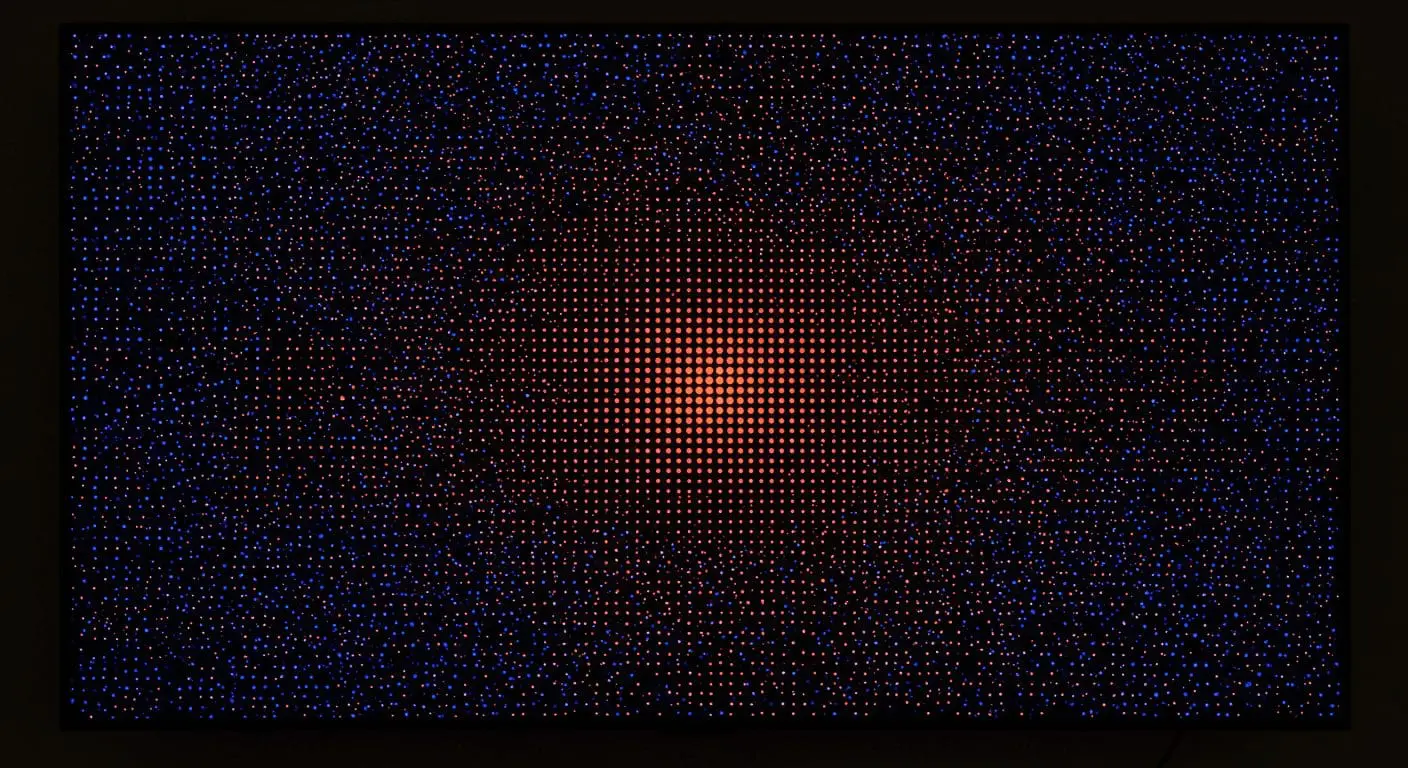
Curtin University researchers have developed eco-friendly blue quantum dot LEDs (QLEDs) using non-toxic materials, achieving a 24.7% efficiency rate and lasting nearly 30,000 hours. This advancement addresses the challenge of creating stable, efficient blue QLEDs without toxic heavy metals like cadmium, offering potential applications in televisions, smartphones, VR headsets, and energy-efficient lighting. The study, published in Nature, involved collaborations with researchers from Shanghai University, Jilin University, Chinese Academy of Sciences, Fudan University, and TCL Research.
Breakthrough in Eco-Friendly Display Technology
Curtin University has significantly advanced display technology by developing eco-friendly quantum dot LEDs (QLEDs) that eliminate the need for toxic heavy metals. This breakthrough addresses a critical challenge in creating stable and efficient blue QLEDs without cadmium, a hazardous material traditionally used in such applications.
The newly developed quantum dots exhibit exceptional performance with an efficiency of 24.7% and a lifespan exceeding 30,000 hours. These metrics underscore their potential to revolutionize display technology across various devices, including televisions, smartphones, VR headsets, and energy-efficient lighting systems.
The innovation stems from meticulous atomic-level adjustments to the quantum dots’ structure, which minimizes defects that hinder light emission. This refinement enhances both brightness and stability, marking a substantial leap forward in optoelectronics.
This technology not only surpasses traditional LEDs in terms of brightness, color accuracy, lifetime, and energy efficiency but also aligns with eco-friendly principles by avoiding harmful materials. The implications for sustainable display solutions are profound, offering a pathway to more durable and environmentally conscious devices.
Efficient Blue Quantum Dot LEDs Without Toxic Heavy Metals
Developing efficient blue quantum dot LEDs without toxic heavy metals represents a critical advancement in display technology. By eliminating the reliance on cadmium, a hazardous material traditionally used in quantum dots, researchers have created a safer and more sustainable alternative. This innovation addresses a long-standing challenge in achieving stable and high-performance blue QLEDs.
The newly developed quantum dots exhibit exceptional performance with an efficiency of 24.7% and a lifespan exceeding 30,000 hours. These metrics highlight their potential to significantly enhance the performance of various devices, including televisions, smartphones, VR headsets, and energy-efficient lighting systems. The reduction in defects within the quantum dots’ structure, achieved through atomic-level adjustments, has been instrumental in improving both brightness and stability.
This advancement not only surpasses traditional LEDs in terms of brightness, color accuracy, and energy efficiency but also aligns with eco-friendly principles by avoiding harmful materials. The implications for sustainable display solutions are profound, offering a pathway to more durable and environmentally conscious devices.
More information
External Link: Click Here For More