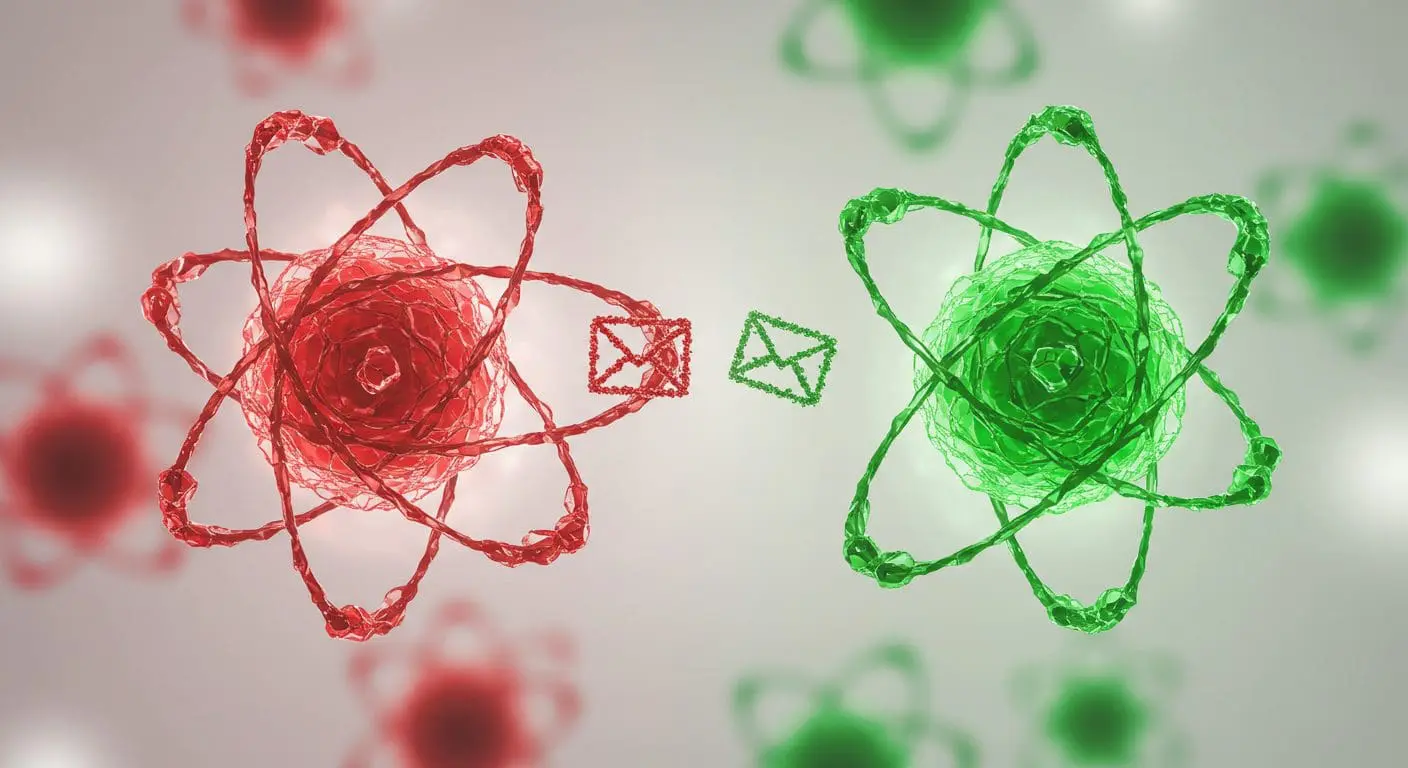
On April 7, 2025, researchers Ivan V. Dudinets, Stanislav S. Straupe, Aleksey K. Fedorov, and Oleg V. Lychkovskiy introduced a novel approach to enhance the scalability of Rydberg-atom-based quantum processors by proposing the use of messenger qubits. Their study, titled All-to-all connectivity of Rydberg-atom-based quantum processors with messenger qubits, addresses the challenge of limited qubit connectivity through innovative architectures that promise significant advancements in quantum computing capabilities.
Rydberg atom arrays offer potential for quantum simulators and processors but face scalability challenges due to limited qubit connectivity. Researchers propose using moving messenger qubits to enable all-to-all interactions, addressing this limitation. Four architectures leveraging this approach are proposed and compared, highlighting their advantages over existing methods. While introducing new technological hurdles, the messenger qubit concept holds promise for advancing Rydberg-based quantum systems.
A new approach leverages multiple atomic species to optimize qubit interactions and information transfer. This innovative architecture aims to enhance efficiency, reduce errors, and enable scalability in quantum systems.
- Checkerboard Pattern for Computational Qubits: Using two distinct atomic species arranged in a checkerboard pattern allows computational qubits to be placed strategically. This configuration minimizes cross-talk, where unintended interactions between qubits can lead to errors, ensuring more reliable operations.
- Messenger Qubits for Efficient Communication: A third atomic species is employed as messenger qubits, facilitating the transfer of information across the quantum system. These messengers move between computational qubits, enabling long-distance interactions without direct connections, which is crucial for performing complex operations efficiently.
- Extended Rydberg Blockade Radius: By extending the Rydberg blockade radius by a factor of 2, the influence range of atoms in their high-energy Rydberg states is increased. This allows qubits to interact over longer distances, reducing the need for direct connections and enhancing the system’s flexibility.
- Faster Messenger Qubits: The extended blockade radius enables messenger qubits to operate at higher velocities, accelerating information transfer and potentially speeding up computations. This advancement addresses a key bottleneck in quantum processing by enabling quicker operations across the system.
- Dual Interaction Mechanisms: The architecture supports two separate types of two-qubit gates between messengers and computational qubits. This dual capability allows for more versatile interactions, reducing errors and supporting complex operations necessary for advanced quantum algorithms.
This novel approach represents a significant step forward in quantum computing by improving communication efficiency, scalability, and error reduction. By integrating multiple atomic species and optimizing their interactions, researchers are paving the way for more robust and practical quantum systems capable of addressing a broader range of computational challenges with enhanced performance.
👉 More information
🗞 All-to-all connectivity of Rydberg-atom-based quantum processors with messenger qubits
🧠 DOI: https://doi.org/10.48550/arXiv.2504.05087