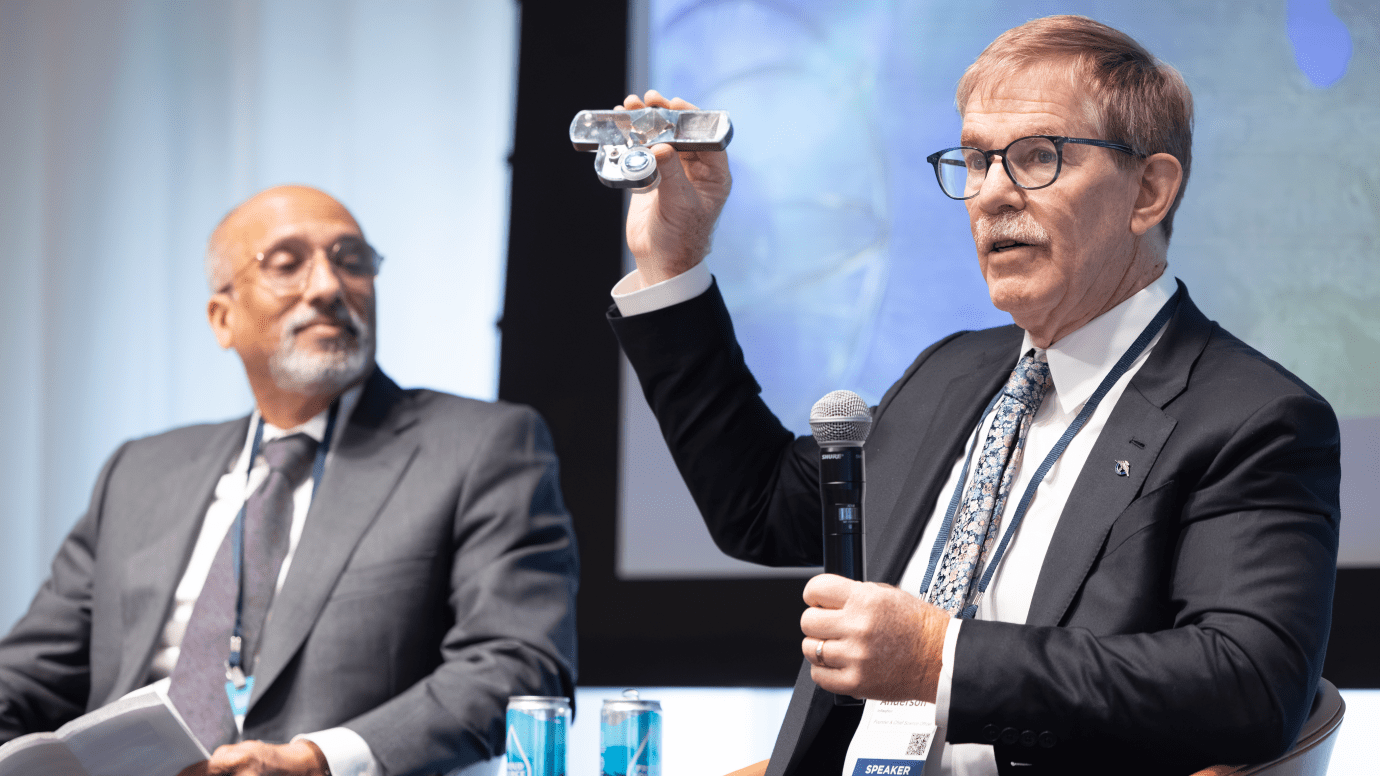
The 2025 Chicago Quantum Summit, hosted by the Chicago Quantum Exchange at the University of Chicago from November 3-4, convened over 950 attendees from at least 16 countries, 32 universities, and 168 companies to emphasize coordinated action as critical to advancing quantum technology. Discussions included strategies for platform interoperability, immigration pathways for skilled quantum professionals, and the potential impact of quantum innovations on financial systems. Notably, U.S. Department of Energy Undersecretary for Science Darío Gil announced $625 million in renewed funding for five DOE National Quantum Information Science (QIS) Research Centers, including the Superconducting Quantum Materials and Systems (SQMS) Center at Fermi National Accelerator Laboratory and Q-NEXT at Argonne National Laboratory, underscoring the importance of cross-institutional partnerships.
Summit Highlights Coordinated Action for Quantum Advancement
The 2025 Chicago Quantum Summit underscored a pivotal shift: quantum technology is moving beyond theoretical research toward practical application. Over 950 attendees—representing 15+ countries, 32 universities, and 168 companies—focused on coordinated action to accelerate progress. Discussions moved past if quantum technologies will impact industries, to when and how. A key announcement was $625 million in renewed funding for five DOE National QIS Research Centers, emphasizing collaborative partnerships as foundational to success.
The summit highlighted a growing, interconnected quantum ecosystem. The University of Chicago announced a partnership with IonQ, joining the Chicago Quantum Exchange as a core partner, while regional developments like new facilities from Bluefors and Hyde Park Labs demonstrate infrastructure growth. Importantly, the release of the “Quantum Law Navigator” – a resource addressing legal and ethical challenges – signals recognition of the need for proactive policy development to support a rapidly evolving quantum economy.
Beyond technical advancements, the summit addressed crucial workforce and supply chain concerns. Lake Shore Cryotronics noted a shift in clientele from research physicists to engineering technicians, illustrating commercialization. The emphasis on immigration pathways and funding models demonstrates a holistic approach to building a sustainable quantum industry. This year’s event, with input from leaders like Australia’s Cathy Foley, clearly showed quantum is evolving into a global industry with complex, interdependent supply chains.
Cross-Sector Collaboration Drives Quantum Ecosystem Growth
The 2025 Chicago Quantum Summit underscored a pivotal shift: quantum technology is transitioning from theoretical research to practical application. Discussions moved beyond if quantum capabilities will impact industries, to when and how this transformation will unfold. This change is evidenced by $625 million in renewed DOE funding for five QIS Research Centers, emphasizing collaborative partnerships. The summit, drawing 950 attendees from 15+ countries, highlighted a growing need to prepare systems, policies, and a skilled workforce for widespread quantum integration.
Cross-sector collaboration was a central theme, with representation spanning 32 universities, 168 companies, and governmental bodies. Participants explored crucial aspects like legal frameworks – evidenced by the release of the “Quantum Law Navigator” report – and workforce development. Initiatives like the Illinois Quantum and Microelectronics Park, alongside partnerships with companies like IonQ, demonstrate a concerted effort to build a robust quantum ecosystem, moving beyond isolated research to scalable commercialization.
The summit revealed a maturing quantum industry, evidenced by shifting customer bases for companies like Lake Shore Cryotronics—transitioning from research physicists to engineering technicians. This signals a move towards production and deployment. Furthermore, the growing interdependence of quantum with fields like AI, photonics, and semiconductors necessitates collaborative supply chains. This interconnectedness, alongside a focus on standardization and legal clarity, is critical for sustained growth and widespread adoption.
Shift from ‘If Quantum’ to ‘When Quantum’ is Evident
The 2025 Chicago Quantum Summit signaled a definitive shift from questioning if quantum technologies would impact industries to determining when and how that transformation will occur. Over 950 attendees—spanning 16 countries, 32 universities, and 168 companies—focused on practical implementation, evidenced by discussions around building quantum supply chains and preparing legal/immigration frameworks. A key indicator was the $625 million renewal of DOE QIS Research Center funding, reinforcing a commitment to sustained collaborative research.
The summit highlighted a maturing ecosystem moving beyond fundamental research. Panels now included electrical engineers, product developers, and legal experts alongside physicists and chemists—a stark contrast to discussions just a decade prior. Lake Shore Cryotronics noted a shift in clientele from academic physicists to industry engineers, signifying commercialization. The release of the Quantum Law Navigator further underscores a proactive approach to addressing the legal and ethical challenges inherent in scaling quantum technologies.
This shift isn’t occurring in isolation. Illinois and the federal government are investing heavily, with the DOE funding renewal and new initiatives like the Illinois Quantum and Microelectronics Park. IonQ’s partnership with the Chicago Quantum Exchange exemplifies growing industry engagement. Rajeeb Hazra of Quantinuum summarized the change succinctly: the question is no longer if quantum will arrive, but when, demanding a focus on systems, policies, and workforce development to capitalize on its potential.
Legal and Ethical Frameworks Gain Summit Focus
The 2025 Chicago Quantum Summit signaled a critical shift towards establishing legal and ethical frameworks for quantum technology’s rapid expansion. Participants highlighted four core challenges—national security, sustained funding, workforce development, and supply chain vulnerabilities—necessitating proactive policy. The Chicago Quantum Exchange released the “Quantum Law Navigator,” a 10-chapter report designed to ease navigation of the complex legal landscape for companies and policymakers, aiming to foster innovation and economic growth within the burgeoning quantum sector.
Discussions moved beyond if quantum technologies will impact industries, to when and how—prompting focus on practical preparation. Leaders emphasized the need for immigration pathways to attract skilled quantum professionals, alongside $625 million in renewed funding for the five DOE National Quantum Information Science (QIS) Research Centers. This funding, coupled with initiatives like the Illinois Quantum and Microelectronics Park, demonstrates a coordinated push towards building critical infrastructure and scaling the quantum workforce.
The summit also revealed a broadening definition of quantum expertise. Panels now include not just physicists and chemists, but also electrical engineers, product developers, and legal professionals. Lake Shore Cryotronics noted a shift in clientele from experimental physicists to engineers and technicians, signifying a move toward commercialization. This interdisciplinary approach, coupled with the focus on legal and ethical considerations, underscores a maturing quantum ecosystem preparing for widespread adoption.
Investment and Partnerships Fuel Quantum Infrastructure
The 2025 Chicago Quantum Summit underscored a critical shift: quantum technology is rapidly moving from theoretical research to practical application. Renewed federal investment—$625 million for five DOE National QIS Research Centers—highlights a commitment to sustained progress. This funding, coupled with partnerships between universities (like UChicago and Argonne), national labs, and private companies (IonQ, Bluefors), is building a robust quantum infrastructure. The emphasis is no longer if quantum will impact industries, but when, driving a need for coordinated action and workforce development.
Collaboration was a central theme, with nearly 950 attendees from 16+ countries participating. Discussions spanned technical advancements to legal and ethical considerations – evidenced by the release of the Quantum Law Navigator report addressing funding, security, and workforce challenges. The summit showcased regional growth, including new facilities from Bluefors and Hyde Park Labs, plus groundbreaking on the Illinois Quantum and Microelectronics Park. This interconnected ecosystem fosters innovation across the entire quantum stack.
Beyond investment, the summit signaled a change in the type of engagement. Companies like Lake Shore Cryotronics report shifting clientele from academic physicists to engineering teams—a clear indication of commercialization. The focus is now on building supply chains, establishing standards, and integrating quantum with existing technologies like semiconductors and AI. This transition requires a multidisciplinary approach, evidenced by panel discussions featuring not only physicists but also electrical engineers and product development leaders.