
The US Department of Transportation (USDOT) has explored the potential of quantum computing to revolutionize transportation systems. A recent workshop brought together experts from companies like IBM, Boeing, and Google to discuss how quantum technologies can improve safety, mobility, and sustainability in transportation.
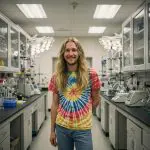
Dr. Vengalattore emphasized that while we are still in the early stages of developing universal quantum computers, researchers are making progress on specific applications. For example, quantum optimization can enable smart mobility by solving complex real-time optimization problems, such as managing traffic flow and public transit systems.
Quantum computing can also contribute to climate resilience by improving congestion management, battery design, and weather event modeling. Dr. Yaakov Weinstein from the MITRE Corporation highlighted the rapid progress being made in scaling up quantum computers, with companies like IonQ, Quantinuum, IBM, and Google predicting major advancements by 2030. The workshop demonstrated that quantum computing has the potential to transform transportation systems, and researchers are working to make this vision a reality.
The concept of smart mobility corridor optimization and connection protection is particularly intriguing. By leveraging quantum parallelism, we can tackle complex combinatorial optimization problems in real-time, ensuring that transportation systems are resilient and adaptable to individual actions or disruptions. This has far-reaching implications for accessibility, convenience, and economic growth.
Climate and sustainability are also critical areas where quantum computing can significantly impact. The report highlights opportunities in congestion management, battery design, computational fluid dynamics, fuel efficiency, and weather event modeling. For instance, applying quantum linear algebra methods to solve partial differential equations in computational fluid dynamics can help reduce carbon dioxide emissions and support resilient infrastructure.
However, the report acknowledges the long road ahead before gate-based quantum computers transition out of the noisy intermediate-scale quantum (NISQ) era. The error rates and scaling limitations of current qubits pose significant challenges. Dr. Vengalattore’s emphasis on the need for further research and development is well-taken.
Predictions from various companies, including IonQ, Quantinuum, IBM, and Google, suggest that major advancements can be expected by 2030. The international landscape, with investments in Europe, Australia, Canada, and China, adds to the excitement. China and Canada’s successful quantum supremacy demonstrations are a testament to the rapid progress being made.
Dr. Klein’s discussion on the demands of certain quantum algorithms, such as phase estimation or the quantum Fourier transform, highlights the need for high-quality qubits and error correction. The differentiation between intermediate quantum computers running at scale with low-precision qubits and those restricted to small scale but high precision is an important consideration.
The report’s emphasis on the coexistence and competition between quantum and classical algorithms is well-placed. As Dr. Klein notes, both approaches continue to improve, and we should be open to adopting the best solutions for transportation problems, regardless of whether they come from quantum or classical computing.
Finally, the discussion on development tools, such as Qiskit and D-Wave’s Python SDK, highlights the progress in software development. The expectation that compilers will mature in 5-10 years is a promising sign for the future of quantum computing in transportation.
Overall, this report provides a comprehensive overview of the opportunities and challenges at the intersection of quantum technologies and transportation. As we move forward, it’s essential to continue investing in research and development, fostering international collaboration, and exploring the potential of quantum computing to create a safer, more sustainable, and more accessible transportation system for all users.
External Link: Click Here For More