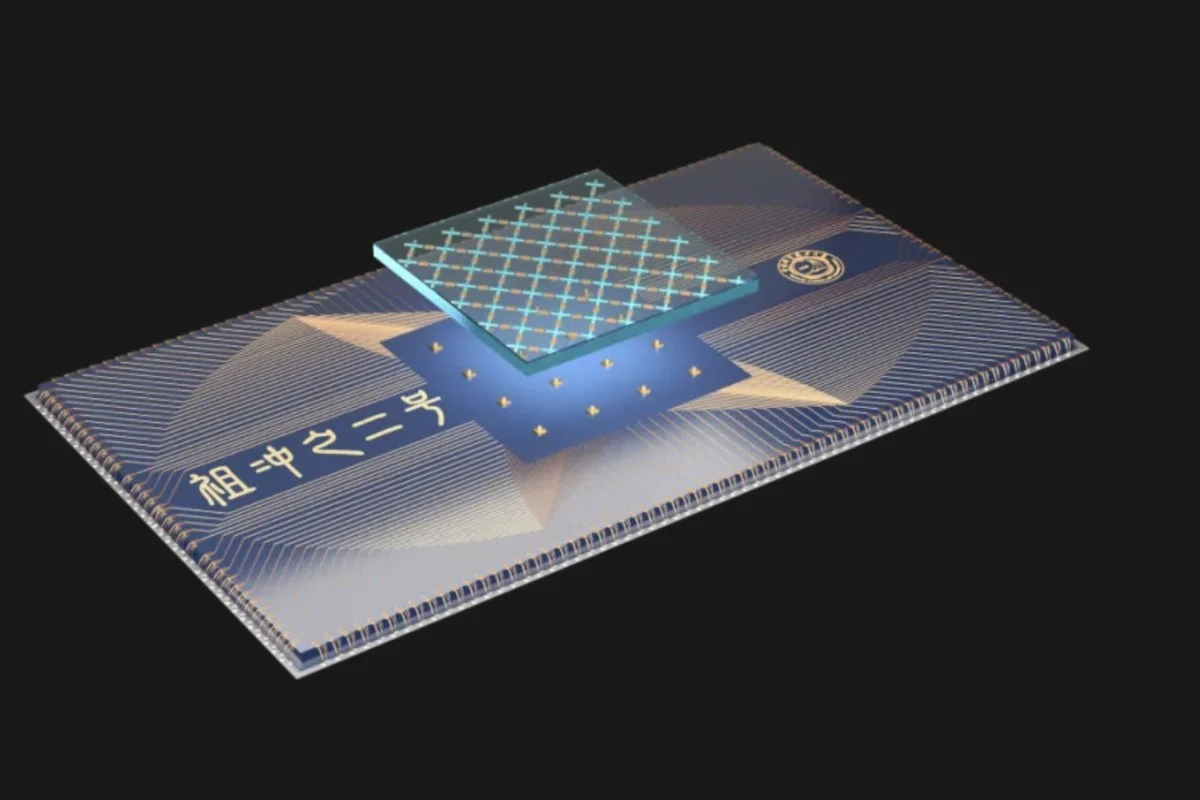
Physicist Pan Jianwei and his team at the University of Science and Technology of China (USTC) have created a stable “quantum Lego block” designed to resist errors and noise. Utilizing the programmable quantum processor Zuchongzhi 2, the team simulated a novel state of matter exhibiting protected corner states, an achievement detailed in a paper published in Science on Friday, November 28, 2025. This experimental realization of non-equilibrium higher-order topological phases offers a new method for storing quantum information—the fundamental units known as qubits—that is less susceptible to environmental disruption, addressing a key limitation in the development of complex and practical quantum computers.
Simulating Stable Quantum Matter States
Chinese physicists, led by Pan Jianwei, have simulated a new state of matter offering enhanced stability for quantum information storage. Utilizing the programmable quantum processor Zuchongzhi 2, the team experimentally realized non-equilibrium higher-order topological phases. These phases feature “quantum armour” – corner states protected by topology – which resist errors and noise. This is a significant step toward building practical, fault-tolerant quantum computers, addressing a key limitation of current technology.
The newly simulated matter doesn’t exist naturally, but presents super stable corners instead of vulnerable surfaces or edges. This unique structure provides protection for qubits – the fundamental units of quantum information – from environmental interference. The findings, published in Science, demonstrate a method to both simulate and detect these complex matter states, paving the way for more reliable quantum computation.
This research is part of a larger technological race toward building powerful quantum computers. Pan Jianwei, previously dubbed the “father of quantum” by Nature, and researchers from USTC and Shanxi University, have focused on overcoming the sensitivity of qubits to their surroundings. The team’s work addresses a major challenge – preventing quantum information from “breaking down” due
Protecting Quantum Information from Errors
Chinese scientists, led by physicist Pan Jianwei, have created a simulated state of matter with “quantum armour” designed to protect quantum information. This was achieved using the programmable quantum processor, Zuchongzhi 2. The new material utilizes corner states – a topological feature – which provide inherent protection against errors and noise. This is a significant step toward building practical quantum computers, as maintaining stable qubits is a major challenge due to their sensitivity to environmental factors.
The research, published in Science, details the first experimental realisation of non-equilibrium higher-order topological phases. Unlike naturally occurring matter, this simulated state locks quantum effects into the corners of the material. These corner states are key because they offer a new method for storing quantum information that is less prone to breakdown. The team from USTC and Shanxi University demonstrated both the simulation and detection of these complex states.
A primary limitation of current quantum computers is the instability of qubits—the fundamental units of quantum information. This new approach addresses this by creating a system where quantum effects are protected by the laws of topology. The result is a potentially more robust way to store and process information, offering a path towards building fault
This new kind of matter, which does not exist in nature, could allow for quantum computers to operate correctly even in the presence of errors or noise, which is a current limitation on machine complexity owing to the sensitivity of quantum bits – the fundamental units of quantum information, also known as qubits – to their environment.