

Research utilising a two-mode bosonic system demonstrates significant coherence within ultrastrong and deep strong coupling regimes. Coherence increases at lower frequencies and with stronger coupling, originating from squeezing terms, not beam-splitter effects. Thermal environments enhance total coherence, potentially benefiting information processing applications.
The behaviour of quantum coherence, a fundamental property enabling quantum technologies, is increasingly investigated as light-matter interactions intensify. Researchers are now probing regimes where these interactions are not merely strong, but ultrastrong and deep strong, revealing unexpected physical phenomena. Yu-qiang Liu, Qiulin Long, and colleagues, in a study detailed in their article, ‘Behavior of quantum coherence in the ultrastrong and deep strong coupling regimes of light-matter system’, utilise the Hopfield model—a mathematical framework describing bosonic systems—to explore coherence characteristics. Their analysis, incorporating thermal environments, demonstrates that significant coherence persists even in these intensely coupled regimes, with specific frequencies and coupling strengths optimising the effect. The team’s findings suggest potential avenues for enhancing coherence in systems relevant to quantum information processing.
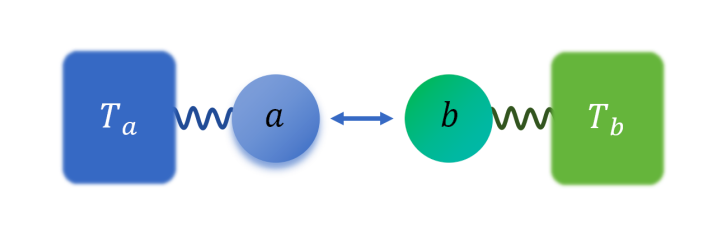
Recent investigations into quantum systems explore the relationship between quantum mechanics and thermodynamics, with a particular focus on maintaining coherence within strongly coupled light-matter interactions. These studies utilise the Hopfield model, a simplified theoretical framework representing two modes of bosonic particles—essentially, quantised oscillators—interacting with thermal reservoirs, to demonstrate that substantial coherence persists even when these systems are strongly coupled. Coherence, in this context, refers to the quantum property that allows for superposition and entanglement, crucial for quantum technologies.
Analysis of the system’s ground state—its lowest energy
Analysis of the system’s ground state—its lowest energy configuration—reveals equal coherence between the photon and matter modes, with maximal coherence occurring at lower frequencies and increased coupling strengths. Coupling strength describes the degree of interaction between the light and matter, while frequency relates to the rate of oscillation of the quantum fields. Increased coupling consistently correlates with enhanced overall coherence, and lower frequencies further amplify this effect, suggesting a clear pathway for optimising these systems.
The generation of coherence relies heavily on ‘squeezing’, a technique that manipulates quantum fluctuations. Squeezing reduces the uncertainty in one property of a quantum system, at the expense of increased uncertainty in another, effectively enhancing specific quantum characteristics. Both one-mode squeezing—affecting a single oscillator—and two-mode squeezing—affecting the interaction between oscillators—play a crucial role in generating coherence.
The introduction of thermal environments, representing heat reservoirs, introduces a complex dynamic. Total coherence benefits from the presence of ‘beam-splitter’ and ‘phase rotation’ terms—mathematical constructs within the Hopfield model that describe how the interaction alters the quantum states—however, coherence within individual subsystems remains unaffected. This demonstrates a nuanced interplay between thermal effects and quantum coherence, where the overall system’s coherence can be enhanced without necessarily improving the coherence of its components. A synergistic effect emerges when these terms combine with the squeezing mechanisms, resulting in a total coherence that amplifies with increasing coupling strength.
Researchers systematically vary coupling strengths, frequencies, and thermal
Researchers systematically vary coupling strengths, frequencies, and thermal environments to investigate coherence dynamics. Their findings reveal that in the ‘deep strong coupling regime’—where the interaction between light and matter is particularly intense—lower frequencies consistently maximise total coherence. This underscores the importance of carefully tuning system parameters to optimise coherence for potential applications.
These results provide valuable insights into the coherence properties of coupled light-matter systems, with potential implications for advancements in quantum information processing. Coherence is a fundamental prerequisite for quantum computation, and the ability to generate and maintain it under extreme conditions opens up new possibilities for building more robust and powerful quantum devices. The team’s findings also provide valuable insights into regimes where conventional models break down, paving the way for a deeper understanding of quantum phenomena. Importantly, beam-splitter and phase rotation terms alone do not induce coherence in either the total system or its constituent subsystems, demonstrating the necessity of squeezing mechanisms to achieve and enhance quantum coherence.
🗞 Behavior of quantum coherence in the ultrastrong and deep strong coupling regimes of light-matter system
🧠 DOI: https://doi.org/10.48550/arXiv.2507.00638


