Universal quantum computation demands robust error correction, and researchers continually seek methods to minimise the resources required for this process. Shi Jie Samuel Tan, Yifan Hong, and Ting-Chun Lin, alongside Michael J. Gullans and Min-Hsiu Hsieh, have now demonstrated a significant advance in this field by developing a new protocol for fault-tolerant computation that achieves ‘single-shot universality’. This innovative approach employs code-switching, seamlessly transitioning between high-rate quantum codes, to perform computations in a single step, avoiding the need for multiple rounds of measurement or complex state preparation. The team’s work represents the first universal fault-tolerant computation protocol on high-rate codes characterised by single-shot operation, and importantly, circumvents the need for computationally expensive magic state distillation, paving the way for more efficient and scalable quantum computers.
Recent advances in this area often require numerous measurement rounds or suffer from low code rates. This work presents a single-shot protocol that uses code-switching between high-rate quantum codes to perform fault-tolerant quantum computation, representing the first universal fault-tolerant quantum computation protocol that achieves single-shot code-switching.
Expanding Codes and Universal Quantum Gates
Foundational work in quantum error correction has explored various coding schemes, and researchers have demonstrated that certain gate sets, such as Toffoli and Controlled-NOT, are sufficient for universal quantum computation. Investigations into transversal gates, which simplify quantum circuits, have also advanced the field, while quantum LDPC codes, offering potential for high rates and distances, remain a focus of ongoing research with recent progress in asymptotically good and locally testable codes. Higher-dimensional quantum codes, like hypergraph product codes, have also shown promise, with single-shot error correction demonstrated in three-dimensional systems. Surface codes, a prominent architecture for quantum error correction, have been extensively studied, with research focusing on transversal gates and resilience to error bursts.
Hypergraph product codes and homological codes have emerged as leading candidates due to their potential for high rates and good distance properties. Researchers have explored methods for partitioning qubits and implementing logical gates within these codes, with advancements in distance-preserving stabilizer measurements and parallelizable logical computation. The development of topological theories for these codes is enabling new approaches to non-clifford gates and magic state generation. Recent research has focused on achieving constant overhead in fault-tolerant quantum computation, a crucial step towards practical quantum computers.
Investigations into universal adapters between quantum LDPC codes and efficient magic state distillation are contributing to this goal. High-rate codes and distance optimization are also key areas of focus, with researchers exploring modular quantum computer architectures based on bivariate bicycle codes. The trend towards constant overhead, coupled with the dominance of homological codes and hypergraph product codes, suggests a promising path towards scalable quantum error correction.
Single-Shot Code-Switching Enables Fault-Tolerant Quantum Computation
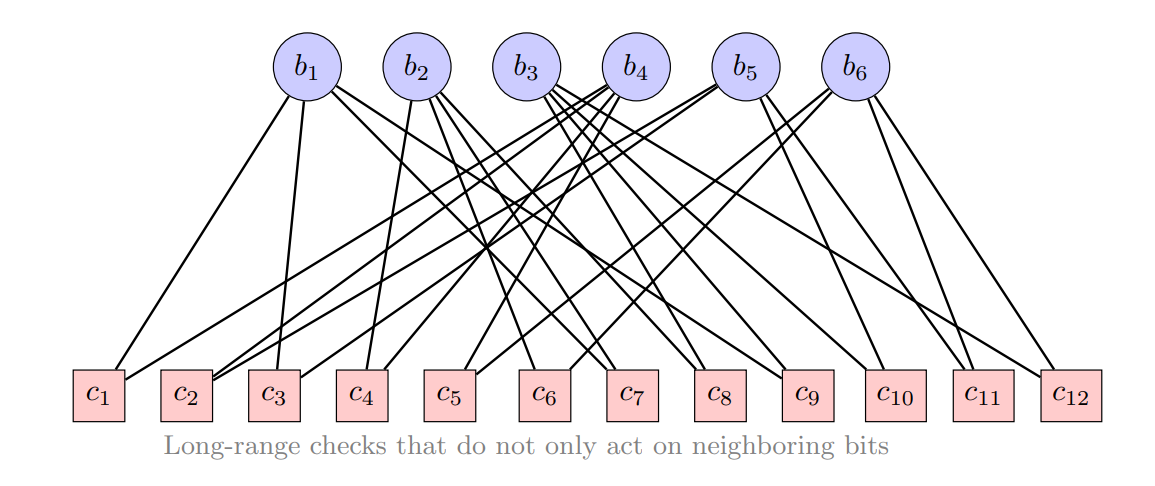
Scientists have achieved a breakthrough in fault-tolerant quantum computation by developing a single-shot protocol that leverages code-switching between high-rate codes, eliminating the need for computationally expensive magic state distillation. This protocol delivers a universal solution characterized by single-shot operation, immediate state preparation, and universal logical gates and measurements within constant depth circuits. The team achieved this by employing single-shot code-switching between constant-rate two-dimensional hypergraph product (HGP) codes and high-rate three-dimensional HGP codes, extending existing techniques for color codes and higher-dimensional topological codes. Experiments demonstrate the construction of high-rate 3D HGP codes with transversal CCZ gates, providing flexibility in selecting expander graphs and local codes to optimize code parameters and logical gate designs.
The research confirms the fault-tolerance of the code-switching protocol under both adversarial and local-stochastic noise models, establishing robustness against various error types. Data shows the protocol achieves single-shot state preparation, enabling immediate encoding of quantum information without iterative correction procedures. Measurements confirm the ability to perform single-shot error correction, efficiently identifying and rectifying errors without multiple correction rounds. The team demonstrated single-shot logical measurements, allowing direct readout of encoded quantum information without complex post-processing.
Results demonstrate the implementation of logical Clifford and CCZ gates within a single operational step, establishing a complete and universal gate set. The study confirms that the protocol achieves constant spatial overhead, encoding logical qubits efficiently without excessive physical resources. Further experiments prove the protocol’s resilience to adversarial noise, demonstrating fault-tolerance even under malicious error patterns. Data also confirms fault-tolerance under local-stochastic noise, validating the protocol’s performance in realistic quantum hardware environments. This breakthrough delivers a path towards universal fault-tolerant quantum computation with low space-time overhead, potentially accelerating the development of practical quantum computers.
Code-Switching Achieves Fault-Tolerant Quantum Computation
This work presents a new protocol for universal fault-tolerant quantum computation that leverages code-switching between different quantum codes. Researchers have achieved single-shot universality, meaning computations can be performed in a single step, utilizing high-rate codes and circumventing the need for complex procedures like magic state distillation. This approach relies on switching between constant-rate two-dimensional hypergraph product (HGP) codes and higher-rate three-dimensional HGP codes, building upon previous advances in dimensional jump techniques for quantum error correction. The team demonstrated the fault-tolerance of this code-switching protocol under both common noise models, adversarial and stochastic, and developed a simplified method for constructing the high-rate 3D HGP codes necessary for the protocol. This new construction offers greater flexibility in selecting codes and logical gates, expanding the possibilities for optimizing performance. Future work will likely focus on exploring different code parameters and graph structures to maximize the efficiency and scalability of this approach to fault-tolerant quantum computation.
🗞 Single-Shot Universality in Quantum LDPC Codes via Code-Switching
🧠 ArXiv: https://arxiv.org/abs/2510.08552