

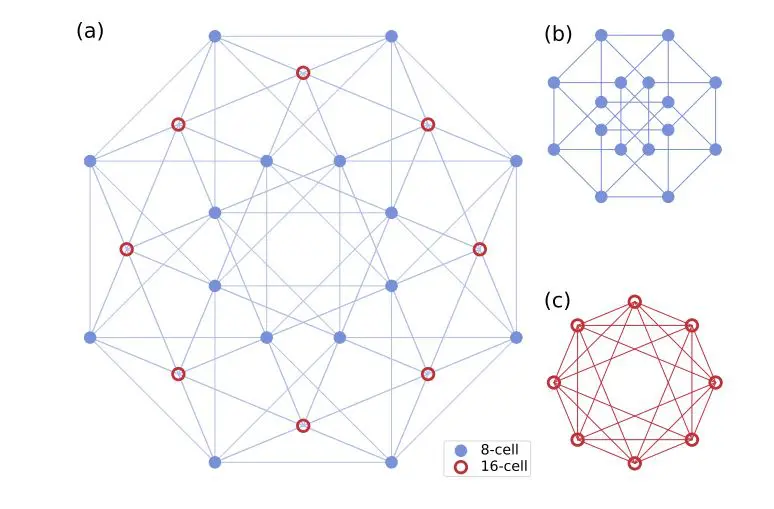
Quantum error correction relies on increasingly sophisticated codes to protect fragile quantum information, and researchers are now exploring codes based on the continuous properties of light. Yaoling Yang from A*STAR, Andrew Tanggara from the National University of Singapore, and Tobias Haug from the Technology Innovation Institute, alongside Kishor Bharti and others, present a new framework called Cubature Codes, which offers a powerful and general way to construct these codes. This approach cleverly connects the geometry of quantum states to mathematical techniques used for approximating complex functions, ensuring robust error correction capabilities. The team demonstrates that existing codes, including well-known cat codes, are actually specific examples within this broader Cubature Code framework, and importantly, this new formalism unlocks a vast design space for even more effective codes, leading to significant improvements in performance under realistic conditions where photons are lost.
These formulas approximate complex calculations by evaluating a function at specific points, and the team cleverly applies this concept to encode quantum information using superpositions of coherent states, the quantum analogue of classical states. This connection between classical and quantum mathematics provides a unique structure for protecting quantum information from noise and errors. The number and arrangement of these coherent states are determined by the principles of cubature formulas, ensuring the code’s effectiveness.
Researchers established that a minimum number of coherent states is necessary to achieve a certain level of error correction, based on established mathematical bounds from approximation theory. Utilizing special arrangements of points, known as tight spherical designs, allows for the creation of more efficient codes with fewer required states. This framework enables the correction of both loss and gain errors simultaneously, a significant advantage over many existing quantum error-correcting codes. The team systematically analyzed the properties of these codes, demonstrating their ability to protect quantum information from various types of noise. This approach establishes a strong mathematical connection between the design of these codes and cubature formulas, a technique originally used for numerical integration. By leveraging this connection, the team can systematically create codes based on superpositions of coherent states, offering greater flexibility in design than previously available. This expanded flexibility allows for greater geometric separation between logical states, a key factor in improving code performance. Scientists discovered new families of codes based on Euclidean designs, achieving greater geometric separation between logical states. Numerical simulations, conducted under a realistic error model, show that these multi-shell QCCs outperform existing single-shell codes in terms of entanglement fidelity. The team demonstrated that the codes effectively suppress errors by maximizing geometric separation, particularly in scenarios with high energy levels where distinct coherent states become nearly orthogonal. This systematic pathway to optimized bosonic error correction represents a significant advance in the field of quantum information processing.
Cubature Codes Expand Bosonic Error Correction
This research introduces quantum cubature codes (QCCs), a new framework for constructing robust quantum error-correcting codes based on the principles of multivariate approximation and coherent state superpositions. By drawing connections between continuous phase space geometry and discrete weighted point sets, the team has established a unifying perspective, demonstrating that existing codes, such as cat and spherical codes, are specific instances within the broader QCC framework. This advancement unlocks a significantly expanded design space for bosonic codes, allowing for the creation of codes with non-uniform superpositions and multi-shell configurations. The researchers leveraged this expanded design space to discover new code families derived from Euclidean designs, achieving greater geometric separation between logical states, which correlates with improved performance against photon loss.
Numerical simulations confirm that these multi-shell QCCs outperform their single-shell counterparts by maximizing geometric separation at a fixed error rate. Furthermore, the team established theoretical lower bounds on the number of coherent states required for effective error correction, based on established principles from approximation theory and cubature formulas. Future work will likely focus on exploring the inclusion of vacuum states and investigating the practical implementation of these codes in realistic quantum hardware. This research represents a significant step forward in the development of efficient and powerful bosonic quantum error correction, offering a promising pathway towards fault-tolerant quantum computation.


