

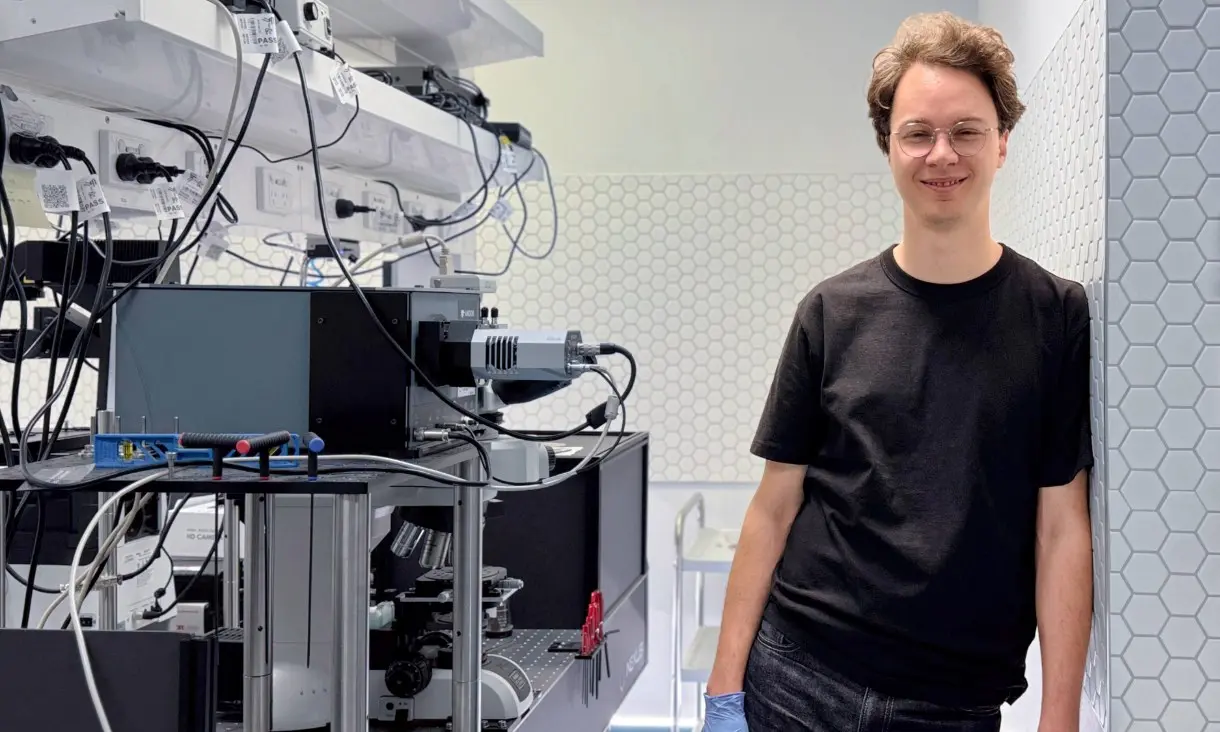
RMIT University and CSIRO researchers have extended the lifespan of quantum batteries to microseconds – a 1,000-fold improvement over prior demonstrations – by optimising energy level alignment within their prototype devices. The collaborative team, funded by the Australian Research Council and the European Union, achieved this breakthrough through experimentation at RMIT’s Micro Nano Research Facility, addressing a critical limitation of quantum battery technology – rapid energy discharge. This advancement establishes a foundation for potential applications in enhancing solar cell efficiency and powering miniature electronics.
Quantum Battery Longevity Enhanced
Research conducted jointly by RMIT University and CSIRO has yielded a quantum battery prototype demonstrating a sustained energy storage duration 1,000 times greater than previously achieved. This improvement addresses a critical shortcoming of earlier designs, which, while exhibiting rapid charging potential, were limited by exceptionally fast discharge rates. Experiments utilising five individual devices identified a performance optimum achieved through the precise alignment of two specific energy levels within the battery’s quantum structure.
The observed extension of storage – from nanoseconds to microseconds – represents a significant, albeit incremental, advance in the field. While the absolute duration remains brief, the results validate the underlying principles and provide a robust platform for iterative development. Detailed in PRX Energy, the research focused on manipulating ‘Dicke quantum batteries’ – a specific architecture leveraging collective interactions between electrons and photons to enhance energy storage capabilities.
Collaboration with industry partners is already underway, aimed at translating these laboratory findings into functional prototypes. This commitment to practical application underscores the potential of quantum batteries to address limitations in conventional energy storage systems. Anticipated applications include enhancing the efficiency of photovoltaic cells and providing power sources for portable electronic devices, suggesting viable avenues for future commercialisation. The research received funding from the Australian Research Council, the European Union, and an RMIT University Vice-Chancellors Senior Research Fellowship, highlighting international interest in this emerging technology.
Core Principles and Experimental Results
The observed extension of energy storage duration was achieved through careful manipulation of molecular triplets – a specific quantum state where three electrons share correlated properties. This configuration facilitated a reduction in energy loss pathways, thereby prolonging the battery’s ability to retain stored energy. The team employed a Dicke quantum battery architecture, which relies on the collective excitation of multiple qubits – the quantum analogue of classical bits – to amplify energy storage capacity. By precisely controlling the interactions between these qubits, they optimised the system for minimal self-discharge.
The research highlights the importance of coherence – the ability of a quantum system to maintain its superposition state – in extending battery lifespan. Decoherence, the loss of this superposition, is a primary cause of energy dissipation in quantum systems. The observed improvement in storage duration suggests the team successfully mitigated some of the decoherence effects, although further investigation is needed to fully understand the underlying mechanisms. This understanding is crucial for developing more robust and scalable quantum battery designs.
The potential of these advancements extends beyond fundamental research, with implications for diverse technological applications. While current prototypes operate at a limited scale, the demonstrated principle of extended coherence times offers a pathway towards developing quantum batteries capable of powering increasingly complex devices. Exploration of different materials and architectures will be critical to realising the full potential of quantum battery applications, particularly in areas where high energy density and rapid charging are paramount.
Future Prospects and Collaborative Efforts
The collaborative framework underpinning this research extends beyond academic institutions. RMIT University and CSIRO are actively engaging with industry partners to transition laboratory prototypes into functional devices. This commitment to translational research is crucial for accelerating the development and eventual commercialisation of quantum battery applications. This focus on practical implementation distinguishes the work from purely theoretical investigations, fostering a pathway towards tangible technological advancements.
Further research will concentrate on scaling these devices while maintaining coherence and minimising energy loss. Exploration of novel materials and architectures is anticipated, with a particular emphasis on identifying systems that exhibit prolonged coherence times at ambient temperatures. This presents a significant challenge, as maintaining quantum coherence typically requires extremely low temperatures and isolation from external disturbances. Overcoming these limitations is essential for realising the widespread adoption of quantum battery applications.
The potential impact of extended coherence times extends beyond improvements in energy storage duration. Enhanced coherence could also unlock new functionalities, such as the ability to precisely control energy delivery and optimise charging protocols. This level of control could be particularly beneficial in applications requiring intermittent or pulsed power, such as powering sensors or actuating micro-electromechanical systems. The development of such capabilities would broaden the scope of quantum battery applications beyond conventional energy storage.
More information
External Link: Click Here For More


