AliroQuantum is detailing the diverse strengths and challenges inherent in the varied approaches currently defining the quantum computing field. Rather than a single dominant technology, the field encompasses superconducting qubits, photonic systems, trapped ions, and spin qubits, each with unique advantages for specific computational tasks; for example, high-speed algorithms may favor superconducting qubits while high-precision quantum chemistry shows promise on ions and atoms. This specialization suggests multiple modalities will likely succeed long-term, tackling different classes of problems and potentially co-existing within future quantum data centers. AliroQuantum observes that multiple modalities are more likely to be successful in the long-term for different classes of problems, a prediction that acknowledges the complex physics governing performance in distributed quantum computing environments.
D-Wave Annealers & Superconducting Qubit Systems
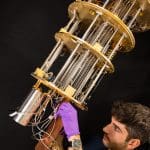
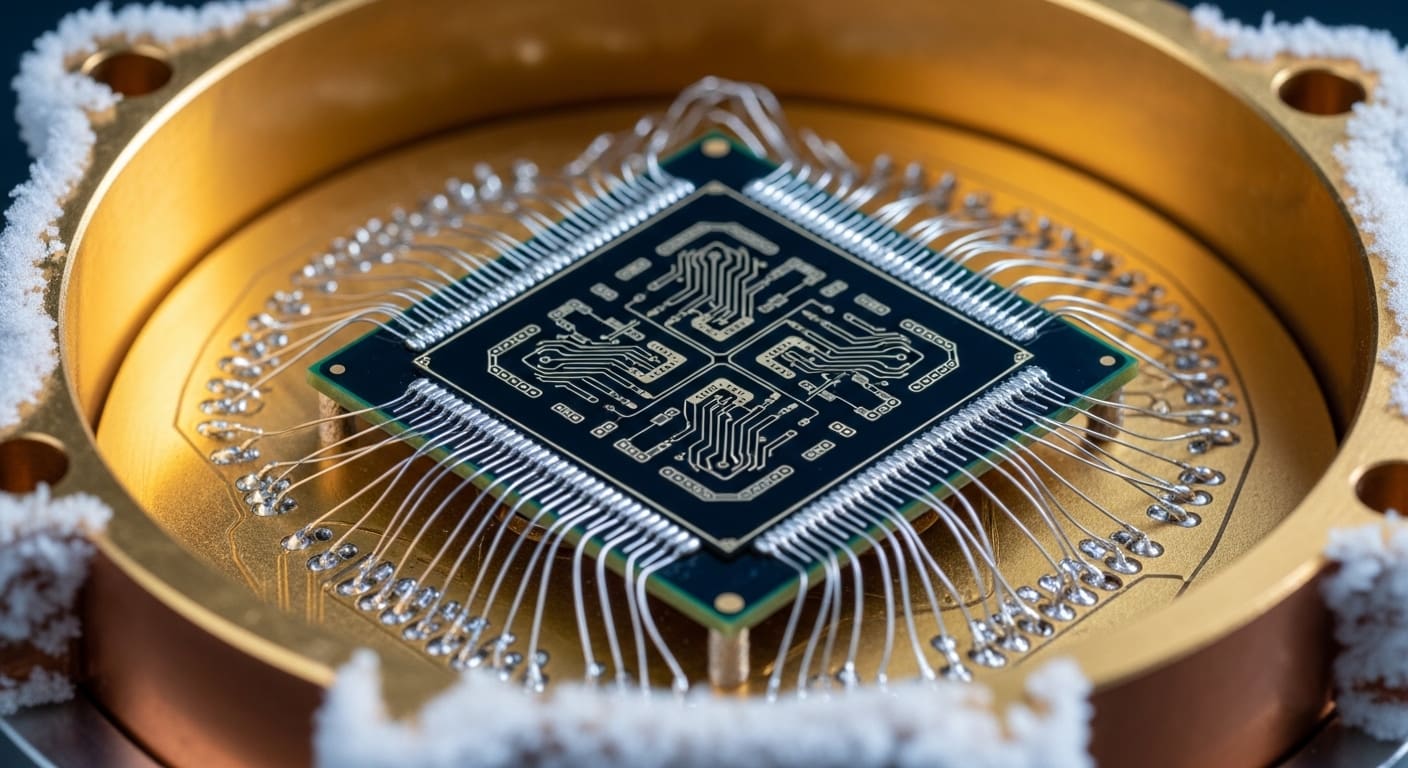
Despite the increase in diverse quantum computing approaches, D-Wave’s annealing systems and superconducting gate-based systems remain prominent contenders in the race to build practical quantum computers. D-Wave utilizes superconducting qubits, but diverges from the standard gate-based approach by focusing on large-scale optimization problems; its machines are designed to set an initial state and slowly cool the system to find a global minimum of a cost function, rather than executing algorithms through quantum gates. This specialization allows D-Wave to excel in specific computational tasks, but contrasts sharply with the more versatile, though currently limited, superconducting gate-based systems championed by companies like Google, IBM, and Rigetti. These gate-based systems, recognizable for their intricate “chandelier” designs, rely on tiny aluminum circuits functioning as inductors and capacitors, with qubit states encoded in electrical current. Operation demands extremely low temperatures, necessitating the use of substantial dilution refrigerators.
While these systems have led the field for years, fabrication and wiring complexity currently restrict chip sizes to around 100 to 200 qubits; scaling beyond this requires innovative solutions, including networking multiple processors. The differing strengths of these modalities suggest a future where multiple quantum computing architectures coexist. High-speed, measurement-heavy algorithms may favor superconducting qubits, while D-Wave’s annealers are naturally suited to large optimization problems. This isn’t a competition with a single winner, but rather a diversification of tools, with the potential for co-location within future quantum data centers to maximize efficiency and minimize costs through shared resources like cryogenics and optical switches.
Photonic Qubits & Trapped Ion/Atom Approaches
The current quantum computing field features a remarkable diversity of physical platforms, with photonic and trapped ion/atom approaches standing out as particularly promising contenders. PsiQuantum is actively pursuing a large-scale quantum computer utilizing photons, leveraging the inherent scalability advantages of this modality; photonic qubits benefit from existing integration with optics, lasers, and detectors, simplifying network integration. Xanadu represents another significant player in the photonic realm, initially focused on boson sampling but now expanding toward full gate-based systems. These approaches contrast with those employing trapped ions and neutral atoms, such as those developed by IonQ and Quantinuum, which are notable for exhibiting longer coherence times, measured in seconds rather than the microseconds typical of superconducting systems, and high-fidelity gates. The fundamental basis for these qubits lies in the study of atomic spectra, reflecting their natural quantum properties.
While these systems demonstrate all-to-all connectivity within a register, they generally operate at slower speeds compared to superconducting counterparts. The future likely involves co-location of these diverse quantum processing units (QPUs) within quantum data centers to mitigate the challenges of long-distance quantum networking, including optical fiber loss and the need for precise timing and entanglement fidelity.
Quantum Data Centers & Networking Layer Components
AliroQuantum is focused on the practical challenges of linking disparate quantum processing units (QPUs) within a shared infrastructure, recognizing that hardware procurement is often simpler than architectural design. This isn’t simply a matter of scaling up individual processors; it’s about creating a cohesive system from fundamentally different technologies. The need for co-location stems from the physics governing quantum communication; while long-distance quantum networks are envisioned for secure communication and a future quantum internet, distributed quantum computing demands tighter integration. Factors like loss in optical fibers, gate speeds, and entanglement fidelity are all magnified by distance, making on-site connectivity crucial for building a logical machine from multiple QPUs. Aliro explains that all of these are easier when QPUs are co-located in a quantum data center with well-engineered optical paths, shared infrastructure, and carefully controlled environments.
A functioning quantum data center requires more than just physically proximate QPUs; it demands a robust quantum networking layer. This layer must facilitate the movement of quantum states between processors, support diverse qubit encodings, photonic, atomic, superconducting, and spin, and maintain entanglement fidelity during conversion and routing. Key components include quantum photonic switches, transducers for translating quantum states, frequency converters, and quantum memories. Aliro emphasized the importance of simulation before hardware commitment, stating that “getting hardware is straightforward compared to choosing the right architecture and components, aligning timing across devices and nodes, and designing protocols and control logic that behave well under real-world noise and loss scenarios.”
At Aliro, one lesson we’ve learned the hard way is that hardware is not the first bottleneck. Getting hardware is straightforward compared to choosing the right architecture and components, aligning timing across devices and nodes, and designing protocols and control logic that behave well under real-world noise and loss scenarios.
Aliro