Quantum Ant Colony Optimization (QACO) is a cutting-edge algorithm that merges quantum computing and ant colony optimization (ACO) algorithms, enhancing the latter’s capabilities. The ACO algorithm, inspired by ant colony foraging, is used to solve complex optimization problems. However, its limitations led to the development of QACO, which leverages quantum computing’s superposition phenomenon to expand computational potential. Despite challenges such as hardware resource limitations and noise robustness, QACO has shown promising results in tests using the Travelling Salesman Problem. Future research will focus on improving the algorithm and exploring new application scenarios.
What is Quantum Ant Colony Optimization (QACO) and Why is it Important?
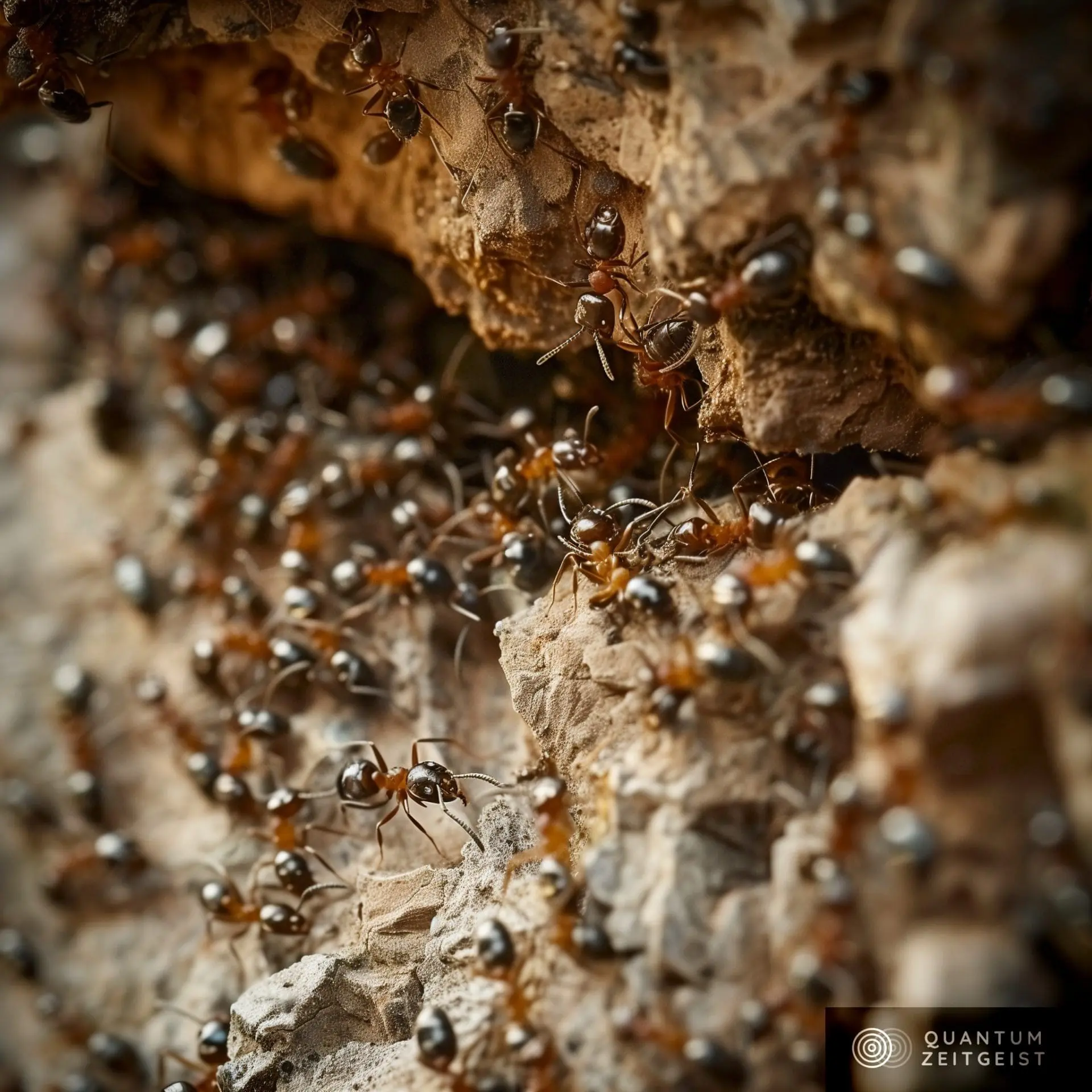
Quantum Ant Colony Optimization (QACO) is a novel algorithm that combines the benefits of quantum computing and ant colony optimization (ACO) algorithms. This combination allows the algorithm to overcome some of the limitations of traditional ACO algorithms. The concept of ACO was first proposed by Italian scholars A Colorni and M Dorigo in the 1990s. The heuristic algorithm is suitable for solving optimization issues by emulating the ant colony foraging process in the wild environment. During the foraging process, each ant in the colony tries to find the shortest path to the food source based on indirect communication among individuals, a process known as pheromone in biological terminology.
The ACO algorithm has been widely used to solve NP-hard combinational problems such as the Travelling Salesman Problem (TSP), Quadratic Assignment Problem, Vehicle Routing Problem, and many other issues. However, the demand for computing resources to solve NP-hard problems led to the proposal of a new computing architecture based on quantum systems, known as quantum computing, by Richard Feynman in 1982. Quantum computing capitalizes on the phenomenon of superposition, allowing quantum bits or qubits to exist in multiple states simultaneously. This vastly expands the potential for complex computations, including neural networks, genetic algorithms, and ant colony optimization.
How is QACO Developed and What are its Advantages?
The advantages of quantum computation have attracted many researchers to modify ant colony optimization with quantum calculation. The often applied methods can be categorized into two ways: quantum algorithms and quantum-inspired algorithm. In 2012, P Li and H Wang introduced a novel Quantum-Inspired Ant Colony Optimization (QIACO) utilizing the Bloch spherical search approach in quantum computation. Meanwhile, some hybrid ACO algorithms have also been proposed, usually involving a combination of quantum and classical components in one algorithm.
However, due to the limitation of quantity and quality of the available qubits of real quantum computers, the usefulness and practical application of the algorithm has not been tested and verified by large problems. To overcome this, a scalable hybrid quantum-classical algorithm that combines the ant colony optimization algorithm with the K-means clustering method has been proposed. This approach can partially overcome the hardware limitations of currently available real quantum computers and is capable of solving problems of a substantial scale with potential for practical application.
What are the Challenges and Limitations of QACO?
Despite the potential advantages of QACO, there are several challenges and limitations that need to be addressed. One of the main challenges is the hardware resource limitations of currently available quantum computers, such as the limited number of qubits, lack of high-fidelity gating operation, and low noisy tolerance. These limitations make the practical application of QACO quite challenging.
Another challenge is the robustness to noise of the calculation process, which is typically a major barrier for the practical application of quantum computers. However, the developed QACO algorithm shows better performance under multiple data sets and also manifests the robustness to noise of the calculation process.
How is QACO Tested and Verified?
To verify the effectiveness and performance of the QACO algorithm, it was tested with the Travelling Salesman Problem (TSP) as benchmarks. The results showed that the developed QACO algorithm shows better performance under multiple data sets. In addition, the developed QACO algorithm also manifests the robustness to noise of the calculation process, which is typically a major barrier for the practical application of quantum computers.
What is the Future of QACO?
The combination of the clustering algorithm with QACO has effectively extended the application scenario of QACO in the current NISQ era of quantum computing. However, more research is needed to further improve the algorithm and overcome the current limitations. The potential research directions in the relevant field include the development of more efficient and robust quantum algorithms, the improvement of quantum hardware, and the exploration of new application scenarios for QACO.
Publication Date: 2024-03-01
Authors: Qian Qiu, Maoqian Wu, Qichun Sun, Xiaogang Liu, et al.
Source: arXiv (Cornell University)
DOI: https://doi.org/10.48550/arxiv.2403.00367