A functional quantum approximate optimisation algorithm (QAOA) for a MAX-CUT problem is now operational using a new platform. Leon E. Röscher of the Technische Universitat Dresden and his colleagues successfully implemented a two-qubit register encoded within a single NV$^-$ centre, operating at room temperature. The proof-of-principle experiment showcases the potential of NV-centre-based quantum processors to perform variational quantum algorithms, reconstructing computational results from fluorescence signals. The work provides a key foundation for developing more complex quantum optimisation strategies and improving control and coherence in future iterations of this technology.
Room-temperature quantum optimisation via nitrogen-vacancy centre cost landscape reconstruction
A cost landscape reconstruction accuracy of 78% represents the first instance of QAOA’s core elements on a room-temperature, solid-state platform. Previously, such algorithms required cryogenic conditions or complex circuit designs. The implementation of the quantum approximate optimisation algorithm (QAOA) tackled the smallest nontrivial instance of the MAX-CUT problem, a benchmark for quantum optimisation, using a two-qubit register uniquely encoded within a single nitrogen-vacancy (NV) centre in diamond. The MAX-CUT problem seeks to divide the nodes of a graph into two disjoint sets in such a way that the number of edges crossing the partition is maximised; it is NP-hard, meaning no efficient classical algorithm is known to solve it, making it a prime candidate for quantum acceleration. This particular instance, the smallest nontrivial case, serves as a crucial initial test for quantum algorithms designed to address this class of problems.
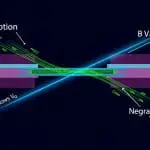
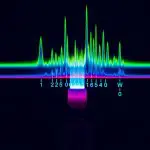
By reconstructing computational basis populations directly from the averaged fluorescence signals emitted by the NV centre, the team achieved a key step towards scalable quantum computation. This reconstruction process relies on the relationship between the NV centre’s fluorescence intensity and the probabilities of being in specific quantum states. The algorithm’s performance was further validated by a successful reconstruction of the cost landscape across 16 distinct parameter combinations. This involved carefully scanning the variational parameters used within the QAOA circuit. These parameters, crucial to the algorithm’s function, control the evolution of the quantum state and are optimised to minimise the cost function representing the MAX-CUT problem. Clever interpretation of the averaged fluorescence signals emitted by the nitrogen-vacancy (NV) centre, rather than direct measurement of qubit states, enabled reconstruction, circumventing the need for traditional projective readout techniques. Traditional readout methods can disrupt the quantum state, introducing errors; this fluorescence-based approach offers a potentially less disruptive alternative. This new approach allowed for the determination of computational basis populations, essential for mapping the algorithm’s progress, with the NV centre acting as both the quantum processor and the optical interface for reading results. A compact use of quantum resources was demonstrated by uniquely encoding the two-qubit register using both the electron spin and the 14N nuclear spin of a single NV − centre. The electron spin provides one qubit, while the nuclear spin of the nitrogen isotope provides the second, maximising qubit density within a single defect.
Nitrogen-vacancy centres in diamond enable a demonstration of quantum optimisation principles
Optimisation problems underpin much of modern life, from streamlining logistics to designing new materials. Finding the best solution from countless possibilities is a constant challenge. This work represents an important step towards using quantum mechanics to accelerate these calculations, utilising the unique properties of defects within diamond. However, scaling this technology, increasing the number of qubits to tackle genuinely complex problems, remains a formidable hurdle. NV centres, formed when a nitrogen atom replaces a carbon atom in the diamond lattice and a neighbouring carbon atom is missing, possess several advantageous properties for quantum computing, including long coherence times and the ability to be controlled and read out using optical techniques.
A striking achievement is the demonstration of the core principles of the quantum approximate optimisation algorithm, or QAOA, on a two-qubit system built from a diamond defect. This proof-of-principle experiment, utilising the electron and nuclear spin of a single nitrogen-vacancy centre, establishes a key foundation for future development. Encoding information within its atomic structure, a quantum calculation has been demonstrated using a diamond defect, a nitrogen-vacancy centre. The QAOA is a hybrid quantum-classical algorithm, meaning it leverages the strengths of both quantum and classical computation. The quantum processor prepares a trial solution, and a classical optimiser adjusts the parameters of the quantum circuit to improve the solution iteratively.
This proof-of-principle experiment successfully implements a basic quantum algorithm, the QAOA, at room temperature, paving the way for more complex systems. Using the electron and nuclear spin of a single nitrogen-vacancy centre in diamond, implementing the quantum approximate optimisation algorithm, or QAOA, represents a functional, room-temperature implementation of this complex calculation. Reconstructing computational states from fluorescence signals bypassed conventional readout methods, allowing determination of qubit performance without direct measurement. Establishing an important foundation for future development of scalable quantum processors and variational quantum algorithms, achieving this on a solid-state system is significant. This work opens questions regarding improved control and coherence, essential for tackling larger, more complex optimisation problems. Maintaining coherence, the ability of a qubit to exist in a superposition of states, is crucial for performing complex quantum computations, and extending coherence times remains a significant challenge in quantum computing. Future research will likely focus on improving the fidelity of the quantum gates used to manipulate the qubits and exploring methods for entangling more qubits to tackle more substantial optimisation challenges. The ability to operate at room temperature is particularly advantageous, potentially reducing the cost and complexity of building and maintaining quantum computers.
This research successfully demonstrated the quantum approximate optimisation algorithm on a two-qubit register encoded within a single nitrogen-vacancy centre in diamond. Performing this calculation at room temperature is notable, as many quantum processors require extremely low temperatures to operate. Researchers reconstructed computational states using fluorescence signals, circumventing the need for direct measurement of the qubits. The findings establish a baseline for future improvements in control, coherence and scaling to larger problem sizes, as stated by the authors.
👉 More information
🗞 Two-Qubit Implementation of QAOA for MAX-CUT on an NV-Center Quantum Processor
🧠 ArXiv: https://arxiv.org/abs/2604.00949