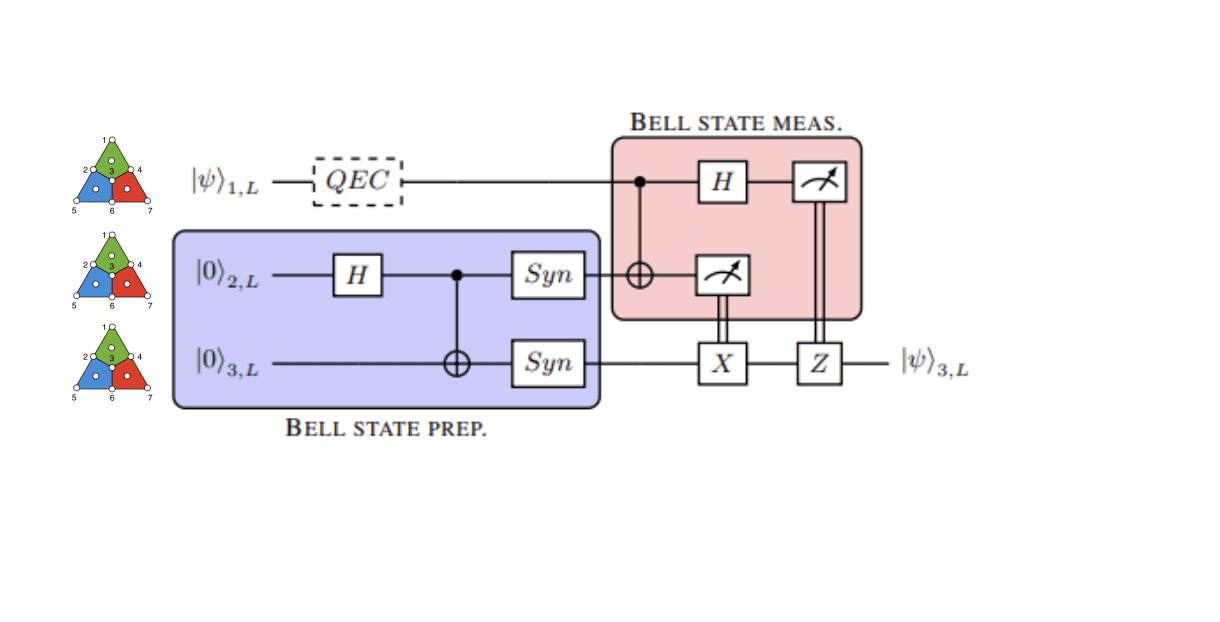
Quantinuum has achieved a significant breakthrough in quantum computing by creating the largest-ever GHZ state with fifty entangled logical qubits, shattering all existing records. This milestone was announced by Dr. David Hayes, Director of Computational Theory and Design at Quantinuum, who will unveil details of this achievement during a plenary session.
Creating a fifty-qubit GHZ state with logical qubits demonstrates the company’s leadership in developing fault-tolerant quantum computers, a crucial requirement for industry-scale quantum computation. According to Dr. Hayes, three key elements for advancing quantum computing are high-performance hardware, robust software, and collaboration with partners to optimize error correction for specific applications. Quantinuum’s achievement signals significant progress in the field and is expected to accelerate the development of practical applications for quantum technology.
Introduction to Quantum Computing and GHZ States
Quantum computing is a rapidly advancing field that has the potential to revolutionize various aspects of modern technology. One of the key concepts in quantum computing is the creation of entangled states, such as the Greenberger-Horne-Zeilinger (GHZ) state. The GHZ state is a type of entangled state that involves multiple qubits, which are the fundamental units of quantum information. In recent years, significant progress has been made in creating large-scale GHZ states using logical qubits. Logical qubits are a type of qubit that is designed to be more robust against errors and can be used to create larger-scale entangled states.
The creation of large-scale GHZ states is an important milestone in the development of quantum computing, as it demonstrates the ability to control and manipulate multiple qubits in a coherent manner. This has significant implications for the development of fault-tolerant quantum computers, which are essential for large-scale quantum computation. Fault-tolerant quantum computers require the ability to correct errors that occur during computation, and the creation of large-scale GHZ states is an important step towards achieving this goal.
The recent achievement of creating a 50-qubit GHZ state using logical qubits is a significant breakthrough in the field of quantum computing. This achievement demonstrates the ability to create large-scale entangled states with high fidelity, which is essential for the development of practical quantum computers. The use of logical qubits in this achievement is particularly notable, as it highlights the potential of these qubits for creating robust and scalable entangled states.
The creation of large-scale GHZ states has significant implications for the development of quantum computing applications. For example, GHZ states can be used to create secure communication channels, such as quantum key distribution protocols. Additionally, GHZ states can be used to simulate complex quantum systems, which could lead to breakthroughs in fields such as chemistry and materials science.
Quantum Error Correction and Logical Qubits
Quantum error correction is a critical component of fault-tolerant quantum computing. Quantum errors occur when the state of a qubit is altered due to interactions with the environment or other qubits. These errors can quickly accumulate and destroy the fragile states required for quantum computation. To mitigate these errors, quantum error correction techniques are used to detect and correct errors in real-time.
Logical qubits are a type of qubit that is designed to be more robust against errors. Logical qubits are created by encoding multiple physical qubits into a single logical qubit. This encoding process allows for the detection and correction of errors, which can significantly improve the fidelity of quantum computation. The use of logical qubits in the creation of large-scale GHZ states is particularly notable, as it highlights the potential of these qubits for creating robust and scalable entangled states.
The development of quantum error correction techniques is an active area of research, with various approaches being explored. One approach is to use surface codes, which involve encoding qubits into a two-dimensional array of physical qubits. Another approach is to use concatenated codes, which involve encoding qubits into multiple layers of physical qubits. The choice of quantum error correction technique depends on the specific application and the requirements of the quantum computer.
The creation of large-scale GHZ states using logical qubits demonstrates the potential of these qubits for creating robust and scalable entangled states. This achievement highlights the importance of quantum error correction in the development of fault-tolerant quantum computers. By using logical qubits, researchers can create larger-scale entangled states with higher fidelity, which is essential for the development of practical quantum computers.
Requirements for Industry-Scale Quantum Computation
The development of industry-scale quantum computation requires several key components. First, high-performance hardware is required to create and manipulate large-scale entangled states. This includes the development of robust and scalable qubits, as well as advanced control systems for manipulating these qubits. Second, robust software is required to control and optimize the performance of the quantum computer. This includes the development of sophisticated algorithms and software frameworks for simulating and optimizing quantum computation.
Third, co-development with partners is essential for optimizing hardware and error correction for specific applications. This involves collaborating with industry partners to develop customized quantum computers that meet the specific needs of their applications. By working together, researchers and industry partners can identify the key challenges and opportunities in developing practical quantum computers.
The development of industry-scale quantum computation also requires significant advances in materials science and engineering. For example, the development of robust and scalable qubits requires the creation of high-quality materials with precise control over their properties. Additionally, the development of advanced control systems for manipulating qubits requires significant advances in fields such as microwave engineering and cryogenics.
The recent achievement of creating a 50-qubit GHZ state using logical qubits demonstrates the potential of these qubits for creating robust and scalable entangled states. This achievement highlights the importance of quantum error correction in the development of fault-tolerant quantum computers. By using logical qubits, researchers can create larger-scale entangled states with higher fidelity, which is essential for the development of practical quantum computers.
Implications for Quantum Computing Applications
The creation of large-scale GHZ states has significant implications for the development of quantum computing applications. For example, GHZ states can be used to create secure communication channels, such as quantum key distribution protocols. Additionally, GHZ states can be used to simulate complex quantum systems, which could lead to breakthroughs in fields such as chemistry and materials science.
The development of practical quantum computers also has significant implications for fields such as optimization and machine learning. Quantum computers can solve complex optimization problems that are currently unsolvable using classical computers. Additionally, quantum computers can speed up machine learning algorithms, which could lead to breakthroughs in fields such as image recognition and natural language processing.
The recent achievement of creating a 50-qubit GHZ state using logical qubits demonstrates the potential of these qubits for creating robust and scalable entangled states. This achievement highlights the importance of quantum error correction in the development of fault-tolerant quantum computers. By using logical qubits, researchers can create larger-scale entangled states with higher fidelity, which is essential for the development of practical quantum computers.
The creation of large-scale GHZ states also has significant implications for the development of quantum computing hardware. For example, the development of robust and scalable qubits requires the creation of high-quality materials with precise control over their properties. Additionally, the development of advanced control systems for manipulating qubits requires significant advances in fields such as microwave engineering and cryogenics.
External Link: Click Here For More