

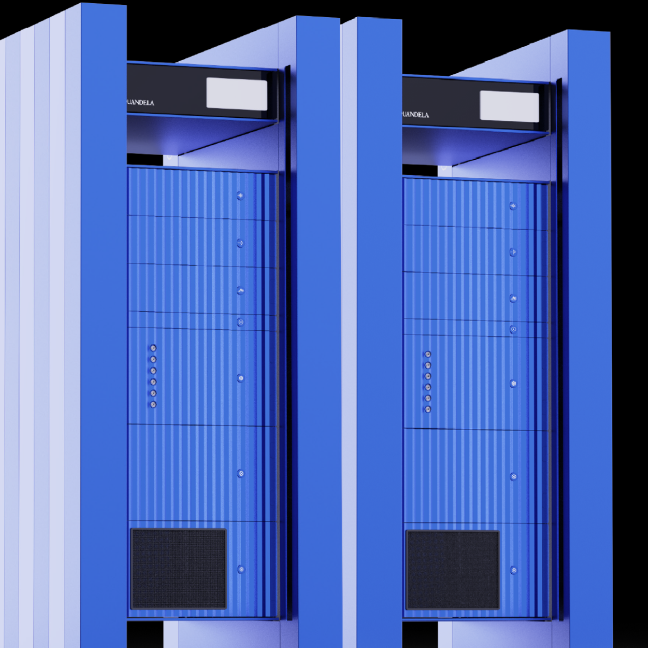
Equipped with 12 photonic qubits, this system enables researchers and industrial users to experiment with quantum algorithms and hybrid workflows across fields like optimization and machine learning. Hosted at CEA’s TGCC in Paris, Lucy strengthens Europe’s leadership in quantum research while preparing industries for future technological advancements. Designed with 80% European components, the system reflects a collaborative effort spanning France and Germany, ensuring sovereign quantum technology development.
European Quantum Computing Capacity Expands with Lucy
The delivery of Lucy, a 12-qubit digital universal photonic quantum computer, significantly expands European quantum computing capabilities. According to Quandela, the system was recently delivered to CEA’s Very Large Computing Center (TGCC) and represents a major step forward for the EuroHPC Joint Undertaking. This powerful new resource will provide European researchers and industrial users with a unique platform for experimentation, ultimately accelerating progress in fields like optimization and machine learning. Initial applications are expected to focus on critical areas such as energy grid optimization and financial risk modeling.
Building on successful deployments in 2023 and 2024, this delivery marks a new milestone in the European quantum journey according to GENCI. Assembled in just twelve months at Quandela’s industrial site, Lucy demonstrates the strength of collaboration between European entities. Cryogenic modules were designed by attocube systems AG near Munich, while quantum devices were manufactured on Quandela’s semiconductor pilot line in Palaiseau. Final integration occurred at Quandela’s plant in Massy, highlighting a robust European supply chain.
Lucy’s significance extends beyond its technical specifications, as 80% of its components , including all critical elements , originate from Europe. This strong domestic component base reinforces Europe’s capacity to deliver sovereign quantum technologies. The system, coupled with the Joliot-Curie supercomputer at the TGCC, will be accessible to a broad community of European users from France and Germany. This increased access is expected to foster innovation and prepare industry for future technological breakthroughs, solidifying Europe’s position at the forefront of quantum research.
Lucy’s European Origins and Future Applications
Building on successful deployments, Lucy represents a significant step towards European sovereignty in quantum technology. According to Quandela, the system’s assembly within just twelve months highlights the efficiency of collaborative efforts across the continent. Eighty percent of Lucy’s components, including all critical elements, originate from European sources, demonstrating a robust and independent supply chain for advanced quantum computing hardware. This commitment to local production strengthens Europe’s position in a rapidly evolving technological landscape.
The intricate development of Lucy involved specialized expertise from multiple institutions. Cryogenic modules were meticulously designed by attocube systems AG near Munich, while the quantum devices themselves were manufactured on Quandela’s advanced semiconductor pilot line in Palaiseau. Final integration and testing occurred at Quandela’s plant in Massy, showcasing a streamlined production process. GENCI led the consortium, partnering with CEA, the University of Bucharest (UPC), ICHEC, and Forschungszentrum Juelich (FZJ) to ensure successful completion and deployment of the system.
Remote access to Lucy, facilitated through the CEA’s TGCC, is intended to promote widespread adoption and accelerate quantum research. European users from France and Germany will be able to leverage Lucy’s 12 photonic qubits for experimentation with quantum algorithms and exploration of hybrid HPC-quantum workflows. This accessibility will foster innovation in fields like energy grid optimization, financial risk modeling, and aerospace design, solidifying Europe’s role at the forefront of quantum technological advancement, as envisioned by GENCI.
The delivery of Lucy to CEA represents a significant step forward for European quantum computing capacity. Equipped with 12 photonic qubits, this system, a collaboration between Quandela and attocube systems AG, will allow European researchers to explore practical applications in areas like energy optimization and financial modeling. This development could enable advancements beyond these initial use cases, extending to logistics, aerospace, and materials science.
For industries reliant on complex calculations, Lucy offers a unique platform to test and refine quantum algorithms alongside conventional supercomputing resources at CEA’s TGCC, as facilitated by GENCI. The implications extend beyond simply increasing computational power; it positions Europe to lead in developing hybrid quantum-classical workflows and realizing the tangible benefits of quantum technology.
Source: https://www.quandela.com/


