QDI Systems, a deep technology company based in Groningen, Netherlands, has secured up to €7.5 million in funding from the European Innovation Council (EIC) and accompanying equity financing. The investment will support the company’s scaling of its quantum dots technology for X-ray and shortwave infrared (SWIR) imaging applications.
QDI Systems is pioneering nanomaterial quantum dots in medical imaging, offering higher-quality images with reduced radiation exposure compared to traditional methods. The funding follows a €5 million Series A round secured last year and reflects the company’s rapid growth, including a tenfold increase in its customer base over the past year.
QDI Systems Secures €75M Investment from European Innovation Council
QDI Systems has secured up to €7.5 million in funding from the European Innovation Council (EIC), marking a significant milestone for the deep technology company. This investment will enable QDI Systems to scale its innovative quantum dot imaging solutions for X-ray and shortwave infrared (SWIR) applications, further solidifying its position as a leader in advanced imaging technologies. The grant complements the company’s recent Series A funding of €5 million, underscoring rapid growth and product development.
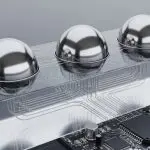
The funding will accelerate QDI Systems’ industrial prototyping capabilities, aligning with customer demand across the medical imaging and consumer technology sectors. By leveraging quantum dots—nanometer-scale semiconductors that enhance photon-to-electron signal conversion—the company is addressing critical limitations in current imaging technologies. These advancements promise higher-quality images, reduced radiation exposure, and improved efficiency across various applications.
Artem Shulga, CEO and founder of QDI Systems, emphasized the importance of this investment in meeting customer needs while scaling production capabilities. “This funding will enable us to meet the growing demand for our technology while reinforcing Europe’s leadership in imaging innovation,” Shulga stated. The company’s commitment to developing and manufacturing breakthrough technologies within Europe also supports the broader semiconductor ecosystem, ensuring continued advancements in imaging performance and efficiency.
With this new capital, QDI Systems is poised to transform multibillion-euro markets and redefine industry standards for imaging technology. Its focus on quantum dot imaging not only enhances medical diagnostics but also extends into industrial and consumer applications, showcasing the versatility of its cutting-edge solutions.
QDI Systems Pioneers Quantum Dots in Medical Imaging
QDI Systems stands at the forefront of quantum dot imaging technology, revolutionizing medical applications through innovative solutions. As pioneers in this field, they harness the potential of quantum dots to enhance imaging processes, offering significant advancements over traditional methods.
Quantum dots are nanometer-scale semiconductors that excel in converting photons into electronic signals, a capability that elevates imaging precision and efficiency. This technology is particularly transformative in medical imaging, where it enables higher-quality images with reduced radiation exposure, addressing critical limitations of conventional techniques.
QDI Systems’ commitment to excellence is evident in their status as the first company to integrate quantum dots into medical X-ray imaging. This pioneering approach not only improves diagnostic accuracy but also contributes to patient safety by minimizing radiation risks.
The expertise of QDI Systems is further bolstered by a team of specialists with academic roots at the University of Groningen, underscoring their deep understanding and innovative application of quantum dot technology.
Beyond healthcare, QDI Systems explores diverse applications such as industrial sorting and consumer technologies like facial recognition. This versatility underscores their strategic vision to expand the impact of quantum dot imaging across various sectors, reinforcing their market leadership and commitment to technological advancement.
Current Limitations in X-ray and SWIR Imaging Technology
Imaging technology plays a pivotal role across various sectors, from healthcare diagnostics to industrial processes. However, current technologies face significant challenges that hinder their effectiveness. In medical imaging, outdated X-ray detectors often result in poor image quality, necessitating repeated scans and exposing patients to unnecessary radiation. This not only increases healthcare costs but also poses risks to patient safety.
Similarly, shortwave infrared (SWIR) imaging is constrained by high costs and low resolution, limiting its application in industrial and consumer sectors. These limitations affect the accuracy of diagnostics and the efficiency of industrial processes, underscoring the need for innovative solutions to enhance imaging capabilities and improve outcomes across these fields.
More information
External Link: Click Here For More