Q-CTRL, a quantum infrastructure software company, has achieved a breakthrough in quantum computing, solving optimization problems over four times larger than previous records using IBM quantum computers. This marks the first time a utility-scale IBM quantum computer has outperformed competitive annealer and trapped ion technologies. The results suggest that quantum optimization, which has potential applications in transport, logistics, machine learning, and financial fraud detection, is closer to realization than previously thought. Key individuals involved in the work include Jay Gambetta, IBM Fellow and VP of IBM Quantum, and Q-CTRL CEO and Founder Prof. Michael J. Biercuk.
Q-CTRL’s Quantum Optimization Breakthrough
Q-CTRL, a quantum infrastructure software company, has recently published results demonstrating a significant advancement in quantum optimization. The company’s novel approach has enabled a quantum optimization problem to be solved on a larger scale than ever before, using an IBM quantum computer. This achievement represents a fourfold increase in the size of an optimization problem that can be accurately solved, surpassing previous records.
Quantum optimization is a promising application of quantum computing, with potential to significantly enhance solutions to complex problems in fields such as transport, logistics, machine learning, and financial fraud detection. McKinsey estimates that quantum applications in logistics alone could be worth over $200-500 billion per year by 2035, provided the quantum sector can successfully solve these problems.
Overcoming Quantum Computing Challenges
Despite the potential of gate-based quantum computers, previous third-party benchmark quantum optimization experiments have shown that they have struggled to live up to their potential due to hardware errors. In previous tests of optimization algorithms, the outputs of the gate-based quantum computers were little different than random outputs or provided modest benefits under limited circumstances.
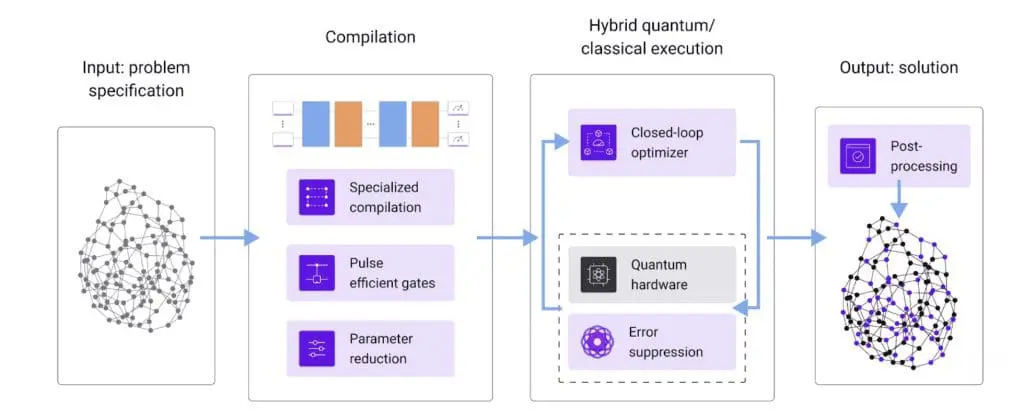
As a result, an alternative architecture known as a quantum annealer was believed to be the preferred choice for exploring industrially relevant optimization problems. However, Q-CTRL’s recent results challenge this widely accepted industry narrative by addressing the error challenge. The company’s methods combine innovations in the problem’s hardware execution with their performance-management infrastructure software run on IBM’s utility-scale quantum computers. This combination delivered improved performance previously limited by errors with no changes to the hardware.
Q-CTRL’s Novel Approach and Results
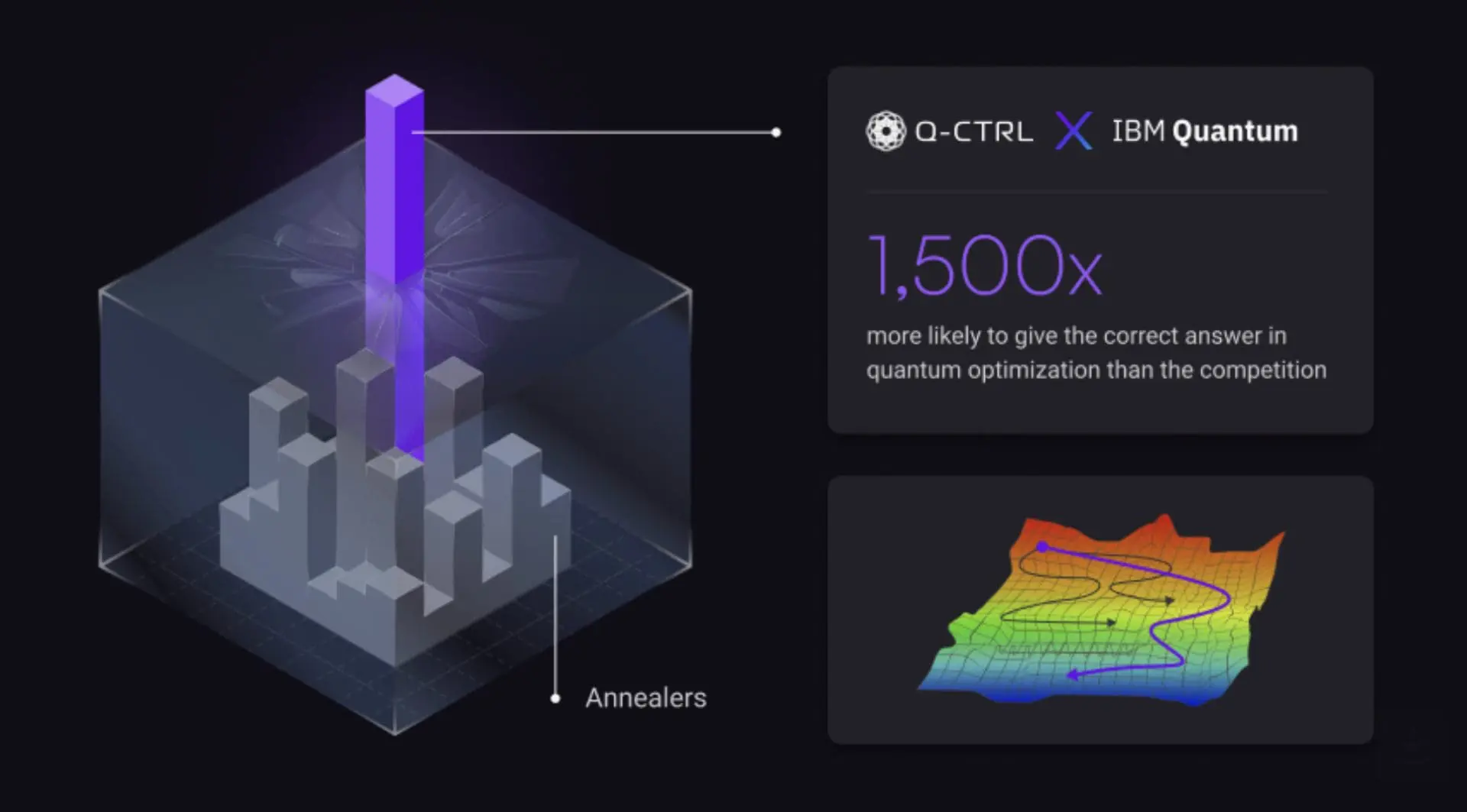
Direct tests showed that using Q-CTRL’s novel technology, a quantum optimization problem run on a 127-qubit IBM quantum computer was up to 1,500 times more likely than an annealer to return the correct result. This groundbreaking result on IBM’s hardware enables quantum optimization algorithms to more consistently find the correct solution to a range of challenging optimization problems at larger scales than ever before.
The results show that this combination could practically outperform published results from both trapped-ion devices and annealers by large margins for some problems. Not only can users now solve important problems that were previously out of reach, the dramatic boost in the likelihood of finding the correct solution translates directly into cost savings for users as fewer attempts are required to return the correct solution.
Industry Reactions and Future Implications
The implications of Q-CTRL’s results are significant for the quantum computing industry. Jay Gambetta, IBM Fellow and VP of IBM Quantum, expressed excitement about Q-CTRL’s progress in delivering practical solutions to industry-relevant optimization problems. David Shaw, Chief Quantum Analyst at Global Quantum Intelligence, noted that the results bring the quantum advantage closer, with a potentially useful number of qubits now in play.
Julian van Velzen, CTIO & Head of Capgemini’s Quantum Lab, emphasized the importance of performance management tools like those provided by Q-CTRL in addressing the noise challenge and unlocking the potential of quantum computing. The results demonstrate that effectively utilizing such tools can elevate the performance of the hardware to a new level and bring a potential quantum advantage years closer.
Q-CTRL, founded by Michael J. Biercuk in 2017, specializes in quantum control infrastructure software for R&D professionals and quantum computing end users. The company’s software delivers high-performance error-correcting and suppressing techniques and provides a unique capability accelerating the pathway to the first useful quantum computers and quantum sensors. Q-CTRL operates a globally leading quantum sensing division focused on software-level innovation for strategic capability. The company also developed Black Opal, an edtech platform that enables users to quickly learn quantum computing. Q-CTRL has been an inaugural member of the IBM Quantum Network startup program since 2018, and its performance management software now runs natively on IBM quantum computers.
External Link: Click Here For More