Q.ANT has secured 62 million in Series A funding, co-led by Cherry Ventures, UVC Partners, and imec.xpand, to accelerate commercialisation of its energy-efficient photonic processors for artificial intelligence and high-performance computing. Founded in 2018 as a spin-off from TRUMPF, the company is now shipping its Native Processing Servers to selected partners and operates a TFLN chip pilot line in collaboration with the Institute for Microelectronics Stuttgart. Q.ANT claims its technology delivers significantly higher performance and energy savings, and is currently offering early access evaluation of its servers.
Photonic Computing Attracts Substantial Investment Q.ANT has secured 62 million in Series A funding, co-led by Cherry Ventures, UVC Partners, and imec.xpand, with participation from several other investors including L-Bank and TRUMPF. This investment represents one of the largest deep tech funding rounds in Europe and is intended to accelerate the commercialization of its energy-efficient photonic processors. The funding will be used to scale production, advance next-generation processor development, expand the team, and establish a presence in the US to support customer deployments, signifying a substantial photonic computing investment.
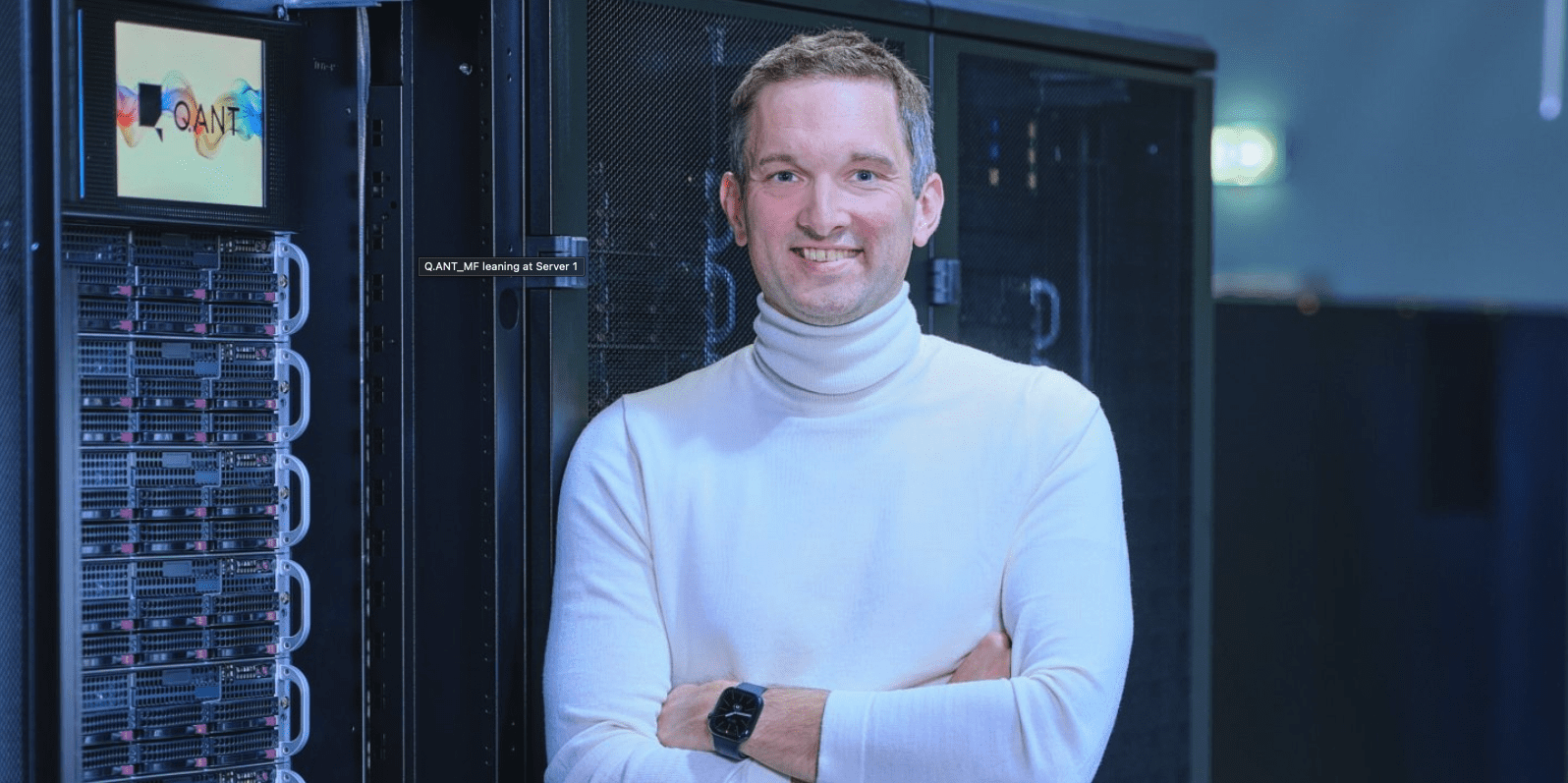
The company’s Native Processing Server (NPS) is now available for early access evaluation and integrates seamlessly into existing data centers as a plug-in co-processor. Q.ANT’s photonic chips aim to reduce data center operating costs while delivering the performance required for next-generation AI and HPC, offering up to 30 times greater energy efficiency and a potential 100-fold increase in data center capacity. The technology utilizes less energy and eliminates on-chip heat, paving the way for sustainable, high-performance computing and representing a key driver for increased photonic computing investment.
Q.ANT has strengthened its advisory board with Hermann Hauser, founder of ARM, and Hermann Eul, former member of the Infineon Management Board and former CVP & GM of Intel. The company operates its own Thin-Film Lithium Niobate (TFLN) chip pilot line in collaboration with the Institute for Microelectronics Stuttgart (IMS CHIPS) and is currently shipping Native Processing Servers to selected partners. Its Light Empowered Native Arithmetics (LENA) architecture delivers analog co-processing power optimised for complex computation, enabling energy-efficient performance for next-generation AI and HPC applications.
Addressing Scaling Challenges in AI and HPC Traditional CMOS chip technology is approaching its physical limits, leading to stagnating performance and unsustainable energy demands, with the International Energy Agency (IEA) forecasting that data center energy consumption could surpass Japan’s total annual electricity usage by 2026. Q.ANT addresses these challenges by employing photonic computing – utilising light instead of electricity – to achieve significantly higher performance and energy savings.
Founded in 2018 as a spin-off from TRUMPF, Q.ANT has developed the world’s first commercial photonic processor for real-world AI and HPC workloads. Built on Thin-Film Lithium Niobate (TFLN), the Q.ANT Native Processing Server integrates seamlessly into existing data centers as a plug-in co-processor, promising up to 30 times greater energy efficiency, 50 times performance improvement, and a potential 100-fold increase in data center capacity without requiring complex cooling systems.
Several industry figures have commented on Q.ANT’s potential, including Bob Sorensen, Senior VP for Research and Chief Analyst at Hyperion Research, who highlights Q.ANT’s success in addressing integration and precision challenges within photonic computing. Johannes Heinloth, Executive Board at L-Bank, emphasizes the company’s role in driving innovation and sustainable growth within the Baden-Württemberg region, while Berthold Schmidt, CTO at TRUMPF, underscores the company’s early support for Q.ANT’s vision and the transformative potential of its photonic processors.
Q.ANT’s Light Empowered Native Arithmetics (LENA) architecture delivers analog co-processing power optimised for complex computation, enabling energy-efficient performance for next-generation AI and HPC applications. The company operates its own TFLN chip pilot line in collaboration with the Institute for Microelectronics Stuttgart (IMS CHIPS) and is currently shipping Native Processing Servers to selected partners.
QANT’s Technology and Expansion Strategy Q.ANT’s technology is built on Thin-Film Lithium Niobate (TFLN), enabling the development of the world’s first commercial photonic processor designed for real-world artificial intelligence (AI) and high-performance computing (HPC) workloads. The company’s Native Processing Server (NPS) offers seamless integration into existing data centers as a plug-in co-processor, promising up to 30 times greater energy efficiency, 50 times performance improvement, and a potential 100-fold increase in data center capacity without necessitating complex cooling systems.
The company operates its own TFLN chip pilot line in collaboration with the Institute for Microelectronics Stuttgart (IMS CHIPS) and is currently shipping Native Processing Servers to selected partners. Q.ANT’s Light Empowered Native Arithmetics (LENA) architecture delivers analog co-processing power optimised for complex computation, enabling energy-efficient performance for next-generation AI and HPC applications.
Founded in 2018 as a spin-off from TRUMPF, Q.ANT has also strengthened its advisory board with Hermann Hauser, founder of ARM, and Hermann Eul, former member of the Infineon Management Board and former CVP & GM of Intel, leveraging their expertise in semiconductor scaling, industrialisation, and global commercialisation. Several industry figures have commented on Q.ANT’s potential, including Bob Sorensen, Senior VP for Research and Chief Analyst at Hyperion Research, who highlights Q.ANT’s success in addressing integration and precision challenges within photonic computing.
More information
External Link: Click Here For More