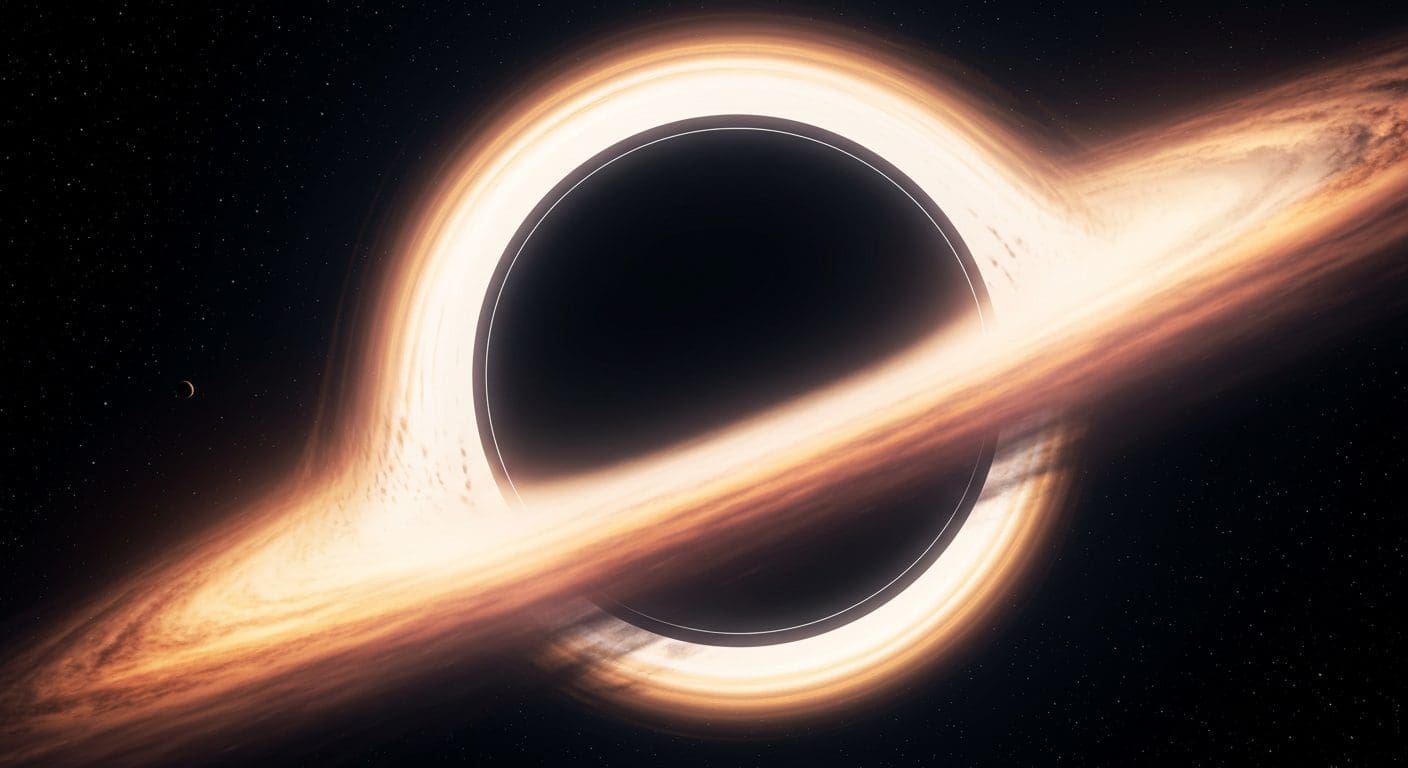
Cristian Joana presents Scalar Induced Gravitational Waves signaling Primordial Black Hole Dark Matter on April 25, 2025, exploring how gravitational waves could serve as signals from primordial black holes, which are potential dark matter candidates, with implications for upcoming LISA and PTA experiments.
Primordial black holes (PBHs) offer insights into early Universe physics, potentially linking inflationary dynamics to dark matter. Recent research analyzed PBH formation and its stochastic gravitational wave background, incorporating contributions from local non-Gaussianities. The findings highlight observable implications for space-based interferometers like LISA and pulsar timing arrays (PTAs), providing a bridge between cosmological models and experimental detection.
The article explores the potential role of primordial black holes (PBHs) in explaining dark matter through their connection to gravitational waves detected by pulsar timing arrays (PTAs). Here’s a structured summary of the key points:
- Primordial Black Holes and Dark Matter:
- PBHs, formed shortly after the Big Bang, are considered as a possible component of dark matter.
- Recent research by Ryoto Inui and C. Joana suggests that these black holes could significantly contribute to the universe’s dark matter.
- Methodology:
- The study uses peak theory to model PBH mass distribution, assuming they constitute all dark matter.
- Non-Gaussian corrections up to third order are included in perturbative calculations to enhance prediction accuracy.
- Gravitational Wave Observations:
- Pulsar timing arrays detect low-frequency gravitational waves, which could be produced by PBHs.
- The research bridges theoretical models with observational data from PTAs.
- Implications for Future Missions:
- The Laser Interferometer Space Antenna (LISA) will detect lower-frequency gravitational waves, aiding in testing PBH theories.
- A monochromatic power spectrum (single mass peak) doesn’t align with observed signals, but a broader mass distribution resolves this inconsistency.
- Conclusion:
- The study offers a promising path to confirm or refute PBHs as dark matter components.
- Future missions like LISA will be crucial in testing these theories and advancing our understanding of the universe’s enigmatic substance.
This research highlights the intersection of astrophysics, cosmology, and gravitational wave astronomy, providing a potential pathway to unravel the mystery of dark matter.
👉 More information
🗞 Scalar Induced Gravitational Waves signaling Primordial Black Hole Dark Matter
🧠 DOI: https://doi.org/10.48550/arXiv.2504.18237