As the threat of quantum computers looms large, post-quantum cryptography has become a pressing concern for ensuring secure data transmission. Traditional encryption algorithms are no longer considered secure, prompting the development of new solutions to address this potential threat. This paper analyzes the performance of quantum-secure encryption algorithms such as Kyber and Falcon on RISC-V architectures, highlighting the importance of considering multiple factors including algorithm performance, portability, and others. The use of PQClean, a tool offering both pure C and Neon versions, enables advanced optimizations by comparing differences between Neon and RISCV intrinsics in cryptographic design.
Can Post-Quantum Cryptography Ensure Secure Data Transmission?
Post-quantum cryptography has become a pressing concern in recent years, as the threat of quantum computers looms large. Traditional encryption algorithms are no longer considered secure, prompting the development of new solutions to address this potential threat. This paper aims to analyze the performance of quantum-secure encryption algorithms such as Kyber and Falcon on RISC-V architectures.
The choice of RISC-V as the research platform is significant, as it offers an open-source nature and scalability, providing a flexible environment for exploring and evaluating the performance of quantum-secure encryption algorithms. However, achieving a smooth transition from traditional encryption algorithms to post-quantum cryptography requires careful consideration of multiple factors, including algorithm performance, portability, and others.
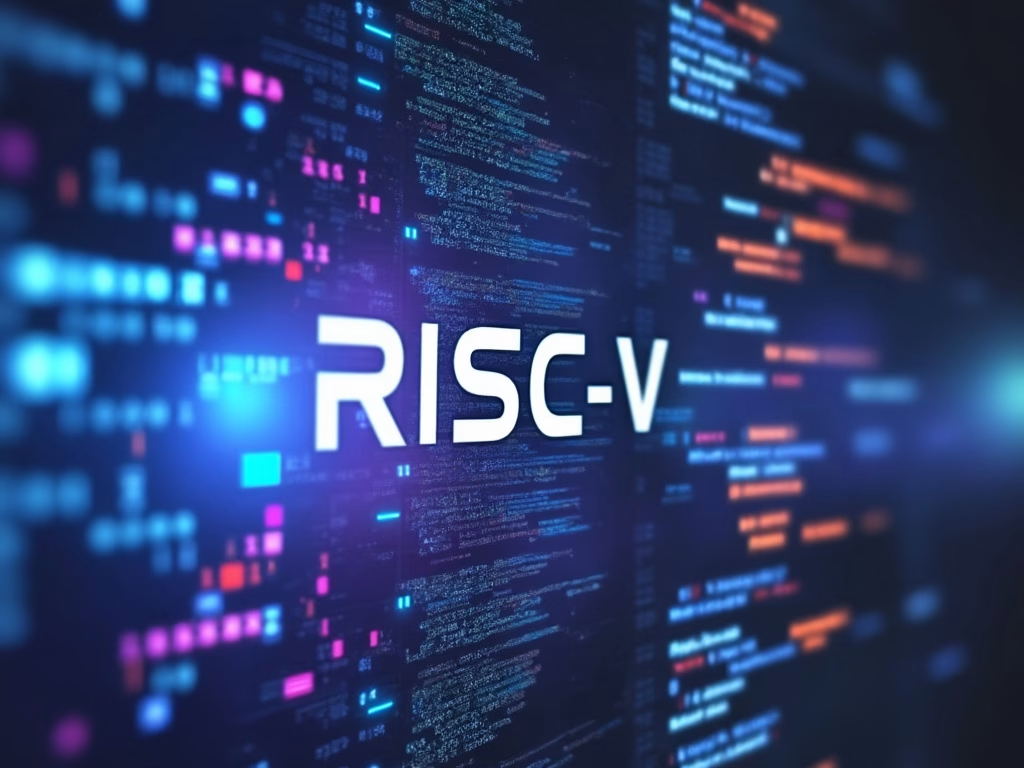
To better understand the performance and feasibility of these solutions, this paper conducts a detailed analysis of PQClean using SIMD Everywhere. PQClean offers not only a pure C version but also a Neon version, which can convert Neon intrinsics into RISC-V intrinsics, enabling further analysis of RISC-V code in PQC using the Neon version of PQClean.
The Need for Post-Quantum Cryptography
The threat of quantum computers has raised concerns about the security of traditional encryption algorithms. Quantum computers have the potential to break many encryption algorithms currently in use, making it essential to develop new solutions that can withstand this threat. Post-quantum cryptography offers a promising approach to ensuring secure data transmission.
Post-quantum cryptography is designed to be resistant to attacks from quantum computers. This requires the development of new cryptographic algorithms and protocols that can provide the same level of security as traditional encryption algorithms but are resistant to quantum attacks. The development of post-quantum cryptography is an active area of research, with many solutions being proposed by the scientific community.
RISC-V Architectures: A Flexible Platform for Post-Quantum Cryptography
RISC-V architectures offer a flexible platform for exploring and evaluating the performance of quantum-secure encryption algorithms. The open-source nature of RISC-V makes it an attractive choice for researchers, as it allows for easy modification and customization of the architecture.
The scalability of RISC-V is also significant, as it provides a flexible environment for exploring and evaluating the performance of quantum-secure encryption algorithms. This flexibility is essential for achieving a smooth transition from traditional encryption algorithms to post-quantum cryptography.
PQClean: A Tool for Post-Quantum Cryptography
PQClean is a tool that offers not only a pure C version but also a Neon version, which can convert Neon intrinsics into RISC-V intrinsics. This enables further analysis of RISC-V code in PQC using the Neon version of PQClean.
The use of SIMD Everywhere with PQClean provides advanced optimizations by comparing the differences between Neon and RISCV intrinsics in the cryptographic design. The entire experimental process was analyzed using LLVM and Spike, providing a comprehensive understanding of the performance and feasibility of post-quantum cryptography on RISC-V architectures.
Conclusion
Post-quantum cryptography is essential for ensuring secure data transmission in the face of quantum computers. RISC-V architectures offer a flexible platform for exploring and evaluating the performance of quantum-secure encryption algorithms. PQClean, with its pure C version and Neon version, provides a tool for post-quantum cryptography that can be used to analyze the performance and feasibility of these solutions.
The use of SIMD Everywhere with PQClean enables advanced optimizations by comparing the differences between Neon and RISCV intrinsics in the cryptographic design. The entire experimental process was analyzed using LLVM and Spike, providing a comprehensive understanding of the performance and feasibility of post-quantum cryptography on RISC-V architectures.
Future Work
Future work includes further optimizing the performance of PQClean using SIMD Everywhere and exploring other solutions for post-quantum cryptography. Additionally, evaluating the security of these solutions against quantum attacks is essential for ensuring secure data transmission in the face of quantum computers.
Publication Date: 2024-08-12
Authors: Liang-Ni Wang, Ju-Hung Li, Chung‐Ming Kuan, Yung-Hsiang Su, et al.
Source:
DOI: https://doi.org/10.1145/3677333.3678149