

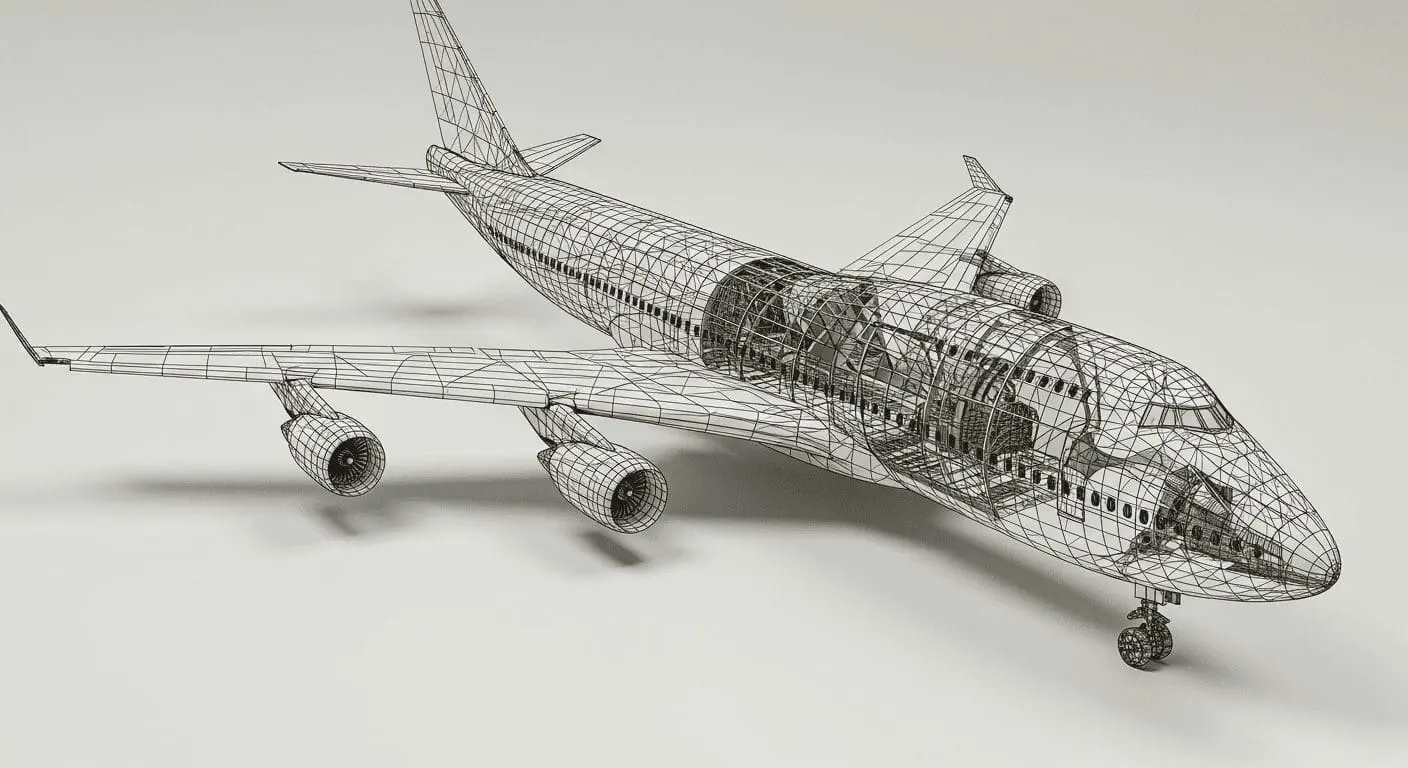
Rune Aero, an autonomous cargo aircraft startup targeting middle-mile routes, has achieved an 80% reduction in early development costs using Luminary Cloud’s virtual wind tunnel powered by Physics AI. This technology enables real-time aerodynamic testing and design optimization, allowing Rune Aero to double payload capacity and reduce fuel consumption by 50%. By leveraging GPU-native CFD simulations and NVIDIA Omniverse visualization, the startup has accelerated its aircraft development process, achieving significant improvements in efficiency and cost-effectiveness for air cargo operations.
Physics AI Accelerates Aircraft Design Time: Rune Aero Cuts Early Development Costs 80% with Luminary Cloud
Rune Aero has successfully implemented Physics AI technology to revolutionize their aircraft design process, achieving a significant 80% reduction in early development costs. By utilizing Luminary Cloud’s virtual wind tunnel, which integrates GPU-native CFD solvers with NVIDIA Omniverse for real-time simulations, Rune Aero was able to accelerate their design iterations and enhance performance metrics.
The integration of Physics AI allowed Rune Aero to explore numerous aircraft configurations rapidly, optimizing designs with immediate feedback. Key improvements included doubling payload capacity and reducing fuel consumption by 50%, demonstrating the efficiency gains from virtual simulations.
NVIDIA’s collaboration with Luminary Cloud leverages GPU acceleration to handle complex computations efficiently, crucial for large-scale simulations. This partnership underscores the importance of computational tools in advancing aerospace engineering practices.
Key Benefits of a Virtual Wind Tunnel for Designers and Engineers
The integration of Physics AI into aerospace engineering has enhanced design processes by enabling virtual simulations that reduce reliance on physical testing and associated costs. Luminary Cloud’s virtual wind tunnel technology utilizes GPU-native CFD solvers combined with NVIDIA Omniverse to facilitate real-time simulations, allowing engineers to efficiently test and refine designs.
Rune Aero achieved specific advancements through this technology, including a doubling of payload capacity and a 50% reduction in fuel consumption. These results highlight the tangible benefits of virtual wind tunnel simulations in optimizing aircraft performance.
While virtual wind tunnels offer high-fidelity testing environments, considerations remain regarding their accuracy compared to real-world testing. Ensuring safety and reliability without extensive physical validation is a concern, though verification processes likely mitigate these issues.
Scalability across different aircraft sizes and the computational resources required are important factors for wider adoption of this technology in the aerospace industry. Addressing these aspects will be key to realizing broader transformative impacts.
Engineers transitioning to these tools may face learning curves, potentially necessitating specialized training. Additionally, integrating Physics AI with other design elements like materials science is essential for creating comprehensive digital ecosystems.
In conclusion, while Physics AI presents advantages in efficiency and cost reduction, understanding its limitations, scalability, and integration needs provides a clearer picture of its potential in aerospace innovation.
More information
External Link: Click Here For More


