

Physicists have made a groundbreaking discovery, uncovering universal non-equilibrium quantum dynamics in randomly interacting spin models. This breakthrough study, published in Nature Physics, was led by Professors DU Jiangfeng and PENG Xinhua from the University of Science and Technology of China, along with theoretical groups from Tsinghua University and Fudan University.
The research team leveraged years of expertise in quantum control and simulation to design pulse sequences that precisely controlled 1H nuclear spins in adamantane powder. By realizing randomly interacting spin models with adjustable anisotropic parameters, they observed a new phenomenon – the spin depolarization dynamics showed a clear transition from monotonic to oscillatory decay as the anisotropic parameter changed.
This study has identified a new type of universality in non-equilibrium dynamics of quantum many-body systems, which are challenging to simulate on classical computers. The findings have significant implications for our understanding of complex systems and demonstrate how quantum information technology can be used to discover new physical laws.
Universal Non-Equilibrium Quantum Dynamics Uncovered in Randomly Interacting Spin Models
The study of non-equilibrium dynamics in quantum many-body systems has been a subject of intense research in recent years, driven by the potential applications in modern quantum science and technology. Despite the rich phenomena observed in synthetic quantum platforms such as ultracold atoms, superconducting qubits, trapped ions, NV centers, and NMR systems, simple and universal rules behind quantum non-equilibrium dynamics have remained elusive. A new study published in Nature Physics has made a significant breakthrough in this area by uncovering universal dynamics far from equilibrium in randomly interacting spin models.
Non-Equilibrium Dynamics: A Challenging Frontier
Non-equilibrium dynamics involve highly excited states beyond the conventional low-energy universality, making it challenging to identify simple and universal rules. The strongly correlating nature and complexity of non-equilibrium many-body systems, as well as the experimental challenges associated with high-precision quantum control of these systems, have hindered progress in this area. Solid-state nuclear spin systems, however, offer a natural and adjustable experimental platform for studying non-equilibrium dynamics of quantum many-body systems.
Experimental Platform: Randomly Interacting Spin Models
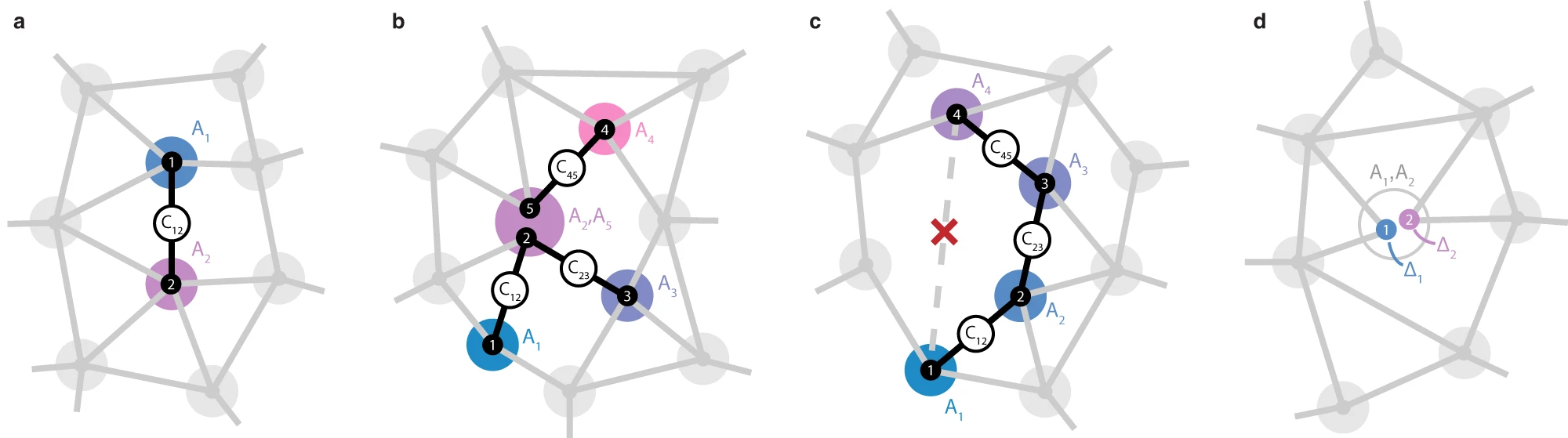
The researchers leveraged years of expertise in quantum control and quantum simulation of nuclear spin systems to design pulse sequences that high-precisely controlled the 1H nuclear spins in adamantane (C10H16) powder. This enabled the realization of randomly interacting spin models with adjustable anisotropic parameters, where the randomness arose from the random orientations between the lattice axes in different grains and the static magnetic field.
Observations: Universal Behavior in Spin Depolarization Dynamics
The researchers observed a new phenomenon where the spin depolarization dynamics showed a clear transition from monotonic to oscillatory decay as the anisotropic parameter changed. They found that the behavior of the spin depolarization dynamics could be universally described by two parameters. By comparing the experimental observations with several different theoretical approaches, the researchers offered a comprehensive theoretical explanation of this non-equilibrium quantum many-body dynamics.
Implications: A New Type of Universality and Insights for Other Physical Systems
This study has identified a new type of universality in non-equilibrium dynamics of quantum many-body systems that are challenging to simulate on classical computers. It serves as an excellent example of how quantum information technology can be used to discover new physical laws. The methods and techniques used in the experiments provide new insights for other physical systems, such as ultracold atoms or molecules and NV center ensembles. The research significantly enhances our understanding of complex systems, potentially sparking widespread interest across various fields of physics.
Conclusion
In conclusion, this study has made a significant breakthrough in uncovering universal dynamics far from equilibrium in randomly interacting spin models. The identification of a new type of universality in non-equilibrium dynamics of quantum many-body systems has the potential to spark widespread interest across various fields of physics and drive further research in this area.
External Link: Click Here For More


