
Researchers at Aalto University’s Department of Applied Physics have made a groundbreaking discovery, creating “light hurricanes” that could revolutionize how we transmit data. Led by Professor Päivi Törmä’s Quantum Dynamics group, Doctoral Researchers Kristian Arjas and Jani Taskinen developed a new method to create tiny vortices of light using metallic nanoparticles and electric fields.
Based on quasicrystal design, this innovative approach can theoretically support any vortex, opening up new possibilities for transmitting information. The team’s discovery can increase data transmission capacity by 8 to 16 times, allowing for more efficient communication through optic fibers. While practical applications are still years away, this fundamental step forward in physics could lead to new ways of sending and receiving information.
Harnessing the Power of Light Hurricanes for Data Transmission
The increasing demand for higher information capacity has led researchers to explore innovative ways of encoding and transmitting data. A recent breakthrough by physicists at Aalto University’s Department of Applied Physics has opened up new possibilities in this field. By creating tiny hurricanes of light, known as vortices, they have discovered a method to carry vast amounts of information.
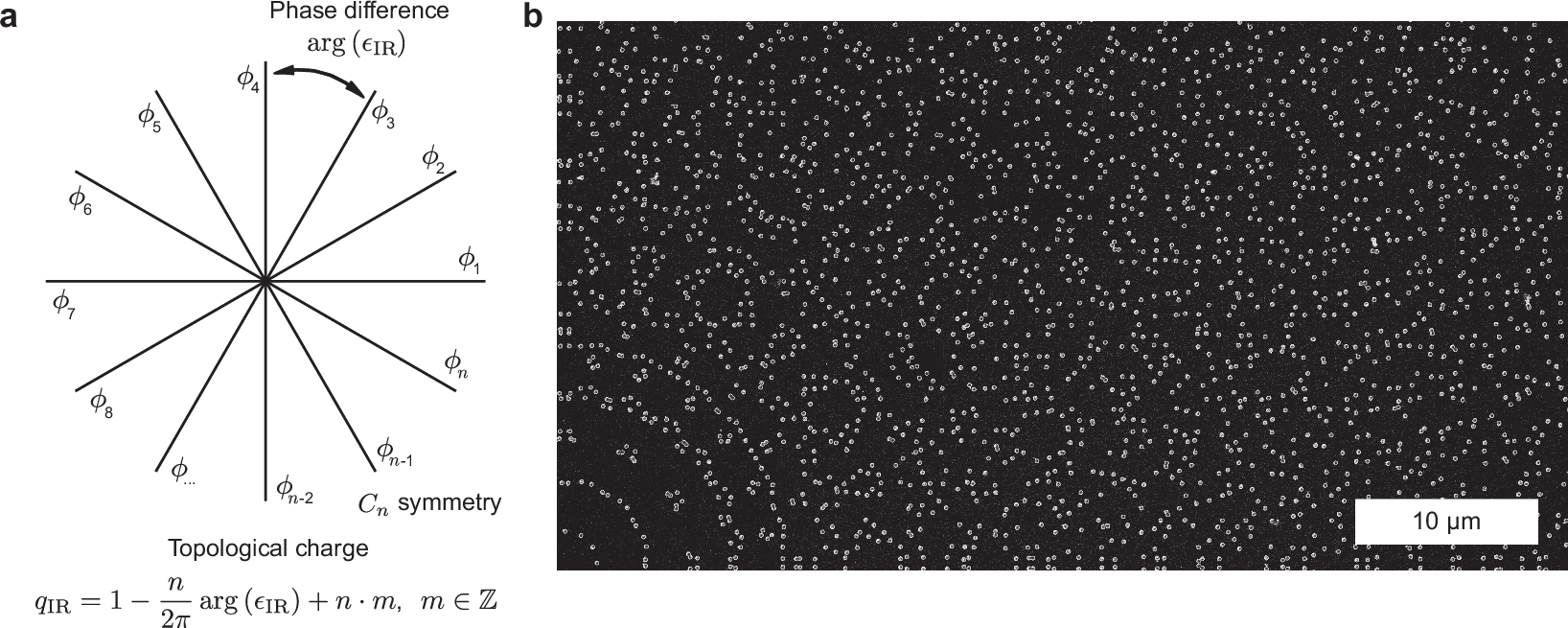
The research team, led by Professor Päivi Törmä, designed a quasicrystal structure that allows for the creation of any kind of vortex. This achievement represents a fundamental step forward in physics and has the potential to revolutionize the way we transmit information. The quasicrystal design method is based on manipulating metallic nanoparticles that interact with an electric field.
Understanding Vortices: Symmetry and Rotationality
Vortices are light hurricanes characterized by a calm and dark center surrounded by a ring of bright light. The symmetry of the structure producing these vortices plays a crucial role in determining the type of vortex that can appear. Previous research has shown that particles arranged in squares produce single vortices, while hexagons produce double vortices, and more complex vortices require at least octagonal shapes.
The Aalto University team’s quasicrystal design is unique in that it falls halfway between order and chaos, allowing for the creation of geometric shapes that can support any kind of vortex. This breakthrough has significant implications for the study of light and its applications.
Manipulating Metallic Nanoparticles
To create their unique design, the researchers manipulated 100,000 metallic nanoparticles, each roughly the size of a hundredth of a single strand of human hair. The key to their success lay in finding where the particles interacted with the desired electric field the least instead of the most.
By introducing particles into the “dead spots” of the electrical field, they were able to select the field with the most interesting properties for applications. This approach allowed them to unlock a method for creating vortices that can carry vast amounts of information.
Potential Applications and Future Research Directions
The discovery opens up new avenues for research in the active field of topological study of light. It also represents the early steps towards developing a powerful way of transmitting information in domains where light is needed to send encoded information, including telecommunications.
One potential application of this technology is the ability to transmit much more information at once through optic fiber cables. The researchers estimate that this method could allow for 8 to 16 times the amount of information currently transmitted over optic fiber.
While practical applications and scalability of the team’s design are likely to take years of engineering, the Quantum Dynamics group at Aalto University is already exploring other research directions, including superconductivity and improving organic LEDs. The OtaNano research infrastructure for nano-, micro- and quantum technologies played a crucial role in their pioneering study.
The research was published in Nature Communications, highlighting the significance of this breakthrough in the field of physics and its potential to revolutionize data transmission.
External Link: Click Here For More