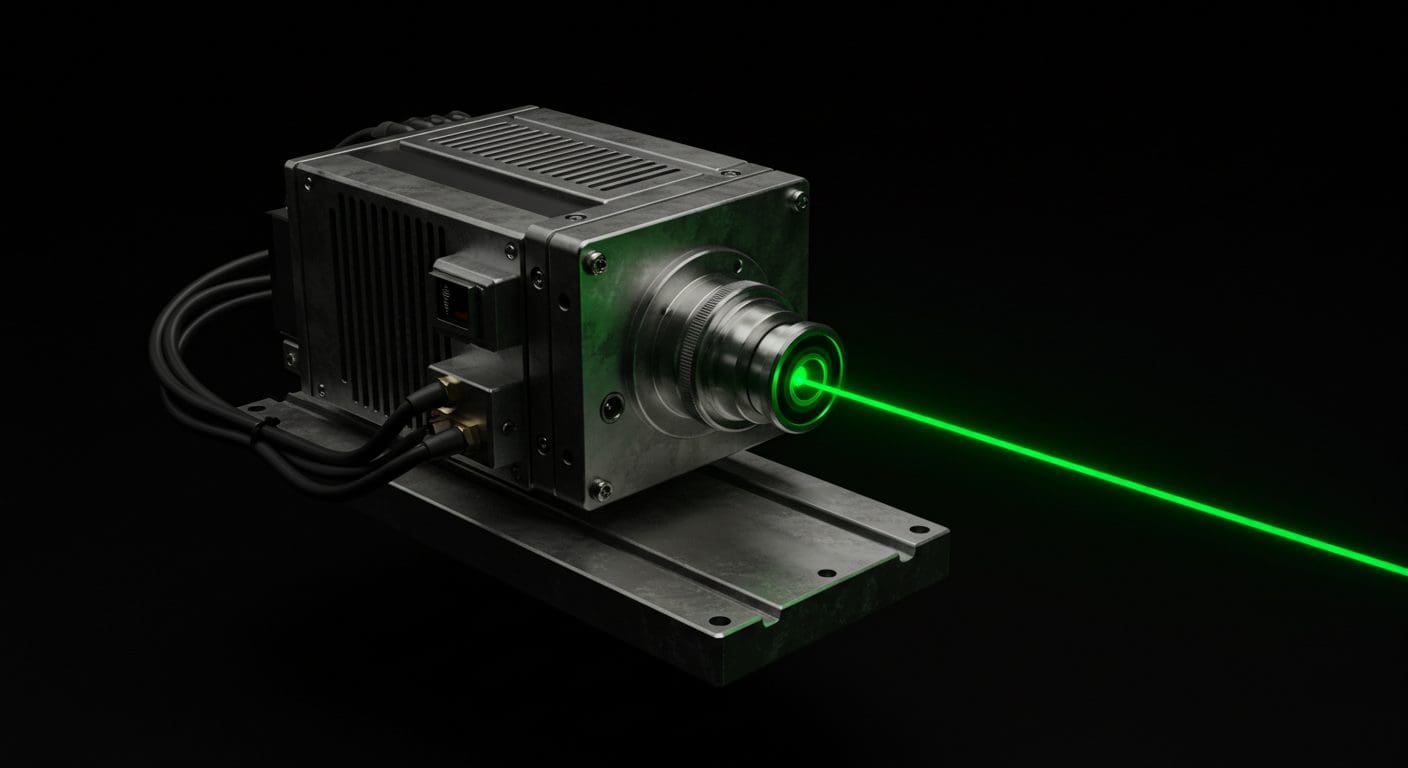
Frequency-agile lasers operating in the blue part of the spectrum are essential components for advances in diverse fields, including optical communications, atomic clocks and novel computing technologies. Anat Siddharth, Asger B. Gardner, and Xinru Ji, along with colleagues at EPFL and Purdue University, now demonstrate the first fully integrated blue laser capable of both rapid frequency tuning and exceptionally low noise. The team achieves this breakthrough by combining a gallium nitride laser diode with a silicon nitride microresonator, creating a compact and robust device that overcomes limitations in existing semiconductor materials. This new laser exhibits a remarkably narrow linewidth and delivers significant optical power, while integrated piezoelectric actuators allow for precise and high-speed frequency control, opening up possibilities for applications ranging from underwater communication to advanced scientific experiments.
Silicon Nitride Waveguide Self-Injection Locking Challenges
This research investigates self-injection locking (SIL) in a blue laser built using ultra-thin silicon nitride (Si3N4) waveguides, aiming for stable and tunable laser operation. The 25-nanometer Si3N4 platform presents challenges due to weaker optical confinement, leading to increased light loss and a narrower range of frequencies the laser can lock onto. Simulations and experiments demonstrate that while this platform suffers from higher bending losses compared to a 50-nanometer version, these limitations are not fundamental and can be overcome with improved design, such as increasing the quality of the microresonator and optimizing the loop mirror. This research highlights the trade-offs between waveguide thickness and performance, emphasizing the importance of careful design optimization for ultra-thin platforms. Stable, tunable lasers based on Si3N4 have potential applications in optical communications, sensing, and spectroscopy.
Hybrid Integration of Blue Photonic Laser
Researchers have developed a novel blue photonic integrated laser, overcoming the challenges of creating efficient blue lasers in a compact package. This laser combines a gallium nitride laser diode with a silicon nitride microresonator, creating a robust device capable of both frequency agility and low noise. The team integrated aluminum nitride piezoelectric actuators directly onto the photonic circuitry, allowing for rapid and accurate tuning of the laser’s output frequency, enabling the generation of linear frequency chirps crucial for advanced applications. The researchers demonstrated the laser’s potential for high-data-rate communication by encoding information onto these frequency chirps and explored its utility in aerosol sensing, creating a LiDAR system that uses the frequency-agile laser to measure airborne particles.
Hybrid Laser Integrates Blue-Ultraviolet Spectrum
Researchers have created the first integrated blue laser operating in the ultraviolet-to-blue spectral range, a significant advancement for technologies like optical communications, atomic clocks, and novel computing platforms. This laser combines low noise performance with fast frequency tuning in a compact device, achieved through a hybrid integration approach combining a gallium nitride laser diode with a silicon nitride microresonator. The team demonstrated a substantial improvement in laser coherence by utilizing an ultra-thin silicon nitride waveguide, reducing scattering losses and achieving a high optical quality factor. This reduction in loss directly translates to a narrower laser linewidth and significantly improved noise performance, delivering over two milliwatts of optical power with high suppression of unwanted modes. Furthermore, the researchers integrated aluminum nitride piezoelectric actuators directly onto the photonic chip, enabling rapid and precise tuning of the laser’s frequency.
Integrated Blue Laser with Agile Frequency Tuning
This work demonstrates the first photonic integrated blue laser operating near 461 nanometers, simultaneously achieving both frequency agility and low phase noise. The laser combines a gallium nitride diode with a silicon nitride microresonator, resulting in a sub-30 kHz linewidth and over one milliwatt of optical power. This integration leverages ultra-low loss waveguides, specifically 25-nanometer thick silicon nitride, to minimise scattering and enhance laser coherence. The researchers successfully integrated aluminum nitride actuators to enable high-speed tuning of the laser frequency, achieving linear chirps up to 900 megahertz at repetition rates up to one megahertz with minimal nonlinearity. Demonstrations in underwater communication and atmospheric sensing highlight the potential of this technology for emerging applications in coherent communication and sensing. While the current 25-nanometer waveguide design exhibits a slightly reduced frequency excursion compared to a 50-nanometer version, the authors note this can be readily improved by optimising waveguide geometry.
👉 More information
🗞 Narrow-linewidth, piezoelectrically tunable photonic integrated blue laser
🧠 ArXiv: https://arxiv.org/abs/2508.02568