
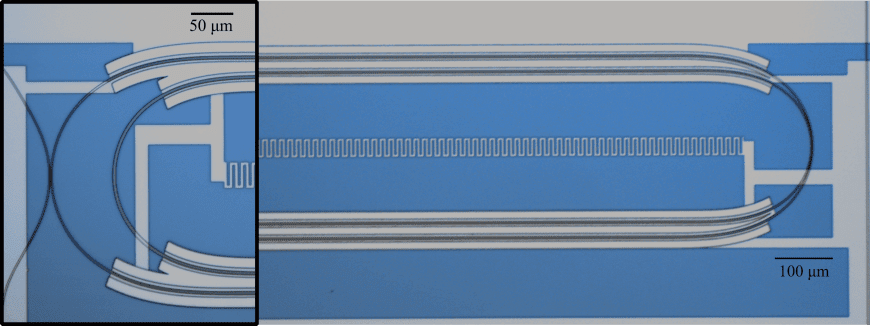
Applied physicists at Harvard’s John A. Paulson School of Engineering and Applied Sciences (SEAS) have developed a microwave-optical quantum transducer. This photon router is designed to integrate superconducting microwave qubits with optical signals over long distances. Marko Lonar spearheaded this breakthrough device. It bridges the energy gap between microwave and optical photons and enables control of microwave qubits using light.
This innovation, published in Nature Physics, facilitates modular quantum computing networks. It leverages existing fiber-optic infrastructure, uses lithium niobate to link resonators, and eliminates bulky cables. This advance supports scalable quantum communication systems.
Photon Router Breakthrough for Quantum Networks
Researchers at Harvard SEAS have developed a microwave-optical quantum transducer, a device that functions as a photon router. This innovation bridges the energy gap between microwave and optical photons. It enables the control of superconducting qubits using optical signals from distant locations. The transducer facilitates scalable and efficient quantum networks by leveraging existing fibre-optic infrastructure.
The device operates by linking a microwave resonator with two optical resonators. This setup allows for the exchange of energy through lithium niobate, which is its base material. This design eliminates bulky microwave cables and utilizes light for communication. The transducer’s compact size and efficient structure make it suitable for integration into quantum computing systems.
This advancement addresses current challenges in quantum computing. It particularly targets the high-temperature requirements for superconducting qubits and the need for scalable systems. The transducer enables control with optical signals. It supports more efficient and scalable quantum networks. This development paves the way for future advancements in quantum technology.
Bridging Microwave-Optical Photon Energy Gap
The microwave-optical quantum transducer developed by researchers at Harvard SEAS operates by linking a microwave resonator with two optical resonators. This configuration facilitates the exchange of energy through lithium niobate, enabling seamless communication between microwave and optical photons. The device’s compact design allows efficient integration into existing quantum computing systems, eliminating bulky microwave cables.
One significant advantage of this transducer is its ability to leverage existing fiber-optic infrastructure, which supports scalable and efficient quantum networks. The transducer mitigates challenges such as high-temperature requirements and physical infrastructure complexity by controlling superconducting qubits using optical signals.
Superconducting Qubit Challenges and Solutions
Superconducting qubits require operation at near-absolute-zero temperatures to maintain coherence, a challenge for large-scale integration. These systems often rely on microwave signals for control and readout, which necessitate physical connections such as bulky cables, complicating scalability. The microwave-optical quantum transducer addresses these limitations by enabling optical control of superconducting qubits, reducing reliance on physical infrastructure and improving system design flexibility.
Device Design and Functionality

The transducer’s design involves linking a microwave resonator with two optical resonators, facilitating energy exchange through lithium niobate. This setup eliminates the need for bulky microwave cables, instead utilizing light for communication. The device’s compact size and efficient structure make it suitable for integration into quantum computing systems.
The microwave-optical quantum transducer has significant implications for modular quantum computing. By enabling optical control of superconducting qubits, the transducer reduces reliance on physical infrastructure such as bulky cables, improving system design flexibility and scalability. This advancement supports the development of more practical and scalable quantum systems, addressing key challenges in quantum computing.
More information
External Link: Click Here For More