

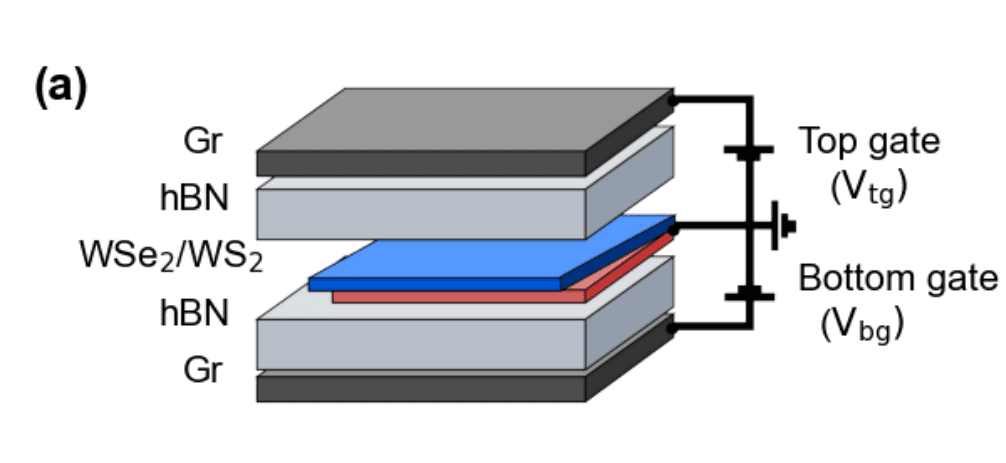
Controlling the flow of electrons is central to modern electronics, and scientists continually seek new ways to rapidly switch materials between conducting and insulating states. Yiliu Li, Esteban Rojas-Gatjens, and Yinjie Guo, along with colleagues at Columbia University and beyond, now demonstrate a remarkably swift transition from a metallic to an insulating state in layered materials called moiré devices. The team achieves this transformation using light to inject energy into the material, creating a correlated insulator that persists for longer than a few microseconds. This discovery establishes a new and effective method for controlling electronic behaviour in these van der Waals heterostructures, potentially paving the way for faster and more efficient electronic components.
Ultrafast Photoexcitation in Twisted WSe₂ Heterostructures
This research investigates the ultrafast dynamics and correlated electronic behaviour in twisted WSe₂ and WSe₂/WS₂ moiré heterostructures. Scientists aimed to understand how light excitation affects the electronic structure and how this is influenced by the number of charge carriers and temperature. The team observed a strong, rapid change in light absorption following excitation, indicating the creation of electron-hole pairs and subsequent electronic excitation, with the strength of this effect sensitive to the carrier density within the material. The research demonstrates that the speed and extent of this change depend strongly on the carrier density, with specific doping levels enhancing or suppressing the effect, and that initial dynamics are dominated by the rapid relaxation of hot carriers and coherent oscillations, followed by the formation and decay of electron-hole pairs. Furthermore, the study reveals that higher temperatures reduce the observed signal, indicating a significant role for thermal effects, and links these dynamics to the unique electronic structure of the moiré heterostructure, including the formation of flat bands and enhanced electron-electron interactions.
Photo-Thermionic Control of Correlated Insulators
Scientists pioneered a novel method to control correlated electronic states in van der Waals heterostructures, demonstrating ultrafast metal-to-insulator transitions using photo-thermionic hole injection from graphite gates. The study employed time-resolved reflectance spectroscopy to probe the dynamics of correlated insulators within WS₂/WSe₂ and WSe₂/WSe₂ moiré devices, selectively exciting these states with a pump photon energy below the material’s optical gap but above the correlation gap. Researchers utilized the WSe₂ moiré exciton as a sensitive probe of the dielectric environment, tracking changes indicative of insulator formation and melting, with similar results observed in the WS₂ exciton and trion spectral regions. By applying varying gate voltages to tune the filling factor, scientists monitored the resulting changes in the exciton oscillator strength, which scales inversely with the effective dielectric constant. Transient reflectance measurements revealed that at low excitation levels, the pump light disrupted correlations throughout the doping region, while at higher energies, a reversal occurred, manifesting as a photoinduced absorption feature indicative of a metal-to-insulator transition.
Ultrafast Switching Between Insulator and Metal States
Scientists have demonstrated ultrafast control of correlated electronic states in van der Waals heterostructures, achieving a metal-to-insulator transition (MIT) using photo-thermionic hole injection. This work establishes a mechanism for switching between metallic and insulating states with unprecedented speed, exceeding microseconds in metastable correlated insulators. The research team utilized dual-gated tungsten diselenide (WSe₂) and tungsten disulfide/tungsten diselenide (WS₂/WSe₂) moiré devices to achieve this control, leveraging photoexcitation to manipulate the electronic properties of the materials. Experiments revealed distinct correlated insulator states in the WS₂/WSe₂ heterostructure, identified through photoluminescence measurements as a function of gate voltage, with four distinct states corresponding to electron and hole correlated insulators at integer fillings, and critical temperatures reaching approximately 150 Kelvin.
Time-resolved reflectance spectroscopy was employed to probe the formation and melting of these correlated states, utilizing a pump photon energy of 1. 46 electron volts. At low excitation densities, the team observed a characteristic decrease in reflectance, indicating the melting of correlated insulators, while at a higher pulse energy density, a reverse effect emerged, a photoinduced absorption feature signifying the transition to a correlated insulator state. This photoinduced absorption, appearing as early as 5 picoseconds after excitation, confirms the MIT.
Ultrafast Control of Correlated Electronic States
This research demonstrates the ultrafast control of correlated electronic states in van der Waals heterostructures, achieving a metal-to-insulator transition using photo-thermionic hole injection. Scientists successfully induced this transition in gate-doped WS₂/WSe₂ and WSe₂/WSe₂ moiré devices, creating metastable insulating states that persist for longer than microseconds. This represents a significant advance as previous demonstrations primarily focused on transitioning from an insulating to a metallic state, but not the reverse without initial ordering. The team’s findings establish a viable mechanism for rapidly manipulating correlated electron behaviour within these materials, opening possibilities for novel electronic devices and control schemes. By carefully controlling the injection of holes using light, they effectively altered the material’s electronic properties on an incredibly fast timescale.
👉 More information
🗞 Photoinduced Metal-to-Insulator Transitions in 2D Moiré Devices
🧠 ArXiv: https://arxiv.org/abs/2510.21005

