

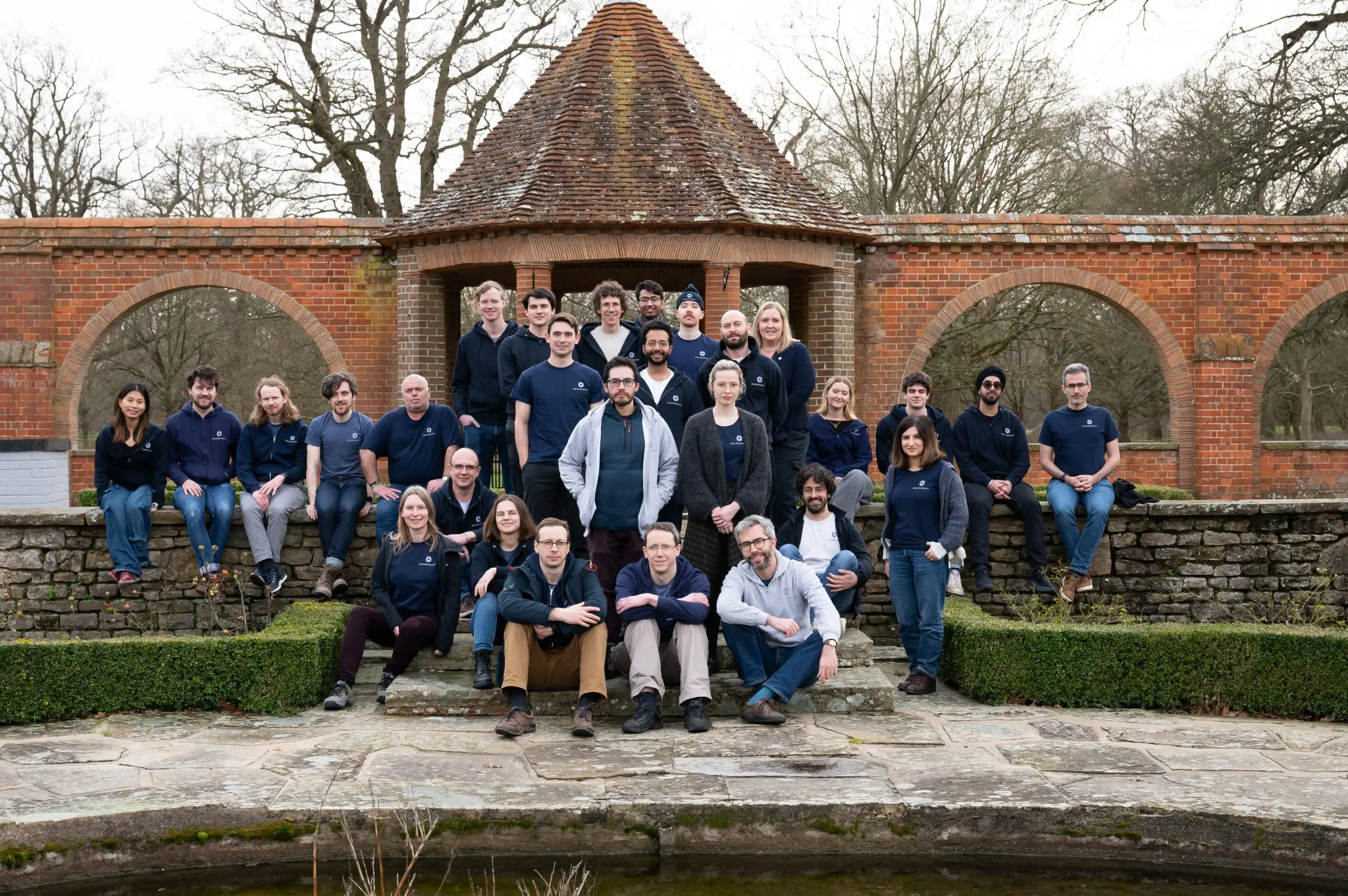
Phasecraft, Inc. announced on September 2nd , 2025, that it has secured $34 million in a Series B round to accelerate the development of quantum algorithms that can be deployed on today’s noisy intermediate‑scale quantum (NISQ) devices. The funding was co‑led by the early‑stage investment fund Plural, the deep‑tech venture firm Playground Global, and Novo Holdings’ newly launched Quantum Fund, which made its first direct investment in quantum software. Existing investors LocalGlobe, AlbionVC, and Parkwalk Advisors also participated, bringing the company’s total capital raised to over $50 million, including grant funding.
The capital will be used to double down on Phasecraft’s hardware‑agnostic approach, which rewrites quantum algorithms so that they can run efficiently on a variety of NISQ machines from Google, IBM, Quantinuum and QuEra. According to co‑founder and chief executive Ashley Montanaro, the company’s “quantum‑enhanced approach uses quantum computing as a partner to standard computing to overcome its limitations and enables today’s NISQ devices to tackle previously inaccessible problems.” Montanaro added that the team is already delivering “meaningful results now, whether it’s simulating the physics of complex materials or optimising the structure of a large energy network.” The new funding will support the expansion of Phasecraft’s U.S. operations and the scaling of industrial collaborations with end-users, including Johnson Matthey, Oxford PV, the UK’s National Energy System Operator (NESO), and BT.
Ian Hogarth, partner at Plural, praised the company’s efficiency gains, noting that Phasecraft’s algorithms are “more efficient by factors of millions” and are already helping solve real‑world problems in material discovery and energy‑network optimisation. Peter Barrett of Playground Global highlighted the transformative potential of Phasecraft’s work for chemistry, materials science and medicine. At the same time, Jeroen Bakker of Novo Holdings emphasised the life sciences impact, describing the Quantum Fund’s investment as a “first quantum software investment” that could “reduce R&D timelines from decades to years.” Together, these investors underscore Phasecraft’s mission to bring quantum advantage to industry faster, leveraging NISQ quantum algorithms to bridge the gap between theoretical promise and practical application.
Hardware Agnostic Algorithms Enable NISQ Devices to Solve Material Discovery and Energy Network Optimisation
Phasecraft, the quantum‑algorithms specialist founded in 2019 by Toby Cubitt, Ashley Montanaro and John Morton, announced on 2 September 2025 that it had secured a $34 million Series B round. The funding was co‑led by the Tallinn‑based venture fund Plural, the Palo Alto‑based Playground Global and the Novo Holdings Quantum Fund, marking the first direct quantum‑software investment from Novo. Existing backers LocalGlobe, AlbionVC and Parkwalk Advisors also participated, bringing the company’s total capital to more than $50 million once grant contributions are included.
Phasecraft’s core proposition is a hardware‑agnostic redesign of quantum algorithms that can be deployed on today’s noisy intermediate‑scale quantum (NISQ) machines. The team, drawing on decades of research at University College London and the University of Bristol, has engineered algorithms that minimise gate depth and error rates, enabling practical simulations of complex materials and the optimisation of large-scale energy networks without waiting for fault-tolerant hardware. The company’s approach treats quantum processors as complementary partners to classical systems, a strategy that has already produced measurable gains in simulation accuracy and optimisation speed.
The firm’s collaborations span a range of industrial partners. In the United Kingdom, Phasecraft collaborates with Johnson Matthey on advanced alloy design, Oxford PV on next-generation solar-cell architectures, the National Energy System Operator (NESO) on grid-optimisation problems, and BT on telecommunications infrastructure. In the United States, the company is expanding its presence to support similar projects, leveraging its NISQ quantum algorithms to accelerate material discovery and energy‑network optimisation across the continent. Partnerships with leading quantum‑hardware providers—Google, IBM, Quantinuum and QuEra—ensure that Phasecraft’s algorithms can run efficiently on a variety of NISQ devices.
The infusion of capital will double the pace of research and development, allowing Phasecraft to scale its industrial collaborations and deepen its integration with hardware vendors. The company plans to allocate a significant portion of the new funds to expanding its U.S. operations, a move that will bring its expertise closer to key end-users and accelerate the deployment of quantum-enhanced solutions in real-world settings.
Investor reactions underscore the perceived transformative potential of Phasecraft’s hardware‑agnostic methodology. Ian Hogarth of Plural highlighted the company’s ability to produce algorithms that are “orders of magnitude more efficient” and to solve tangible problems in material science and energy optimisation. Peter Barrett of Playground Global remarked that Phasecraft’s advances are poised to shift the field from discovery to design, heralding a new era of dynamism in chemistry, materials science and medicine. Jeroen Bakker of Novo Holdings noted that the Quantum Fund’s investment is a first for the firm, emphasising the promise of quantum algorithms to shorten drug‑development timelines from decades to years.
As quantum computing hardware and software converge toward commercial viability, Phasecraft’s ultra-efficient, hardware-agnostic algorithms position the company at the forefront of this transition. By harnessing NISQ quantum algorithms, Phasecraft is turning theoretical promise into tangible applications, enabling industries to tackle previously intractable problems in material discovery and energy‑network optimisation.
Major Investors, Including Plural Playground Global and Novo Holdings Signal Confidence in Quantum Software Market
Phasecraft, the quantum‑algorithms specialist founded in 2019 by Toby Cubitt, Ashley Montanaro and John Morton, announced on 2 September 2025 that it had closed a Series B round of $34 million. The funding was co‑led by Plural, the early‑stage fund that has already backed a number of high‑growth European technology companies, and by Playground Global, a deep‑tech venture arm with $1.2 billion in assets under management. Novo Holdings, the investment vehicle of the Novo Nordisk Foundation, made its first direct investment in quantum software through its new Quantum Fund. The round also attracted existing backers LocalGlobe, AlbionVC and Parkwalk Advisors, bringing Phasecraft’s total capital raised to more than $50 million when grant funding is included.
Plural, launched in June 2022 and headquartered in Tallinn, Estonia and London, UK, has positioned itself as a catalyst for companies that aim to deliver GDP‑level impact across Europe. Its investment in Phasecraft signals a belief that the company’s hardware‑agnostic algorithms can accelerate the transition from experimental quantum demonstrations to commercial applications. Playground Global, founded in 2015 and based in Palo Alto, California, is known for providing hands‑on technical and operational support to early‑stage startups tackling fundamental challenges in compute, automation and the energy transition. Novo Holdings, which manages the assets of the Novo Nordisk Foundation and reported total assets of 142 billion as of year‑end 2024, has a long‑term investment focus in life sciences and sustainability. Its entry into quantum software underscores the sector’s growing relevance to drug discovery and other health‑related fields.
Ian Hogarth, partner at Plural, said: “Phasecraft is revolutionising the quantum landscape in ways that were previously thought impossible. Its hardware‑agnostic approach means it’s been able to work with several of the world’s most powerful computing devices, creating algorithms that are more efficient by factors of millions and that are now helping to solve real‑world problems like material discovery and the optimisation of our energy networks. It’s to the credit of the best‑in‑class team that Ashley and Toby have built that some of the biggest tech companies in the world, including Google and IBM, see Phasecraft as the way to accelerate the impact of their own devices. I’m incredibly excited to continue supporting Phasecraft not just as Chairman, but as an investor as well.”
Peter Barrett, general partner at Playground Global, added: “Today, we are living in a world without quantum materials, oblivious to the unrealised potential and abundance that lie just out of sight. With advancements in quantum algorithms from Phasecraft, we are poised to shift from discovery to design, entering an era of unprecedented dynamism in chemistry, materials science, and medicine.”
Jeroen Bakker, partner at Novo Holdings, remarked: “The impact quantum computing will have on the world is undeniable, particularly in the life sciences. Quantum algorithms offer tremendous potential for molecular simulation to predict drug efficacy and optimise design. This is why we are excited to make our first quantum software investment from our new Quantum Fund in Phasecraft. We’re excited about Phasecraft’s ability to enable healthcare breakthroughs that could save millions of lives while reducing R&D timelines from decades to years.”
Phasecraft’s core offering is a suite of ultra‑efficient, hardware‑agnostic quantum algorithms that operate on today’s noisy intermediate‑scale quantum (NISQ) devices. By treating quantum computing as a partner to conventional processors, the company’s methods enable the simulation of complex materials, the optimisation of chemical reaction pathways, the design of energy‑grid topologies and the routing of logistics networks at a scale that would be infeasible on classical hardware alone. The algorithms have already been deployed with industry partners such as Johnson Matthey, Oxford PV, the UK’s National Energy System Operator (NESO) and BT, and are supported by hardware vendors including Google, IBM, Quantinuum and QuEra.
The fresh capital will be directed toward scaling Phasecraft’s research and development, expanding its U.S. footprint to bring its expertise closer to key end users, and deepening industrial collaborations that translate algorithmic advances into market‑ready solutions. By accelerating the development of NISQ quantum algorithms, Phasecraft aims to bring quantum advantage to sectors that have long awaited practical quantum‑enhanced tools.
The convergence of capital, technology and industry partnership embodied in this Series B round illustrates a growing confidence in the quantum software market. Investors from across the technology and life‑science spectrum are recognising that hardware‑agnostic algorithms, capable of extracting value from imperfect quantum machines, can deliver tangible benefits in the near term. As Phasecraft moves forward, its ability to translate theoretical promise into operational outcomes will likely shape the trajectory of quantum computing’s commercialisation.
Partnerships with Google, IBM, Quantinuum and Industry Leaders Such As Johnson Matthey Oxford PV and BT Drive Early Commercialisation
Phasecraft’s core technology is a suite of ultra‑efficient, hardware‑agnostic quantum algorithms that treat quantum processors as a complementary partner to conventional computing. By designing algorithms that can tolerate the noise and limited qubit counts of current NISQ machines, the company enables tasks such as material simulation, chemical reaction optimisation, and energy‑grid topology design to be tackled at scales that would be impossible on classical hardware alone. The firm’s approach has already been validated on devices supplied by Google, IBM, Quantinuum and QuEra, with each partnership demonstrating algorithmic speed‑ups that “are more efficient by factors of millions,” according to Ian Hogarth, partner at Plural.
The Series B funding will also deepen Phasecraft’s industrial collaborations, most notably with Johnson Matthey, a specialty‑materials developer based in the United Kingdom; Oxford PV, a solar‑cell manufacturer headquartered in Oxford; BT, the UK’s leading telecommunications provider; and the National Energy System Operator (NESO), which manages the country’s energy network. These partnerships are designed to translate Phasecraft’s NISQ quantum algorithms into real‑world solutions that can be deployed in existing industrial pipelines. The company’s CEO, Ashley Montanaro, noted that “our algorithms are delivering meaningful results now, whether it’s simulating the physics of complex materials or optimizing the structure of a large energy network.” Montanaro added that the backing of investors such as Plural, Playground Global and Novo Holdings will accelerate the transition from laboratory demonstrations to commercial applications.
Investor comments underscore the perceived transformative potential of Phasecraft’s work. Peter Barrett, general partner at Playground Global, said that the company’s advances “are poised to shift from discovery to design, entering an era of unprecedented dynamism in chemistry, materials science, and medicine.” Jeroen Bakker, partner at Novo Holdings, highlighted the life‑science impact, stating that quantum algorithms “offer tremendous potential for molecular simulation to predict drug efficacy and optimise design,” and that the investment will help “save millions of lives while reducing R&D timelines from decades to years.” Ian Hogarth added that the partnership with Google and IBM demonstrates that “some of the biggest tech companies in the world see Phasecraft as the way to accelerate the impact of their own devices.”
Collectively, these alliances position Phasecraft to bring quantum advantage to market sooner than previously anticipated. By leveraging the complementary strengths of leading quantum hardware vendors and industrial partners, the company is poised to deliver the first wave of quantum‑enhanced solutions that can be integrated into existing production and research workflows. The Series B capital will enable Phasecraft to scale its research, deepen its industrial footprint, and accelerate the deployment of NISQ quantum algorithms across a range of high‑impact sectors.
Phasecrafts Breakthroughs Promise to Reduce Drug Development Timelines and Transform Energy Systems
In the life sciences arena, Phasecraft’s work is already being leveraged by Novo Holdings, the investment arm of the Novo Nordisk Foundation. Novo’s partner, Jeroen Bakker, highlighted that quantum algorithms can dramatically shorten drug-development timelines, “reducing R&D timelines from decades to years.” By accelerating molecular simulation and predictive modelling, the company’s NISQ quantum algorithms could enable earlier identification of promising drug candidates, potentially saving millions of lives and billions of dollars in research expenditure.
Energy systems stand to benefit from Phasecraft’s optimisation algorithms as well. The company is collaborating with the UK’s National Energy System Operator (NESO) to model and optimise the structure of large‑scale energy networks. By integrating quantum-enhanced optimisation with classical grid-management tools, the partnership aims to improve network reliability, reduce operational costs, and accelerate the deployment of renewable assets. Phasecraft’s algorithms have already been tested on real-world datasets, demonstrating the ability to identify cost-saving configurations that would be infeasible to discover with classical methods alone.
Beyond pharmaceuticals and power grids, Phasecraft’s portfolio of industrial partners includes Johnson Matthey, a speciality-materials developer; Oxford PV, a solar‑cell manufacturer; and BT, a leading telecommunications provider. Each collaboration focuses on a different application domain – from discovering new catalyst materials to improving photovoltaic efficiency and optimising network routing – illustrating the breadth of the company’s quantum‑enhanced approach.
Founded in 2019 by Toby Cubitt, Ashley Montanaro and John Morton – all of whom have led research teams at University College London and the University of Bristol – Phasecraft works closely with hardware vendors such as Google, IBM, Quantinuum and QuEra. The company’s mission is to translate the theoretical promise of quantum computing into practical, near-term applications, thereby shortening development cycles across high-impact sectors and accelerating the transition to a quantum-enabled economy.
Original Press Release
Source: Phasecraft, Inc. (quantum algorithms company)
View Original Source


