PennyLane, a quantum computing software company, has developed a plugin that allows users to seamlessly integrate their Qiskit circuits into PennyLane’s ecosystem. This enables access to fully-differentiable and hardware-agnostic quantum programming. Isaac De Vlugt, a Quantum Scientist at Xanadu, has written an article explaining how to use this plugin.
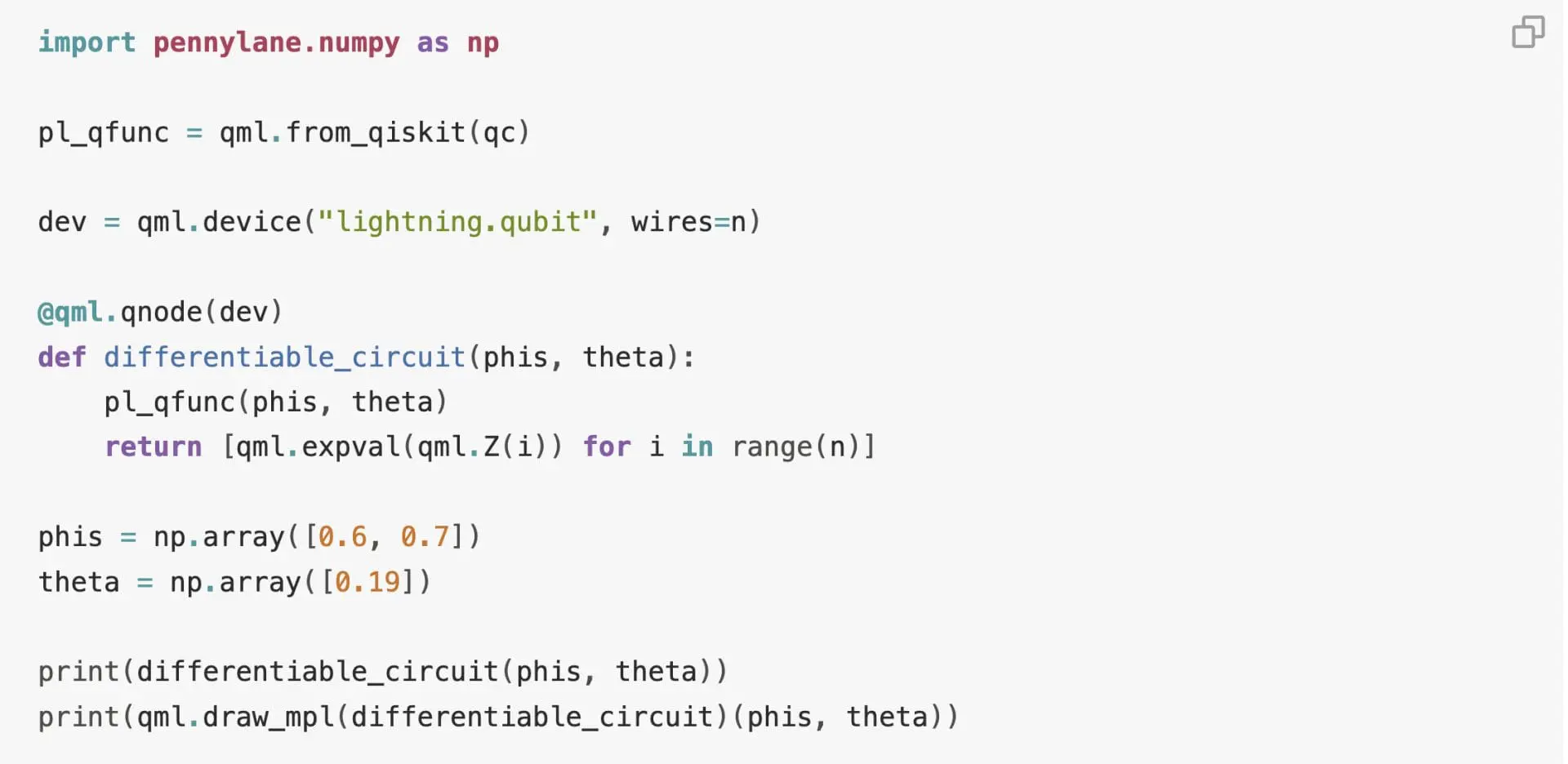
The plugin allows users to take their existing Qiskit circuits and convert them into PennyLane-compatible code with just one line of code. This enables users to leverage PennyLane’s end-to-end differentiability and optimization methods.
In the article, De Vlugt provides a real-world example of using the plugin to optimize a cost function with tunable parameters belonging to a circuit. He demonstrates how to use the plugin to convert a Qiskit circuit into a PennyLane-compatible quantum function, which can then be optimized using PennyLane’s optimization methods.
Companies involved in this work include Xanadu and IBM, the developer of Qiskit. Key technologies mentioned include quantum computing, differentiable programming, and optimization methods.
The author, Isaac De Vlugt, takes us on a journey to explore the seamless integration of Qiskit and PennyLane, two popular quantum programming ecosystems. He demonstrates how to convert a Qiskit QuantumCircuit to PennyLane using qml.from_qiskit, allowing users to leverage PennyLane’s fully-differentiable and hardware-agnostic capabilities.
The real-world example showcases how to optimize a cost function using PennyLane’s differentiable capabilities, which is a crucial aspect of many quantum algorithms. The use of a variational circuit with tunable parameters, a common scenario in quantum computing, makes the example relatable and relevant.
In conclusion, this article is an excellent resource for anyone interested in exploring the intersection of Qiskit and PennyLane. It provides a comprehensive introduction to the capabilities of both ecosystems and demonstrates how they can be leveraged together to achieve powerful quantum computing results.
External Link: Click Here For More