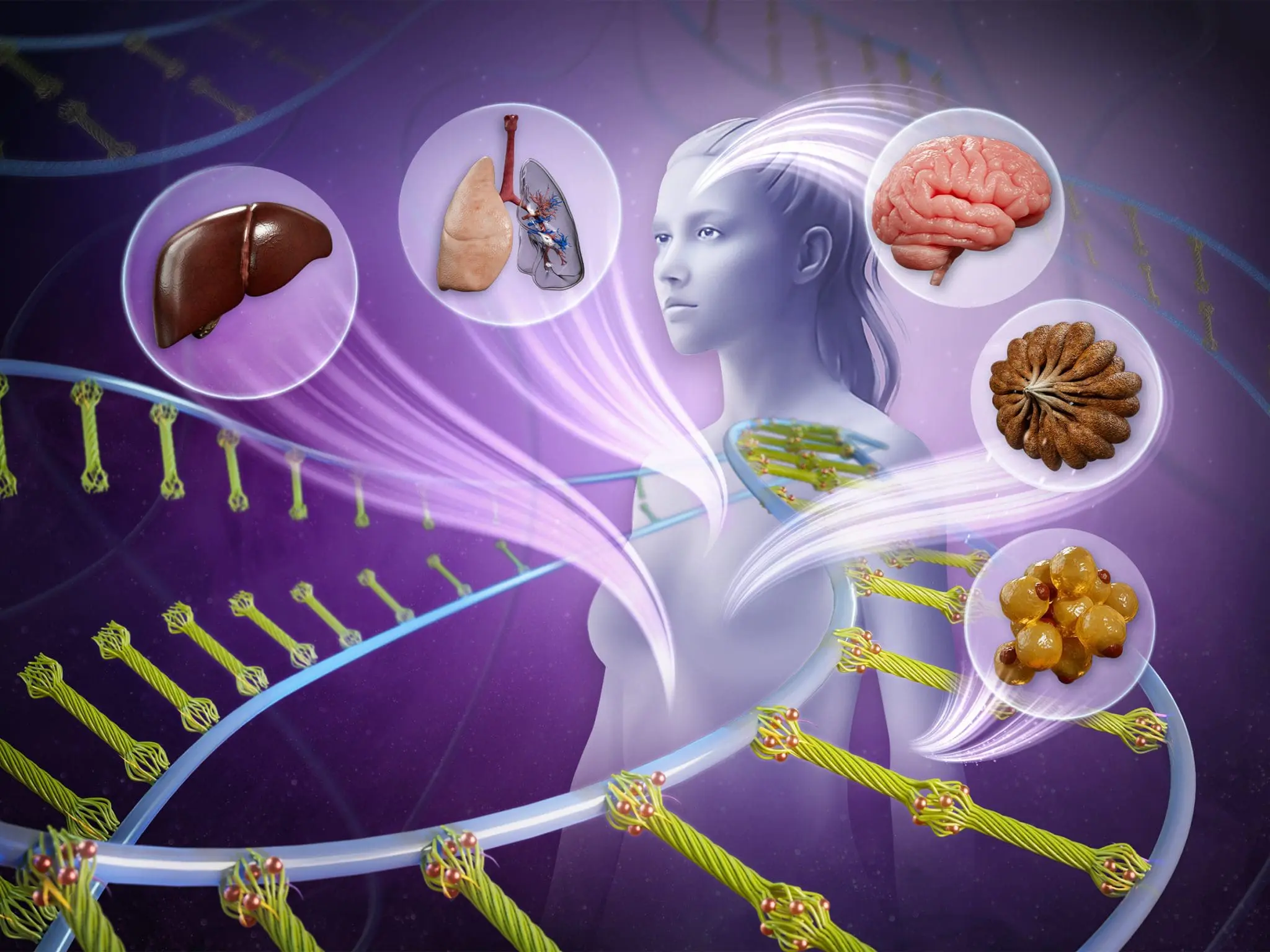
Researchers at Penn State University have developed a novel biomaterial that replicates the properties of extracellular matrices, the biological scaffolding that supports tissue structure and cell function in the human body.
This innovative material, known as acellular nanocomposite living hydrogels, or LivGels, exhibits self-healing properties and mimics the nonlinear strain-stiffening behavior of natural tissues, making it a promising tool for advancing regenerative medicine, disease modeling, and soft robotics.
By leveraging a unique design approach incorporating “hairy” nanoparticles with disordered cellulose chains, the researchers have created a bio-based material that can dynamically interact with its environment, providing precise control over stiffness and strain-stiffening properties.
With potential applications in tissue repair, drug testing, and 3D bioprinting, this breakthrough biomaterial has the potential to revolutionize various fields of research and pave the way for the development of more sophisticated and adaptable materials that can mimic the complex behaviors of living tissues.
Introduction to Biomaterials and Regenerative Medicine
The development of biomaterials that can mimic the properties of human tissue has been a long-standing goal in the field of regenerative medicine. Researchers at Penn State have recently made a significant advancement in this area by creating a novel “living” biomaterial that can replicate the behavior of extracellular matrices (ECMs), which are key building blocks of mammalian tissues. This biomaterial, known as acellular nanocomposite living hydrogels (LivGels), has the potential to advance regenerative medicine, disease modeling, soft robotics, and more.
The development of LivGels was motivated by the limitations of previous biomaterials, which were often synthetic and lacked the desired combination of mechanical responsiveness and biological mimicry of ECMs. The researchers aimed to create a material that could replicate nonlinear strain-stiffening, a property of ECMs that is essential for providing structural support and facilitating cell signaling. They also sought to develop a material with self-healing properties, which are necessary for tissue structure and survival.
The LivGels developed by the Penn State team consist of “hairy” nanoparticles composed of nanocrystals with disordered cellulose chains at the ends. These nanoparticles bond with a biopolymeric matrix of modified alginate, a natural polysaccharide found in brown algae. The resulting material exhibits dynamic bonding and strain-stiffening behavior, mimicking the response of ECMs to mechanical stress. The researchers used rheological testing to measure the material’s properties and demonstrate its ability to recover its structure after high strain.
Properties and Characteristics of LivGels
The LivGels developed by the Penn State team have several key properties that make them suitable for use in regenerative medicine and other applications. One of the most important properties is their ability to replicate nonlinear strain-stiffening, which is a critical feature of ECMs. This property allows the material to provide structural support and facilitate cell signaling, making it an ideal scaffold for tissue repair and regeneration.
Another key property of LivGels is their self-healing ability, which enables them to restore their integrity after damage. This property is essential for tissue structure and survival, as it allows the material to maintain its function even in the face of mechanical stress or other forms of damage. The researchers demonstrated the self-healing properties of LivGels using rheological testing, which showed that the material can rapidly recover its structure after high strain.
The LivGels are also composed entirely of biological materials, avoiding synthetic polymers with potential biocompatibility issues. This makes them an attractive option for use in regenerative medicine and other applications where biocompatibility is a concern. The researchers believe that the use of biological materials will help to mitigate the limitations of previously developed biomaterials and provide a more effective scaffold for tissue repair and regeneration.
Potential Applications of LivGels
The potential applications of LivGels are diverse and far-reaching, with possibilities in regenerative medicine, disease modeling, soft robotics, and more. One of the most promising applications is in scaffolding for tissue repair and regeneration within regenerative medicine. The material’s ability to replicate nonlinear strain-stiffening and its self-healing properties make it an ideal scaffold for promoting tissue growth and repair.
Another potential application of LivGels is in simulating tissue behavior for drug testing and creating realistic environments for studying disease progression. The material’s ability to mimic the properties of ECMs makes it an attractive option for use in these applications, as it can provide a more accurate representation of tissue behavior than traditional biomaterials.
The researchers also believe that LivGels could be used for 3D bioprinting customizable hydrogels or for developing soft robotics with adaptable mechanical properties. The material’s ability to be fine-tuned to match the properties of natural ECMs makes it an attractive option for use in these applications, as it can provide a high degree of control over the material’s properties.
External Link: Click Here For More