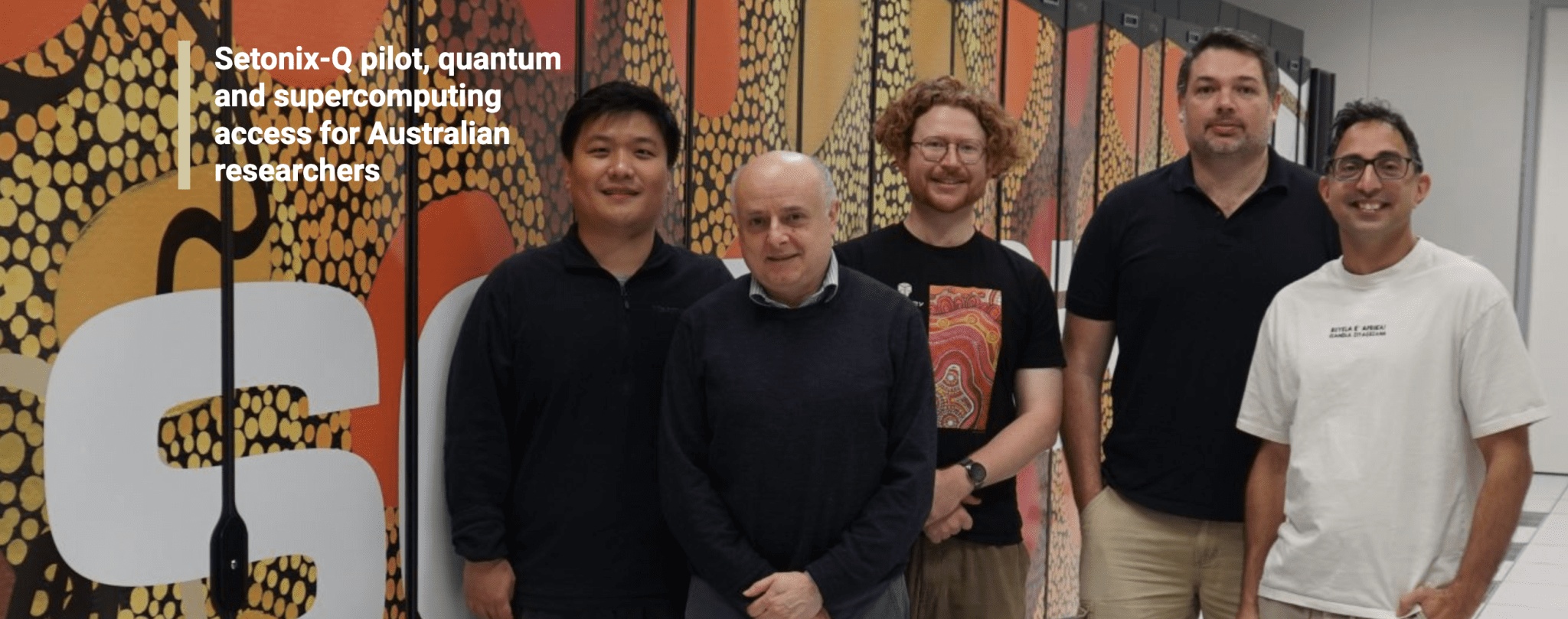
A world‑first quantum‑computing platform that integrates seamlessly with Australia’s flagship Setonix supercomputer has been launched by the Pawsey Supercomputing Research Centre. The Setonix‑Q pilot, delivered through the Quantum Hub Portal, offers free, dual‑allocation access to quantum simulators powered by NVIDIA GraceHopper GH200 superchips and CUDA‑Q architecture, as well as to real quantum hardware via Amazon Braket, and is funded through the National Collaborative Research Infrastructure Strategy and the National Computational Merit Allocation Scheme. Researchers across Australia will be able to experiment with ion‑trap, superconducting and neutral‑atom QPUs—including IonQ Aria and Forte, IQM Garnet and Emerald, QuEra Aquila and Rigetti Ankaa‑3—under a transparent budget and control framework that aims to democratise access to quantum technology.
In a global first, Pawsey Supercomputing Research Centre is offering a fully integrated, streamlined platform that adds quantum computing to the capacity of Australia’s most advanced research supercomputer This achievement marks a pivotal moment in the evolution of scientific understanding. The research, conducted at Curtin University, Murdoch University, builds upon decades of foundational work in the field. This development is particularly significant because quantum computing made easy: pawsey’s setonix‑q breaks new ground.
By lowering traditional barriers, the Setonix‑Q pilot, available via the Quantum Hub Portal, enables researchers to pursue new discoveries and accelerate breakthroughs across a wide range of scientific domains Beyond immediate applications, this research opens new avenues for scientific inquiry and technological innovation. The methodology developed here could accelerate progress across multiple related fields, from materials science to computational physics.
Looking ahead, this research points toward transformative possibilities for technology and society. The applications extend beyond current technological boundaries, potentially revolutionizing how we approach complex scientific and engineering challenges. As research teams worldwide build upon these findings, we can expect accelerated progress toward breakthroughs that will define the next generation of scientific achievement.
Original Press Release
Source: Pawsey Supercomputing Research Centre (research institution)
View Original Source