

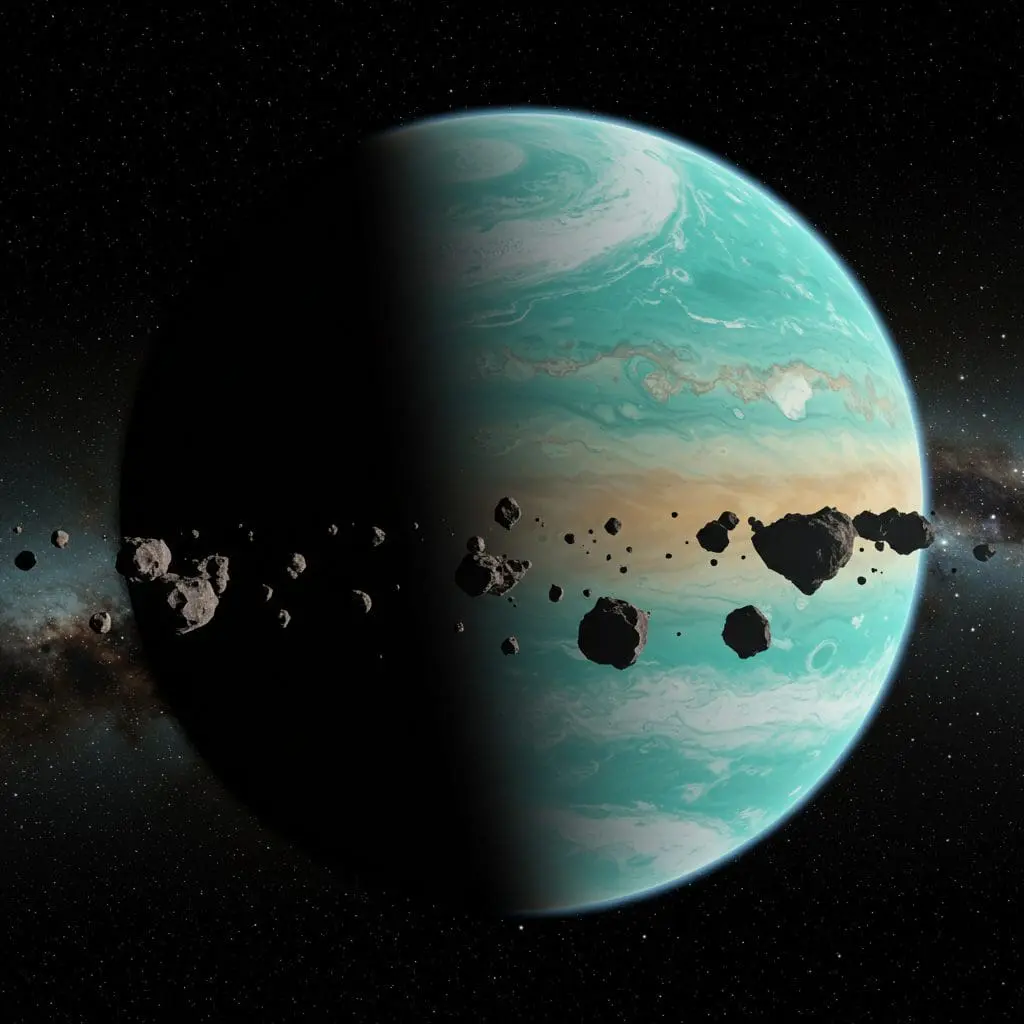
Photochemical modelling of Venus’s atmosphere reveals existing chemical pathways cannot account for observed mesospheric ozone concentrations. This challenges ozone’s reliability as a biosignature for exoplanets resembling Venus, as abiotic production may be common and mimic biological origins, limiting its use as a habitability indicator.
The search for life beyond Earth frequently centres on identifying atmospheric gases indicative of biological activity. Ozone (O₃), typically linked to photosynthetic oxygen production, is considered a potential ‘biosignature’ – a sign of life. However, its presence does not automatically confirm life’s existence. New research investigates the unexpected detection of ozone in the atmosphere of Venus, a planet demonstrably lacking life, and explores the implications for identifying habitable exoplanets. Robb Calder, Oliver Shorttle, Sean Jordan, Paul Rimmer, and Tereza Constantinou, from the University of Cambridge, ETH Zurich, and associated institutions, detail their photochemical modelling in the article ‘Abiotic Ozone in the Observable Atmospheres of Venus and Venus-like Exoplanets’, revealing that known chemical processes cannot account for the observed ozone levels on Venus or similar worlds, raising questions about its reliability as a definitive indicator of life.
Venusian Ozone: Atmospheric Models Fail to Replicate Observed Levels
Atmospheric modelling of Venus reveals a significant discrepancy between predicted and observed ozone concentrations in the planet’s mesosphere – the layer of the atmosphere between 50 and 85 kilometres altitude. Researchers utilising sophisticated atmospheric models consistently underestimate ozone levels while simultaneously overestimating the abundance of atomic oxygen.
The study involved varying key atmospheric constituents—sulphur dioxide, water, and hydrogen chloride—alongside differing temperature profiles within the models. Despite these parameter variations, the models failed to reproduce the observed ozone concentrations accurately. This suggests that the current understanding of Venusian atmospheric chemistry is incomplete and that previously unconsidered chemical processes may be at play.
The research indicates that temperature at higher altitudes considerably influences ozone production. Ozone is formed through chemical reactions involving oxygen atoms and molecules, and the rate of these reactions is highly temperature-dependent. The models’ inability to replicate observed ozone levels, even with adjusted temperature profiles, points to a potential deficiency in the underlying chemical mechanisms incorporated within the simulations.
The findings underscore the complexity of planetary atmospheres and the need to refine atmospheric models to account for non-standard chemical pathways. Further investigation into the specific chemical processes driving ozone production on Venus is required to resolve this discrepancy and improve our understanding of the planet’s atmospheric dynamics.
👉 More information
🗞 Abiotic Ozone in the Observable Atmospheres of Venus and Venus-like Exoplanets
🧠 DOI: https://doi.org/10.48550/arXiv.2505.16543


