
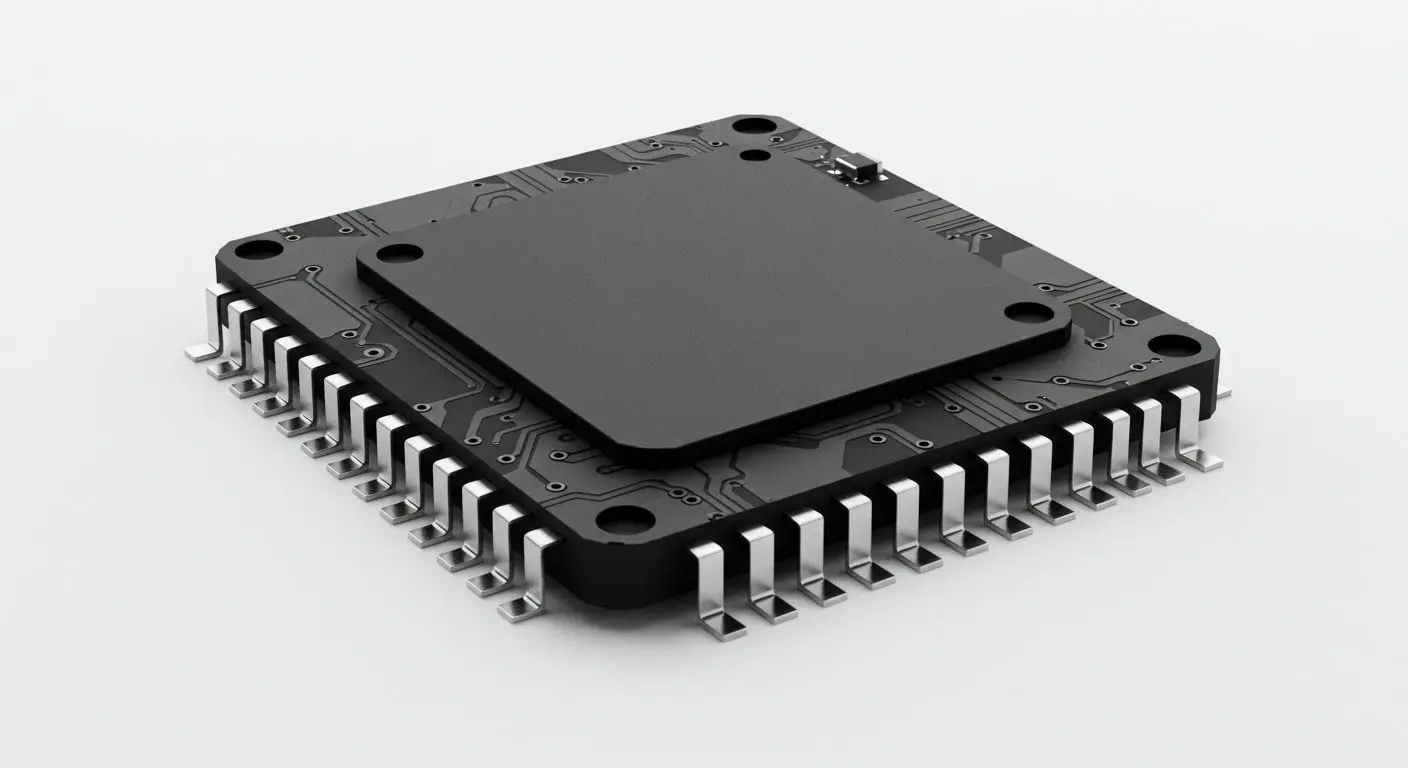
Founded by Raja Koduri, OXMIQ Labs Inc. is re-architecting GPU infrastructure through a licensing-first model, delivering a complete hardware IP stack and unified software ecosystem, OXCapsule, designed to address the demands of multimodal computing. The core of their approach is OXCORE, a scalable GPU core integrating scalar, vector, and tensor compute engines within a modular architecture, configurable via the OXQUILT chip-let architecture to optimise ratios of compute, memory, and interconnect-scaling from single-core Physical AI applications to thousands of cores for data centres. A key innovation is the incorporation of nano-agents leveraging RISC-V cores, alongside near-memory and in-memory computing, and native Python acceleration facilitated by OXPython, which enables seamless execution of NVIDIA CUDA applications on non-NVIDIA hardware without code modification. OXMIQ has secured $20 million in seed funding from investors including MediaTek and has established a minority stake in Mihira Visual Labs, with ongoing collaboration to integrate agentic GPU innovations into Mihira’s cinematic AI platform; initial software deployment is slated for Tenstorrent’s AI platform later this year, demonstrating compatibility with existing AI infrastructure.
GPU Architecture Reimagined
is pursuing a radical reimagining of GPU architecture, diverging from conventional fixed-function AI accelerators towards a more versatile, software-defined approach. Founded by Raja Koduri, the company boasts a team with over 500 years of combined experience in GPU and AI architecture, and a collective track record exceeding $100 billion in revenue generation. This expertise is focused on addressing the demands of increasingly complex multimodal experiences – the seamless integration of text, audio, video, images, and 3D environments – where GPUs, with their inherent computational flexibility and compatibility with established operating systems and unified memory models, are positioned as essential compute engines. Central to OXMIQ’s innovation is a ‘first principles’ re-architecting of the GPU, incorporating technologies such as nano-agents implemented in silicon utilising RISC-V cores. This approach moves beyond traditional parallel processing towards a more granular, agent-based computing paradigm. Complementing this is the integration of near-memory and in-memory computing techniques, designed to alleviate the bottlenecks associated with data transfer between processing units and memory, thereby significantly enhancing performance for data-intensive workloads.
The company’s scalable GPU core, OXCORE, integrates scalar, vector, and tensor compute engines within a modular architecture, allowing for customisation tailored to specific workloads, and scales from single core for compact Physical AI applications to thousands of cores for data centers via the OXQUILT chip-let architecture. OXMIQ’s software strategy, termed ‘Software First’, prioritises developer experience through the OXCapsule unified software ecosystem. This ecosystem abstracts hardware complexity, facilitating deployment across diverse computing platforms and mitigating the configuration challenges inherent in heterogeneous environments. A key component, OXPython, allows NVIDIA CUDA-based Python applications to run seamlessly on non-NVIDIA hardware without code modification or recompilation. This portability, demonstrated through a launch on Tenstorrent’s AI platform, is a core tenet of OXMIQ’s approach, as articulated by Tenstorrent CEO Jim Keller, who stated, “OXPython’s ability to bring Python workloads for CUDA to AI platforms like Wormhole and Blackhole is great for developer portability and ecosystem expansion. ” The company’s licensing-first model, coupled with a seed funding round of $20 million from investors including MediaTek, positions it as a capital-efficient player in the GPU IP market, avoiding the substantial capital expenditure associated with traditional chip fabrication. Lawrence Loh, SVP of MediaTek, highlighted this potential, stating, “The company’s GPU IP and software innovations will drive a new era of compute flexibility across devices from mobile to automotive to AI on the edge. ”
More information
External Link: Click Here For More