

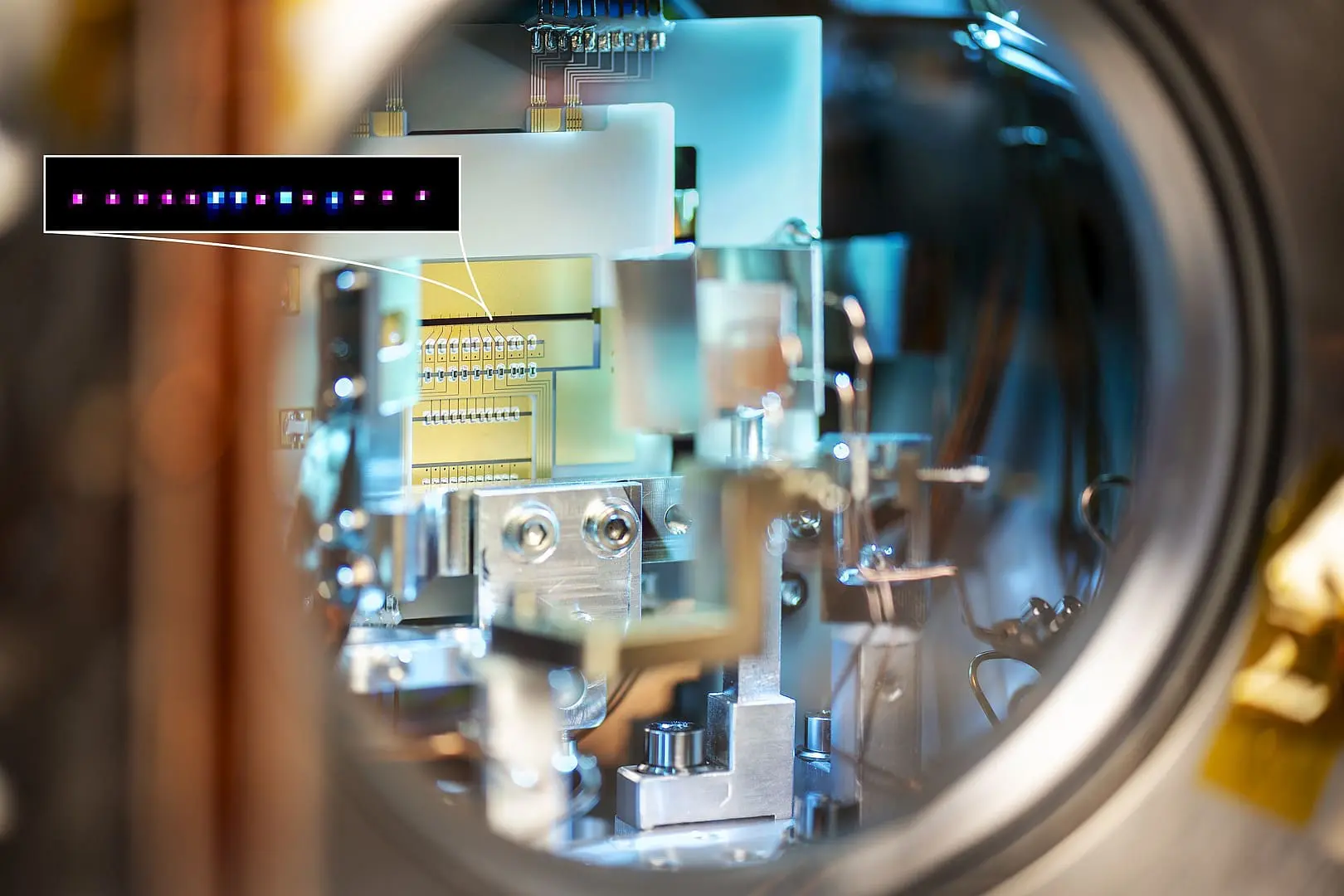
The pursuit of precision timekeeping has reached a new milestone with the development of a novel optical atomic clock that boasts unparalleled accuracy. This innovative timekeeper, which utilizes a crystal composed of indium and ytterbium ions, has demonstrated an unprecedented level of precision in comparison measurements, bringing the scientific community one step closer to redefining the fundamental unit of time – the second.
By harnessing the power of laser light to manipulate the quantum states of atoms, this cutting-edge clock has achieved a remarkable accuracy that surpasses its predecessors, including traditional caesium clocks, by a factor of 100. As researchers continue to refine and test this technology, it is poised to become the foundation for a new global standard of timekeeping, with far-reaching implications for fields such as physics, engineering, and telecommunications.
Introduction to Optical Atomic Clocks
Optical atomic clocks have emerged as a promising technology for achieving record-breaking accuracy in timekeeping. These clocks operate by irradiating atoms with laser light, which causes the atoms to change their quantum-mechanical state if the laser has the correct frequency. By shielding the atoms from external influences and accurately measuring any remaining effects, optical clocks can achieve extremely high precision. The development of these clocks is crucial for redefining the second in the International System of Units (SI), with potential applications in fields such as navigation, communication, and fundamental physics research.
The current generation of atomic clocks, based on caesium atoms and microwave frequencies, has limitations in terms of accuracy. In contrast, optical clocks operate at much higher frequencies, typically 100,000 times faster than caesium clocks, allowing for more precise timekeeping. Researchers have been exploring various types of optical clocks, including single ion clocks and optical lattice clocks, to push the boundaries of accuracy. The Physikalisch-Technische Bundesanstalt (PTB) has developed an impressive series of optical clocks, with some achieving accuracies 100 times better than caesium clocks.
One of the key challenges in developing optical clocks is demonstrating their reliability through repeated testing and participation in worldwide comparisons. To address this challenge, researchers at PTB have developed a new type of clock, known as an ion crystal clock, which has shown promising results. This clock uses a crystal consisting of indium and ytterbium ions, which are trapped and manipulated using electrical fields and laser light. By interacting with each other, the ions form a crystalline structure that enables highly accurate timekeeping.
Principles of Ion Crystal Clocks
Ion crystal clocks operate on the principle of trapping multiple ions in a single trap, allowing for parallelization and increased signal strength. This approach enables faster measurement times and higher accuracy compared to traditional single-ion clocks. The use of different types of ions, such as indium and ytterbium, allows researchers to combine their strengths and achieve favorable properties for high-accuracy timekeeping. Indium ions are used for their high accuracy, while ytterbium ions are added for efficient cooling.
The development of ion crystal clocks requires innovative solutions to challenges such as creating an ion trap that provides high-accuracy conditions for spatially extended crystals. Researchers at PTB have made significant progress in addressing these challenges, with the clock currently reaching an accuracy close to the 18th decimal place. This achievement is a major milestone towards the development of highly stable and accurate optical ion clocks.
The concept of ion crystal clocks also opens up new opportunities for exploring entirely new clock concepts, such as the use of quantum many-body states or the cascaded interrogation of several ensembles. These approaches could potentially lead to even higher accuracy and stability in timekeeping, with far-reaching implications for various fields of research and application.
Experimental Results and Comparisons
The PTB research team has conducted a series of experiments to demonstrate the performance of their ion crystal clock. The clock was compared to other optical and microwave clock systems, including a single-ion ytterbium clock, a strontium lattice clock, and a caesium fountain clock. The results show that the ratio of the indium clock to the ytterbium clock has reached an overall uncertainty lower than the limit required for such comparisons by the roadmap for the redefinition of the second.
The experimental results are a significant step towards the development of highly accurate optical clocks, with potential applications in fields such as navigation, communication, and fundamental physics research. The achievement of an accuracy close to the 18th decimal place demonstrates the potential of ion crystal clocks for pushing the boundaries of timekeeping precision.
Future Directions and Applications
The development of highly accurate optical clocks has far-reaching implications for various fields of research and application. One of the primary goals is to redefine the second in the SI, which would require achieving an accuracy of at least 1 part in 10^18. The achievement of such high accuracy would have significant impacts on fields such as navigation, communication, and fundamental physics research.
The concept of ion crystal clocks also opens up new opportunities for exploring entirely new clock concepts, such as the use of quantum many-body states or the cascaded interrogation of several ensembles. These approaches could potentially lead to even higher accuracy and stability in timekeeping, with far-reaching implications for various fields of research and application.
In conclusion, the development of ion crystal clocks is a significant step towards achieving highly accurate optical clocks. The results demonstrated by the PTB research team show promising potential for pushing the boundaries of timekeeping precision, with far-reaching implications for various fields of research and application. Further research and development are necessary to fully exploit the potential of ion crystal clocks and to achieve the goal of redefining the second in the SI.
External Link: Click Here For More


