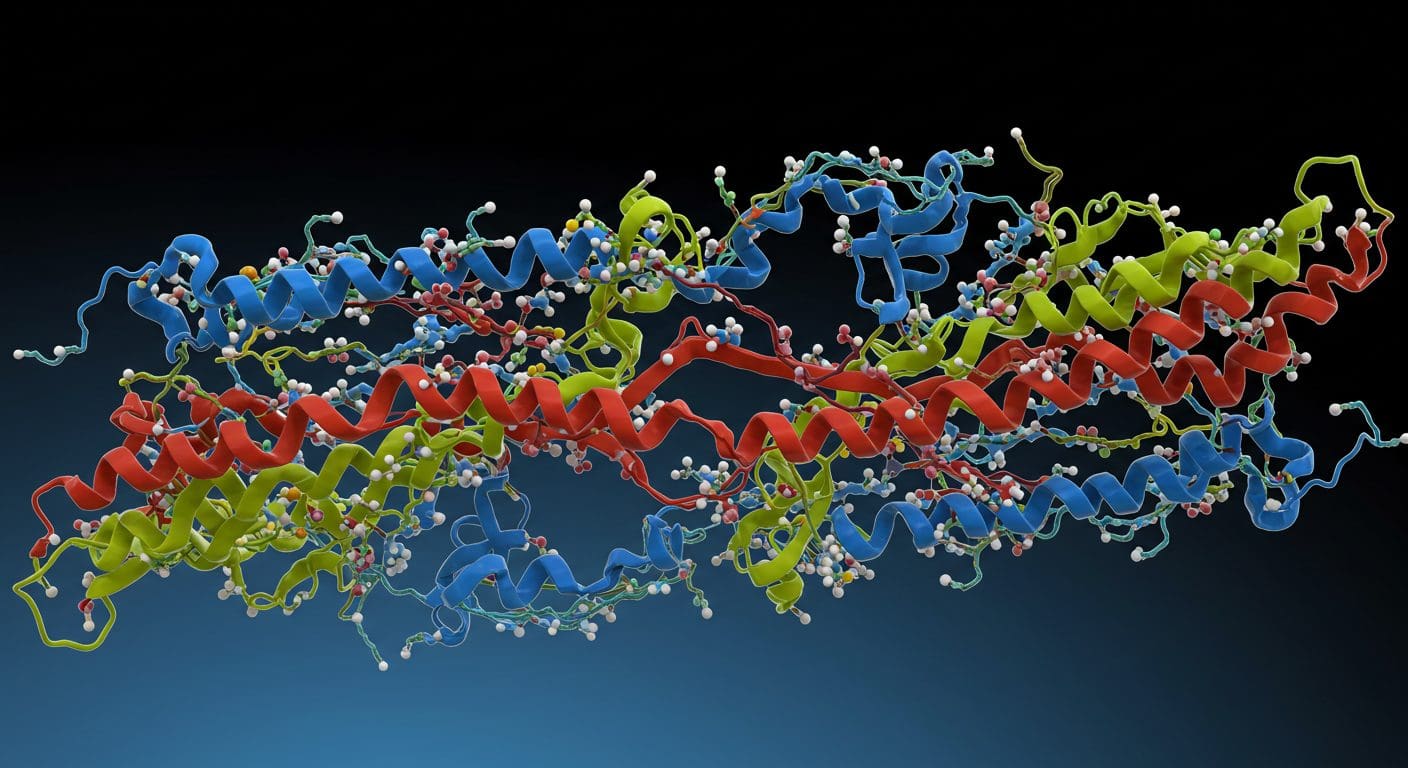
Dan Jacobson from Oak Ridge National Laboratory, a computational systems biologist and corresponding author on the study, has demonstrated an AI‑powered workflow that merges molecular dynamics simulations with machine learning to predict the binding of large, flexible lipo‑chitooligosaccharide ligands to plant receptor proteins, achieving predictions that match experimental laboratory measurements. The method, dubbed MD/ML, was trained on a large dataset of protein‑ligand complexes and executed on the nation’s fastest supercomputers, Frontier and Summit, at the Oak Ridge Leadership Computing Facility, and ranks binding strength even when starting from rough protein models. By accurately forecasting which plant genes govern optimal microbial partnerships, the approach promises to accelerate the engineering of microbiomes that enable crops to grow faster, require less fertilizer and yield more biomass for conversion into fuels, chemicals and materials, thereby strengthening U.S. competitiveness in the global biotechnology sector.
Oak Ridge National Laboratory pioneers AI driven molecular dynamics for plant microbe signalling
Oak Ridge National Laboratory (ORNL) announced on 15 September 2025 that it has introduced a hybrid workflow that couples long‑timescale molecular dynamics (MD) simulations with machine‑learning (ML) inference to predict how plant receptors recognise lipo‑chitooligosaccharide (LCO) signals. Developed by the ORNL Computational and Predictive Biology Group and the ORNL Molecular Biophysics Group under co‑leaders Erica Prates and Omar Demerdash, the method—termed MD/ML—trains ML models on thousands of experimentally characterised protein‑ligand complexes and then samples receptor conformations through MD, ranking binding affinities even when starting structures are low‑confidence homology models. The approach addresses the limitations of static tools such as AlphaFold, which optimise for small, drug‑like ligands and miss the dynamic fluctuations that govern LCO binding.
Frontier and Summit supercomputers power dynamic protein ligand predictions
The MD/ML workflow was executed on the nation’s fastest supercomputers, Frontier and Summit, housed at the Oak Ridge Leadership Computing Facility. Extensive sampling of receptor flexibility captured transient binding events that would otherwise be missed, and the resulting predictions matched experimental binding assays, revealing previously unknown structural details of the ligand‑receptor interface. The framework can also probe hormone signalling and pathogen‑defence pathways.
Ranking receptor–ligand interactions provides a mechanistic map of plant genes most likely to orchestrate beneficial microbial partnerships. The team, led by Prates and Demerdash and including Toms Rush, Udaya Kalluri and Manesh Shah, demonstrated that engineered microbial consortia can boost plant growth, reduce reliance on synthetic fertilisers, and increase biomass yields suitable for conversion into biofuels, biochemicals and advanced materials, thereby shortening the development cycle for sustainable crop technologies and strengthening the United States’ position in the global biotechnology sector.
Computational systems biologist Dan Jacobson noted that “proteins aren’t rigid; they’re wiggling all the time,” and that incorporating MD simulations allows the system to sample the full range of receptor motions that govern ligand recognition. The quantitative binding‑strength scores produced by the MD/ML workflow match laboratory measurements and expose residues and conformations critical for LCO engagement, enabling breeders and genetic engineers to prioritise receptors with the strongest binding profiles for crop improvement and to explore repurposing existing pharmaceuticals for human disease treatment.
US biotechnology competitiveness and global food security benefit from advanced plant microbe modelling
Supported by the DOE Office of Science Biological and Environmental Research program’s Plant‑Microbe Interfaces Science Focus Area, the ORNL initiative demonstrates how AI‑driven MD ligand binding can translate molecular insights into practical benefits for food security and industrial biotechnology. Rapid screening and prioritisation of plant–microbe interactions give American companies a competitive edge in the international market for sustainable agriculture solutions, while also offering a versatile platform for drug discovery and broader life sciences applications.
Original Press Release
Source: Oak Ridge National Laboratory (U.S. Department of Energy)
View Original Source