The release of InQuanto v4.0, a platform that enables large-scale and high-precision simulations, has achieved a breakthrough in quantum computational chemistry. This development was made possible through the collaboration between Quantinuum, a leading quantum computing company, and NVIDIA, a pioneer in artificial intelligence and graphics processing.
Tim Costa, Senior Director at NVIDIA, praised the achievement, stating that “hybrid quantum-classical supercomputing is accelerating quantum computational chemistry research.” The InQuanto v4.0 platform allows users to integrate new extensions and functionality seamlessly, including GPU acceleration through cuQuantum SDK and tensor-network-based methods.
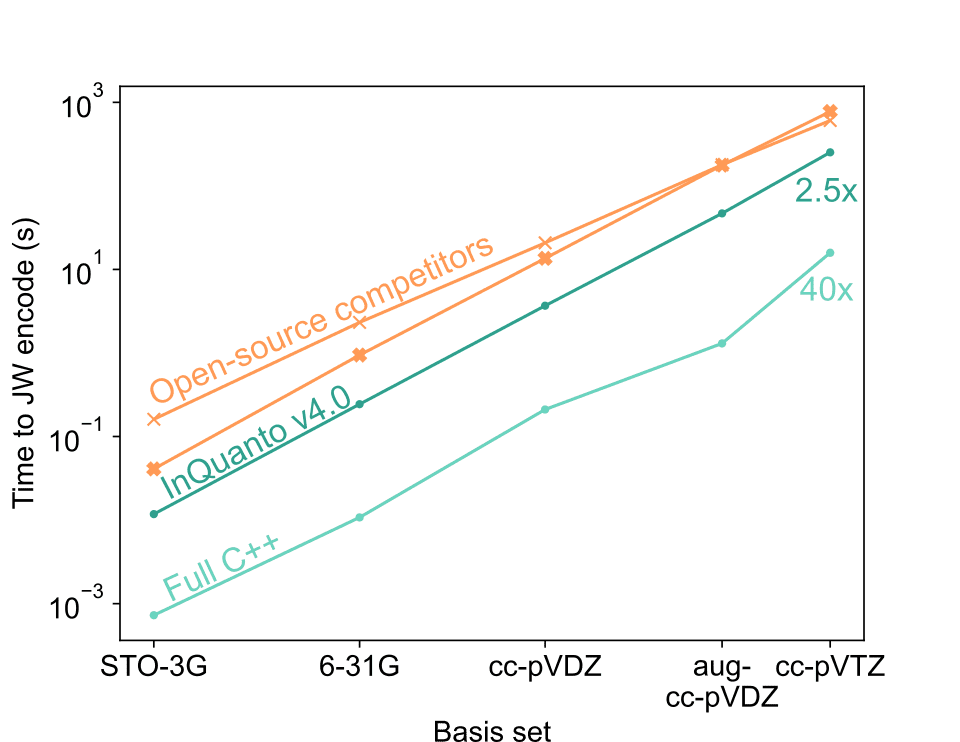
This enables researchers to simulate larger chemical systems with unprecedented accuracy. The platform also interfaces easily with classical codes such as Gaussian and Psi4, making it a powerful tool for advancing quantum chemistry research. With InQuanto v4.0, scientists can now explore complex chemical reactions and materials at an unprecedented scale, paving the way for groundbreaking discoveries in medicine and energy.
One of the key highlights is the integration of the CuTensorNetProtocol with the Nexus platform, users can run tensor network-based simulations without requiring access to their local GPU resources. This is demonstrated through an example code snippet that uses the get_system method from inquanto.express to define a system (in this case, H2 using the STO-3G basis set) and then employ the CuTensorNetProtocol to run a VQE experiment.
The release also mentions the modular design of InQuanto, which enables seamless integration of new extensions and functionality. For instance, users can modify existing code to enable GPU acceleration through inquanto-cutensornet or use shot-based simulation via the CuTensorNetShotsBackend provided by pytket-cutensornet.
Another important feature is the classical code interface, which allows InQuanto to interface with classical codes such as Gaussian and Psi4 easily. Users can bring their system from classical codes by passing an FCIDUMP file to the FCIDumpRestricted class and calling the to_ChemistryRestrictedIntegralOperator method.
The article also touches on exposing TKET compilation, which enables users to experiment with TKET’s latest circuit compilation tools straightforwardly. This change allows for cleaner integration of new functionality through extensions such as inquanto-nexus and inquanto-cutensornet.
Overall, InQuanto v4.0 is a significant step forward in quantum computational chemistry, enabling users to simulate larger chemical systems on quantum computers. The platform’s modular design and seamless integration with classical codes make it an attractive tool for researchers in the field.
External Link: Click Here For More