
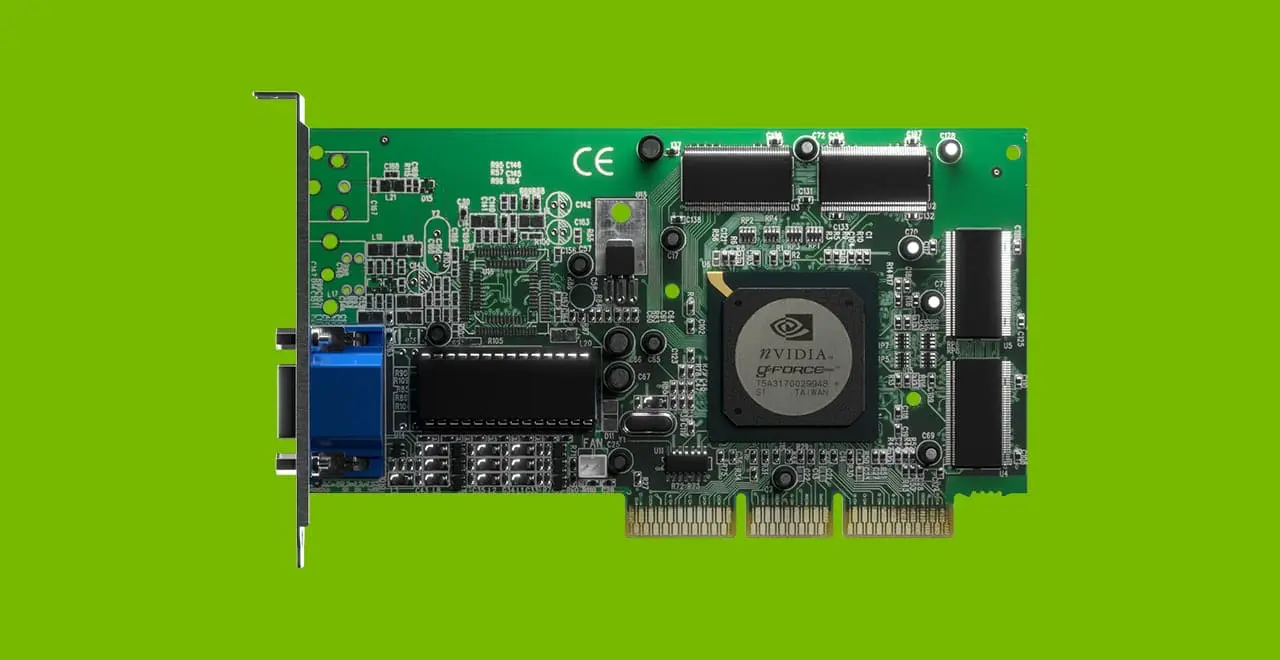
On October 11, 1999, NVIDIA released the GeForce 256, a graphics card that revolutionized gaming and laid the foundation for the AI era. This GPU, introduced as the world’s first, took the load off CPUs, allowing game developers to create more detailed and realistic games. For gamers, playing Quake III Arena on a GeForce 256 was a revelation, with enthusiasts noting it felt like they’d never seen the title before. The collaboration between NVIDIA and game developers drove advancements in textures, lighting, and frame rates, transforming the gaming landscape.
In the decades that followed, NVIDIA’s GPUs continued to push boundaries, driving innovations that reshaped the gaming world. Researchers soon realized these GPUs could also unlock massive computational potential in AI, enabling breakthroughs beyond gaming. Key individuals like Alex Krizhevsky from the University of Toronto used NVIDIA GPUs to win the ImageNet image recognition competition, marking a seismic shift in technology. Today, GPUs are icons of tech culture, driving the transformative power of generative AI and shaping the future of computing and entertainment.
The Birth of Modern Gaming: NVIDIA’s GeForce 256 GPU
In 1999, the tech world was abuzz with the release of NVIDIA’s GeForce 256 graphics processing unit (GPU). This pioneering device marked a significant turning point in the history of gaming and computing, laying the foundation for the development of artificial intelligence (AI) in the years to come.
The GeForce 256 was more than just another graphics card; it introduced hardware transform and lighting (T&L), taking the load off central processing units (CPUs) and allowing game developers to create more detailed and immersive gaming experiences. As Tom’s Hardware emphasized, “[The GeForce 256] can take the strain off the CPU, keep the 3D-pipeline from stalling, and allow game developers to use much more polygons, which automatically results in greatly increased detail.”
A New Era of Gaming
For gamers, the release of Quake III Arena on a GeForce 256 was a revelation. The enthusiasts at AnandTech described it as “Immediately after firing up your favorite game, it feels like you’ve never even seen the title before this moment.” The GeForce 256 paired beautifully with breakthrough titles such as Unreal Tournament, which would go on to sell over 1 million copies in its first year.
Over the next quarter-century, the collaboration between game developers and NVIDIA continued to push boundaries, driving advancements such as increasingly realistic textures, dynamic lighting, and smoother frame rates. These innovations delivered far more than just immersive experiences for gamers; they transformed the gaming landscape.
NVIDIA’s GPUs evolved into a platform that transformed new silicon and software into powerful, visceral innovations, shaping the future of gaming and entertainment.
From Gaming to AI: The GPU’s Next Frontier
As gaming worlds grew in complexity, so too did the computational demands. The parallel power that transformed gaming graphics caught the attention of researchers, who realized these GPUs could also unlock massive computational potential in AI, enabling breakthroughs far beyond the gaming world.
Deep learning, a software model that relies on billions of neurons and trillions of connections, requires immense computational power. Traditional CPUs, designed for sequential tasks, couldn’t efficiently handle this workload. But GPUs, with their massively parallel architecture, were perfect for the job.
By 2011, AI researchers had discovered NVIDIA GPUs and their ability to handle deep learning’s immense processing needs. Researchers at Google, Stanford, and New York University began using NVIDIA GPUs to accelerate AI development, achieving performance that previously required supercomputers.
The Rise of Generative AI
2012 a breakthrough came when Alex Krizhevsky from the University of Toronto used NVIDIA GPUs to win the ImageNet image recognition competition. His neural network, AlexNet, trained on a million images, crushed the competition, beating handcrafted software written by vision experts.
This marked a seismic shift in technology. What once seemed like science fiction — computers learning and adapting from vast amounts of data — was now a reality, driven by the raw power of GPUs.
By 2015, AI had reached superhuman levels of perception, with Google, Microsoft, and Baidu surpassing human performance in tasks like image recognition and speech understanding — all powered by deep neural networks running on GPUs.
In 2016, NVIDIA CEO Jensen Huang donated the first NVIDIA DGX-1 AI supercomputer to OpenAI, which would harness GPUs to train ChatGPT, launched in November 2022. In 2018, NVIDIA debuted GeForce RTX (20 Series) with RT Cores and Tensor Cores, designed specifically for real-time ray tracing and AI workloads.
Shaping the Future
Today, GPUs are not only celebrated in the gaming world but have become icons of tech culture, appearing in Reddit memes, Twitch streams, T-shirts at Comic-Con, and even being immortalized in custom PC builds and digital fan art.
The revolution that began with the GeForce 256 continues to unfold today in gaming and entertainment, in personal computing where AI powered by NVIDIA GPUs is now part of everyday life — and inside the trillion-dollar industries building next-generation AI into the core of their businesses.
GPUs are not just enhancing gaming but are designing the future of AI itself. With innovations like NVIDIA DLSS, which uses AI to boost gaming performance and deliver sharper images, and NVIDIA ACE, designed to bring more lifelike interactions to in-game characters, AI is once again reshaping the gaming world.
The GeForce 256 laid the bedrock for a future where gaming, computing, and AI are not just evolving — together, they’re transforming the world.
External Link: Click Here For More