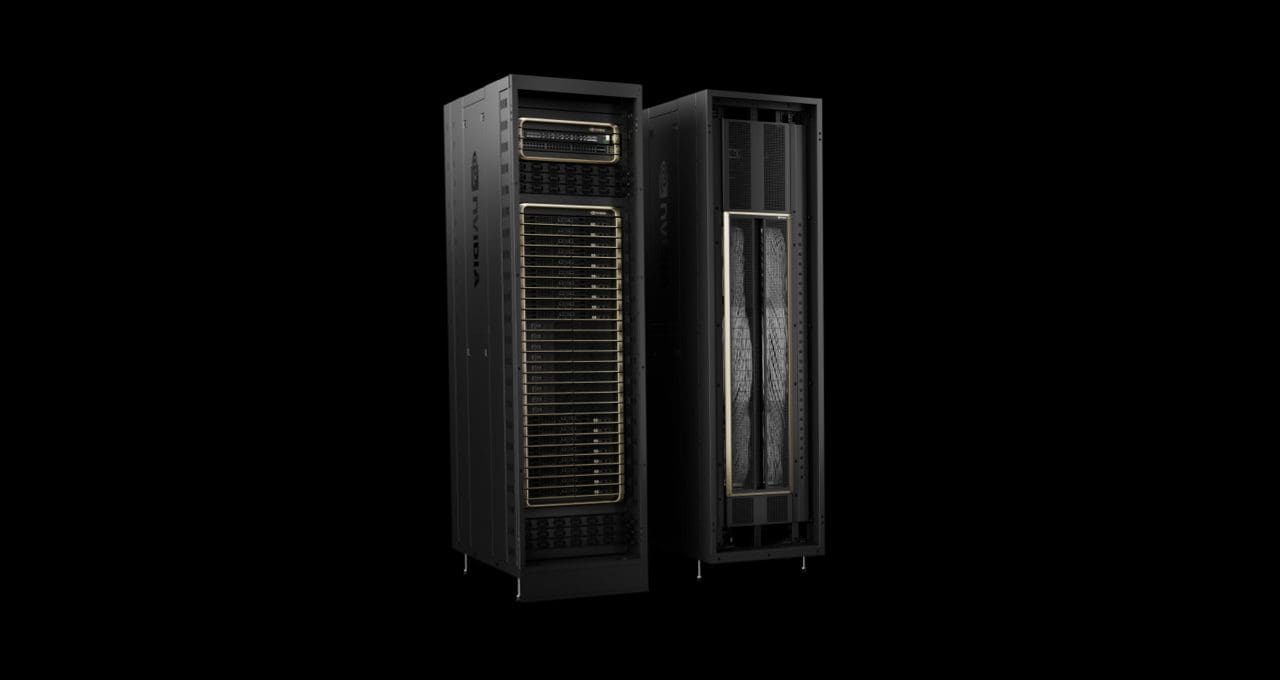
NVIDIA’s newly developed GB200 NVL72 systems are accelerating progress towards practical quantum computation. These systems leverage graphics processing unit (GPU) acceleration to address key challenges in quantum computing development, ranging from algorithm design and qubit engineering to data generation and error correction. By providing substantial performance gains – up to 500x in certain workloads – the GB200 NVL72 is enabling researchers and companies like Diraq to integrate quantum processors with conventional GPU-accelerated supercomputers, paving the way for commercially viable quantum applications. This integration is further supported by initiatives such as the NVIDIA CUDA-Q Academic program, onboarding researchers to utilise these advanced technologies.
Developing Better Quantum Algorithms
Simulating candidate algorithms on quantum computers is crucial for discovering and refining performant quantum applications. Large-scale simulations, such as those performed by Ansys on the Gefion supercomputer for computational fluid dynamics, demand substantial computational resources. The high-bandwidth, all-to-all GPU connectivity of the GB200 NVL72 system enables NVIDIA cuQuantum libraries to execute state-of-the-art simulation techniques at feasible timescales, achieving an 800x speedup compared to the best CPU implementations. This acceleration allows researchers to explore a wider range of algorithms and parameters, ultimately leading to more efficient and effective quantum applications.
The ability to rapidly simulate quantum algorithms is particularly important during early development, where iterative refinement is essential. By leveraging GPU acceleration, researchers can significantly reduce the time required to evaluate different algorithmic approaches and identify promising candidates for further investigation.
Designing Low-Noise Qubits
Quantum hardware development, analogous to conventional chip manufacturing, relies heavily on detailed physics simulations to rapidly iterate towards performant processor designs. Consequently, qubits/”>quantum hardware designers are increasingly utilising these simulation tools to discover low-noise qubit designs, crucial for viable quantum computation. Simulations that accurately emulate noise within potential qubit designs necessitate complex quantum mechanical calculations, demanding substantial computational resources.
The GB200 NVL72 system, paired with NVIDIA’s cuQuantum dynamics library, provides significant acceleration for these workloads, achieving a 1,200x speedup. This enhanced computational capability delivers a valuable tool that accelerates the design process for quantum hardware builders, such as Alice & Bob, enabling faster exploration of qubit architectures and optimisation of performance characteristics. By substantially reducing simulation times, the GB200 NVL72 facilitates a more iterative design cycle, allowing researchers to evaluate a wider range of qubit designs and refine their parameters more effectively.
This accelerated process is critical for overcoming the challenges associated with qubit coherence and minimising noise, ultimately leading to the development of more stable and reliable quantum processors.
Generating Quantum Training Data
Artificial intelligence models are demonstrating increasing potential for addressing challenges within quantum computing, notably in performing the control operations essential for maintaining system functionality. Generating the datasets required to train these models is computationally intensive. The GB200 NVL72 system provides a means to rapidly generate large datasets representative of quantum system behaviour, empowering researchers to develop and refine AI models capable of optimising quantum computer performance and addressing complex computational problems.
By providing this capability, the GB200 NVL72 achieves a significant speedup, enabling the development of AI models capable of optimising quantum computer performance and addressing complex computational problems.
Exploring Hybrid Applications
Future quantum applications will necessitate the synergistic operation of both quantum and classical hardware, dynamically allocating algorithmic subroutines to the most suitable processing unit. Exploring algorithms designed for this integrated environment demands a platform capable of simultaneously simulating quantum hardware and providing access to advanced AI supercomputing capabilities, a combination readily available through the GB200 NVL72 system. NVIDIA’s CUDA-Q platform facilitates this integration, accelerating development by a factor of 1,300.
This capability is crucial as quantum algorithms are rarely envisioned as entirely quantum processes; instead, they typically involve a partitioning of tasks, with classical computation handling pre- and post-processing, data management, and control functions. CUDA-Q provides the tools and libraries necessary to seamlessly manage this interplay, enabling developers to efficiently prototype and refine hybrid quantum-classical workflows.
Unlocking Quantum Error Correction
Future quantum-GPU supercomputers will necessitate quantum error correction – a continuous control process that applies demanding decoding algorithms to qubit data – to mitigate inherent errors. Maintaining qubit coherence and accuracy requires constant monitoring and correction, placing substantial computational demands on associated classical hardware.
The decoding algorithms central to quantum error correction execute on conventional computing platforms and must process terabytes of data per second to effectively address qubit errors. The GB200 NVL72 achieves a 500x speedup when running a commonly employed class of decoding algorithms, thereby establishing quantum error correction as a viable component of future quantum computing systems.
This accelerated performance is critical because the complexity of error correction scales rapidly with the number of qubits. Efficient decoding is not merely a performance enhancement; it is a fundamental requirement for building fault-tolerant quantum computers capable of tackling complex problems.
More information
External Link: Click Here For More