

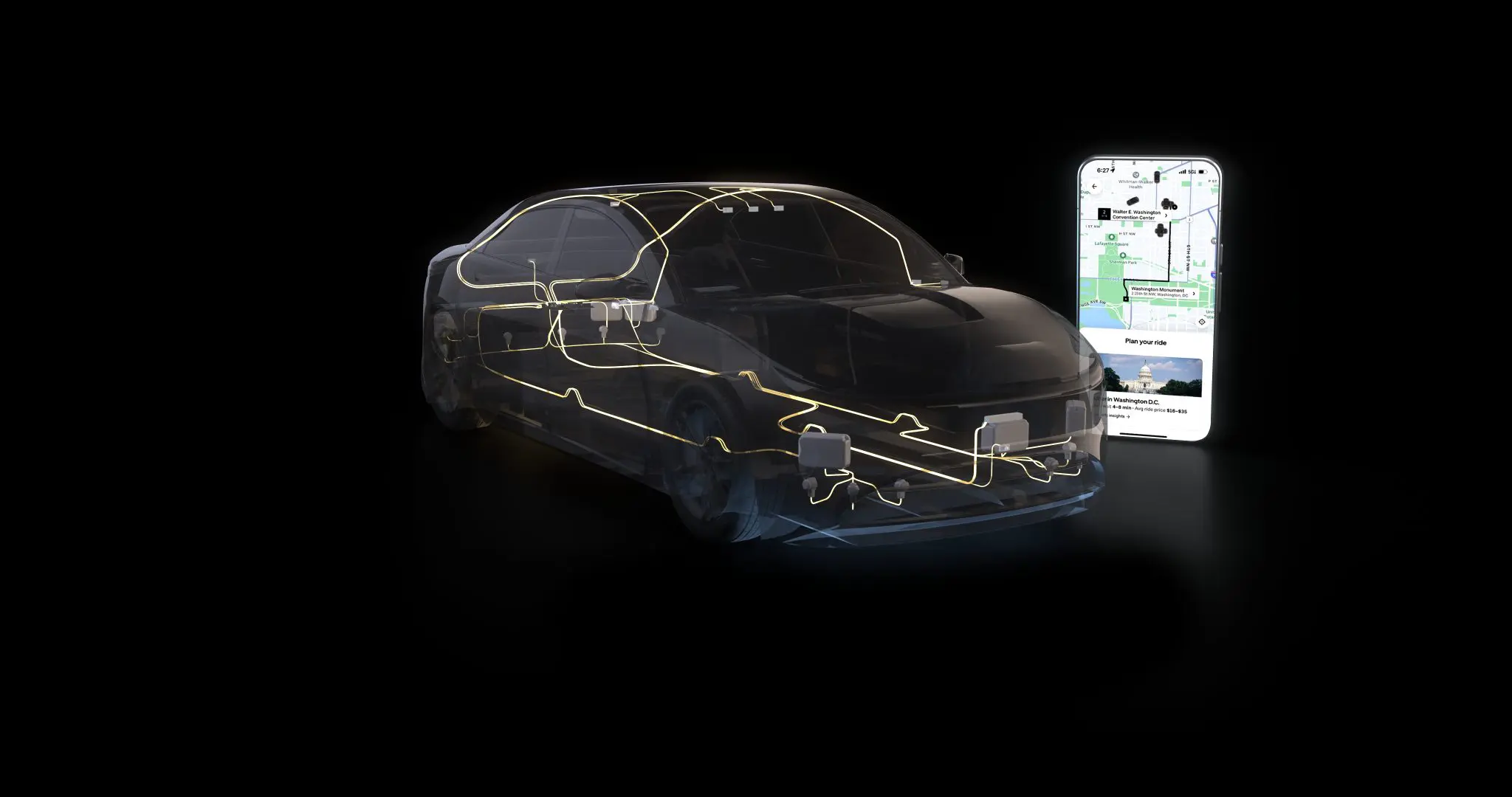
NVIDIA and Uber are partnering to scale the world’s largest level 4-ready mobility network, leveraging NVIDIA’s next-generation DRIVE AGX Hyperion 10 autonomous vehicle (AV) platform and DRIVE AV software. This collaboration aims to support Uber in deploying a global autonomous fleet of 100,000 vehicles starting in 2027, developed with NVIDIA and other ecosystem partners. According to Jensen Huang, founder and CEO of NVIDIA, robotaxis represent the beginning of a global transformation in mobility, making transportation safer, cleaner, and more efficient. Dara Khosrowshahi, CEO of Uber, echoed this sentiment, stating NVIDIA is fully harnessing innovation to unleash L4 autonomy at enormous scale, while making it easier for NVIDIA-empowered AVs to be deployed on Uber’s network.
NVIDIA and Uber Scale Autonomous Vehicle Network
NVIDIA and Uber are collaborating to significantly scale the deployment of level 4 autonomous vehicle (AV) technology, aiming for a global fleet exceeding 100,000 vehicles starting in 2027, the company announced. This partnership leverages NVIDIA’s next-generation DRIVE AGX Hyperion 10 autonomous vehicle development platform and DRIVE AV software, purpose-built for level 4 autonomy, to accelerate the growth of Uber’s robotaxi and autonomous delivery services. According to NVIDIA, this collaboration marks a pivotal step towards transforming transportation, making it safer, cleaner, and more efficient for cities worldwide. Jensen Huang, founder and CEO of NVIDIA, emphasized the potential of robotaxis to revolutionize mobility, stating that what was once science fiction is rapidly becoming a reality.
“What was once science fiction is fast becoming an everyday reality.”
Jensen Huang, NVIDIA
The core of this expanded ecosystem relies on the NVIDIA DRIVE AGX Hyperion 10, a reference production computer and sensor set architecture designed to make any vehicle level 4-ready. This validated hardware and sensor suite allows automakers to build vehicles capable of hosting compatible autonomous driving software, providing a unified foundation for safe and scalable AI-defined mobility. Building on this, NVIDIA and Uber are jointly developing a data factory powered by the NVIDIA Cosmos world foundation model development platform, crucial for curating and processing the massive amounts of data required for autonomous vehicle development. Dara Khosrowshahi, CEO of Uber, highlighted that autonomous mobility will fundamentally improve cities, expressing excitement about partnering with NVIDIA to achieve this vision.
This collaboration extends beyond just technology, as leading global automakers and tier 1 suppliers are already working with both NVIDIA and Uber to launch level 4 fleets powered by NVIDIA AI. Stellantis is actively developing AV-Ready Platforms specifically optimized for level 4 capabilities and robotaxi requirements, integrating NVIDIA’s full-stack AI technology. This expanded ecosystem will seamlessly integrate human drivers and autonomous vehicles into a single operating network, creating a unified ride-hailing service that includes both traditional drivers and robotaxis. According to NVIDIA, this holistic approach promises a future where transportation is not only more efficient but also more accessible and sustainable.
Next-Gen Platform Powers Level 4 Autonomy
The NVIDIA DRIVE AGX Hyperion 10 platform is central to enabling level 4 autonomy, functioning as a complete, validated computer and sensor set architecture. According to the company announcement, this platform allows automakers to rapidly build and deploy autonomous vehicles equipped with the necessary hardware and sensors. This unified foundation streamlines the development process, ensuring compatibility with various autonomous driving software solutions and accelerating the path to safe, scalable, and AI-defined mobility. The platform’s design prioritizes robustness and reliability, crucial for operating in complex and unpredictable real-world environments.
Building on this foundational hardware, NVIDIA and Uber are jointly developing a data factory powered by the NVIDIA Cosmos world foundation model development platform. This collaborative effort focuses on curating and processing the massive datasets required for training and validating autonomous vehicle systems. According to NVIDIA, this data factory will significantly enhance the quality and efficiency of data processing, allowing for faster iteration and improvement of autonomous driving algorithms. Jensen Huang, founder and CEO of NVIDIA, emphasized that the platform is designed to handle the immense computational demands of level 4 autonomy, making it easier to deploy NVIDIA-empowered AVs on Uber’s network. This robust data pipeline is essential for tackling the challenges of edge cases and ensuring the safety of autonomous operations.
Dara Khosrowshahi, CEO of Uber, highlighted that the integration of this next-generation platform will transform cities for the better, ultimately making transportation safer, cleaner, and more efficient. The ability to seamlessly integrate autonomous vehicles with human drivers within a single operating network represents a significant step towards a truly unified ride-hailing service. This holistic approach allows Uber to optimize fleet management, reduce costs, and improve the overall passenger experience. Furthermore, the scalability of the NVIDIA DRIVE platform is crucial for Uber’s ambition to deploy a fleet of 100,000 autonomous vehicles starting in 2027, positioning the company as a leader in the rapidly evolving autonomous mobility landscape.
“Autonomous mobility will transform our cities for the better, and we’re thrilled to partner with NVIDIA to help make that vision a reality.”
Dara Khosrowshahi, Uber
AI, Data, and Safety Drive Autonomous Future
The advancement of autonomous vehicle technology relies heavily on robust data curation and processing, and NVIDIA and Uber are collaborating to build a dedicated “data factory” to facilitate this process. According to the company announcement, this factory will be accelerated by the NVIDIA Cosmos world foundation model development platform, designed to efficiently manage and refine the massive datasets required for training and validating autonomous driving systems. This focus on data quality and scale is critical, as the safety and reliability of level 4 autonomy depend on the ability of the vehicles to accurately perceive and react to complex real-world scenarios. The partnership aims to streamline this process, enabling faster development and deployment of autonomous fleets.
Building on this, the collaboration extends beyond simply collecting data; it emphasizes the creation of a closed-loop system for continuous improvement. NVIDIA DRIVE AGX Hyperion 10, functioning as the central processing unit, will not only analyze incoming sensor data but also provide feedback to refine the algorithms and models powering the autonomous vehicles. This iterative approach, coupled with the processing capabilities of NVIDIA Cosmos, allows for the identification and correction of edge cases, enhancing the robustness of the system over time. Dara Khosrowshahi, CEO of Uber, highlighted that autonomous mobility will transform cities for the better, and this data-driven approach is integral to realizing that vision. The system aims to move beyond simulations and into real-world learning, accelerating the path to safer, more reliable autonomous operation.
Furthermore, the safety implications of this technology are paramount, and NVIDIA and Uber are prioritizing a rigorous approach to validation and testing. The collaborative data factory will generate synthetic data to supplement real-world data, creating a more comprehensive and diverse dataset for training the AI models. This synthetic data can be used to simulate challenging scenarios, such as inclement weather or unusual traffic patterns, allowing the autonomous vehicles to be tested in a controlled environment before being deployed on public roads. Jensen Huang, founder and CEO of NVIDIA, stated that robotaxis mark the beginning of a global transformation in mobility, making transportation safer, cleaner, and more efficient, and this commitment to data-driven safety is central to that transformation. The partnership’s focus on both data quantity and quality underscores the commitment to building a safe and reliable autonomous future.
The partnership between NVIDIA and Uber signals a significant acceleration toward widespread level 4 autonomous vehicle deployment. By standardizing development on the NVIDIA DRIVE AGX Hyperion 10 platform and leveraging NVIDIA Cosmos for data processing, the companies are streamlining a historically complex and fragmented process. This collaborative approach could enable faster innovation cycles and reduced costs for autonomous vehicle technologies, ultimately impacting urban mobility and logistics networks.
For industries reliant on efficient and scalable transportation, this represents a pivotal step towards realizing the benefits of autonomous fleets. Uber’s plan to integrate robotaxis with its existing ride-hailing service, starting in 2027, demonstrates a practical pathway for mainstream adoption. The implications extend beyond simply replacing human drivers; NVIDIA and Uber are building a foundation for safer, cleaner, and more accessible transportation systems, redefining how people and goods move within cities and beyond.


