

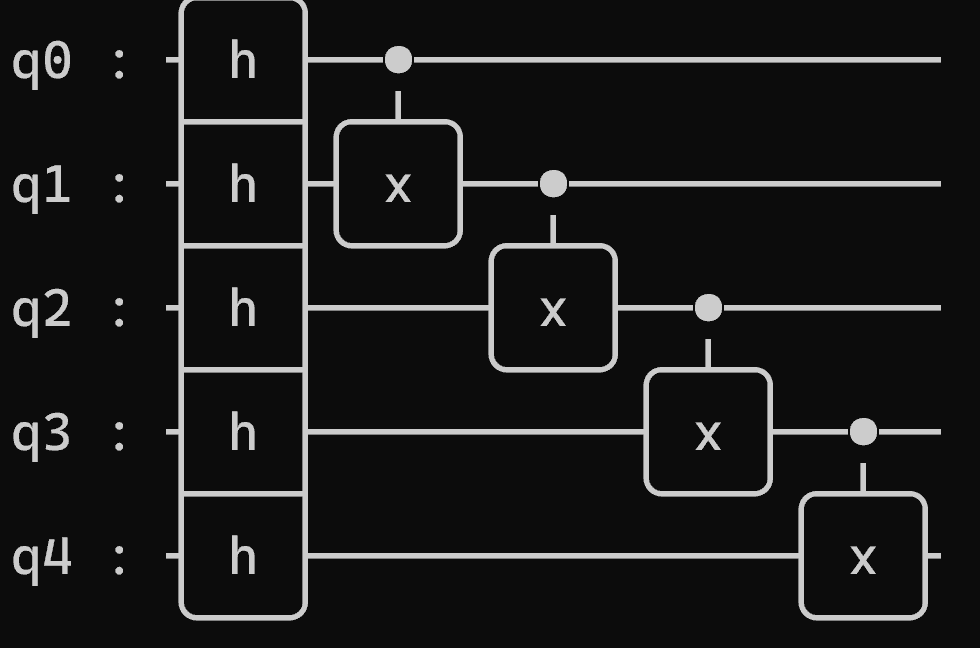
NVIDIA has released CUDA-Q v0.8, an open-source programming model for building hybrid-quantum classical applications that take full advantage of CPU, GPU, and QPU compute abilities. This platform enables developers to efficiently evaluate and improve the performance of quantum-accelerated supercomputing applications. Alexey Galda, a researcher at NVIDIA, has been instrumental in developing CUDA-Q.
The new release includes features such as custom unitary operations, enhanced visualization tools, and integration with NVIDIA’s GH200 Superchip, which provides significant speedup in simulating quantum systems. This technology has the potential to revolutionize fields such as finance and materials science by enabling faster and more accurate simulations. With CUDA-Q v0.8, developers can now build applications that are positioned to deploy in future hybrid CPU, GPU, and QPU environments necessary for practical quantum computing.
Firstly, the introduction of Pauli words as a new input type for quantum kernels is a significant advancement. This allows for more flexible and efficient representation of quantum operations, enabling researchers to simulate complex Hamiltonians with ease. The example code snippet demonstrates how to apply an operation like e^{i(0.432XYZ + 0.324IXX)} using a list of Pauli words and their associated coefficients.
The ability to execute custom unitary operations within CUDA-Q kernels is another major breakthrough. This feature enables researchers to design quantum algorithms that are more abstract, have oracles, or don’t rely on specific gate sets. The example code shows how to specify a custom unitary operation as a NumPy array, register it with CUDA-Q, and then use it in a kernel.
The enhanced visualization tools in CUDA-Q v0.8 are also noteworthy. The ability to visualize quantum circuits using ASCII representation or LaTeX is incredibly useful for learning, designing algorithms, and collaborating on research. The integration of QuTip for visualizing Bloch spheres corresponding to single-qubit states is another valuable addition.
Lastly, the integration of NVIDIA Grace Hopper (GH200 Superchip) with CUDA-Q is a significant milestone. This enables researchers to leverage the full performance of the GH200 Superchip, pushing the boundaries of quantum simulation even further.
Overall, CUDA-Q v0.8 is an impressive step forward in the development of quantum-accelerated supercomputing applications. I’m excited to see how researchers and developers will utilize these new features to advance the field of quantum computing.
For those interested in getting started with CUDA-Q, I recommend checking out the resources listed at the end of the article, including the Quick Start guide, Basics, By Example, and Tutorials. Additionally, the /NVIDIA/cuda-quantum GitHub repo is a great place to provide feedback and suggestions.
External Link: Click Here For More


