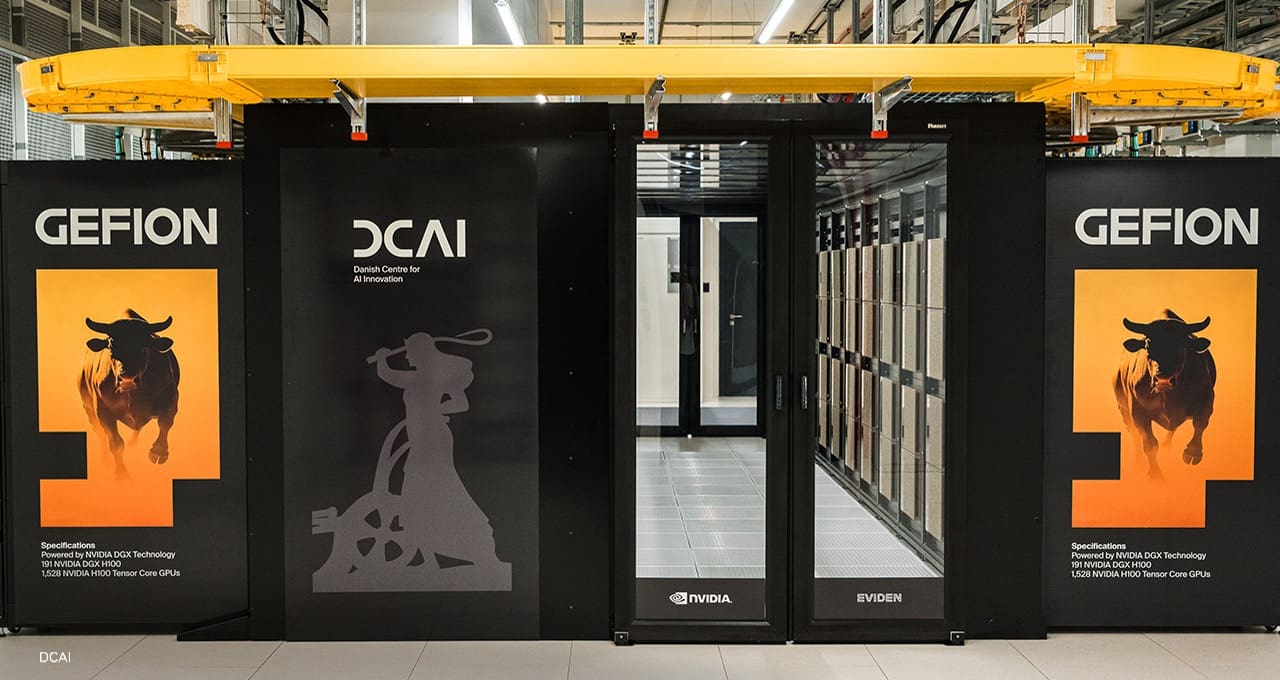
Ansys is collaborating with NVIDIA and the Danish Center for Applied Innovation (DCAI) to advance quantum algorithms for simulating fluid dynamics, leveraging the power of Denmarks first AI supercomputer, Gefion. The project utilises the NVIDIA CUDA-Q software platform, running on Gefion’s NVIDIA DGX SuperPOD infrastructure, to perform accelerated simulations of Quantum Lattice Boltzmann Methods – a class of algorithms with potential applications in areas such as aerospace and automotive engineering. This work aims to bridge the gap between theoretical quantum computing and practical engineering applications by enabling researchers to investigate the performance of these algorithms on a scale previously unattainable, simulating the behaviour of a 39-qubit quantum computer. The collaboration underscores a growing trend of combining classical high-performance computing with emerging quantum technologies to accelerate scientific discovery.
Advancing Quantum Simulations
Ansys is leveraging the NVIDIA CUDA-Q quantum computing platform, hosted on the Gefion supercomputer, to progress quantum algorithms for fluid dynamics applications. Gefion, Denmark’s inaugural AI supercomputer, comprises an NVIDIA DGX SuperPOD interconnected via NVIDIA Quantum-2 InfiniBand networking, providing the computational resources necessary for these complex simulations. By utilising the open-source CUDA-Q software, Ansys performs GPU-accelerated simulations of Quantum Lattice Boltzmann Methods – a class of algorithms used to model fluid behaviour – allowing for investigation into their potential impact on fluid dynamics.
These simulations, conducted on a 39-qubit scale, enable Ansys to assess algorithm performance in a cost-effective manner, bridging the gap between theoretical quantum computation and practical engineering applications. This approach allows researchers to investigate quantum applications in regimes where discernible effects become apparent, facilitating rapid exploration of quantum computing’s potential. The ability to simulate larger, more complex systems is crucial for identifying practical applications and refining algorithmic approaches.
The collaboration between NVIDIA, Ansys, and the Danish Center for Applied Innovation (DCAI), which operates Gefion, is driving the convergence of quantum technologies and AI supercomputing. Nadia Carlsten, CEO of DCAI, highlights the importance of this partnership in unlocking hybrid quantum-classical computing for researchers. Prith Banerjee, CTO of Ansys, confirms that these GPU-accelerated simulations are expanding the role of quantum computing within engineering disciplines like computational fluid dynamics.
Harnessing Supercomputing Power
Ansys is leveraging the computational power of the Gefion supercomputer to advance quantum algorithms for fluid dynamics applications. Gefion comprises an NVIDIA DGX SuperPOD interconnected via NVIDIA Quantum-2 InfiniBand networking, providing a robust platform for complex simulations. The simulations are facilitated by the open-source NVIDIA CUDA-Q software platform, enabling GPU-accelerated analysis of quantum algorithms.
CUDA-Q accesses GPU-accelerated libraries, allowing Gefion to execute simulations of Quantum Lattice Boltzmann Methods – a class of algorithms relevant to modelling fluid behaviour. By simulating the performance of these algorithms on a 39-qubit quantum computer, Ansys can efficiently and economically assess their potential impact on fluid dynamics problems. This work builds upon NVIDIA’s broader commitment to accelerating quantum computing research, demonstrated by initiatives such as the establishment of ABCI-Q in Japan and a new supercomputer in Taiwan.
Expanding Quantum Applications in Engineering
The collaboration between NVIDIA, Ansys, and the Danish Center for Applied Innovation (DCAI) is driving the convergence of quantum technologies and AI supercomputing. Nadia Carlsten, CEO of DCAI, highlights how this partnership unlocks hybrid quantum-classical computing for researchers. Prith Banerjee, CTO of Ansys, emphasises that these GPU-accelerated simulations enable the study of quantum applications in regimes where their effects become discernible, paving the way for future advancements in modelling and simulation techniques.
More information
External Link: Click Here For More