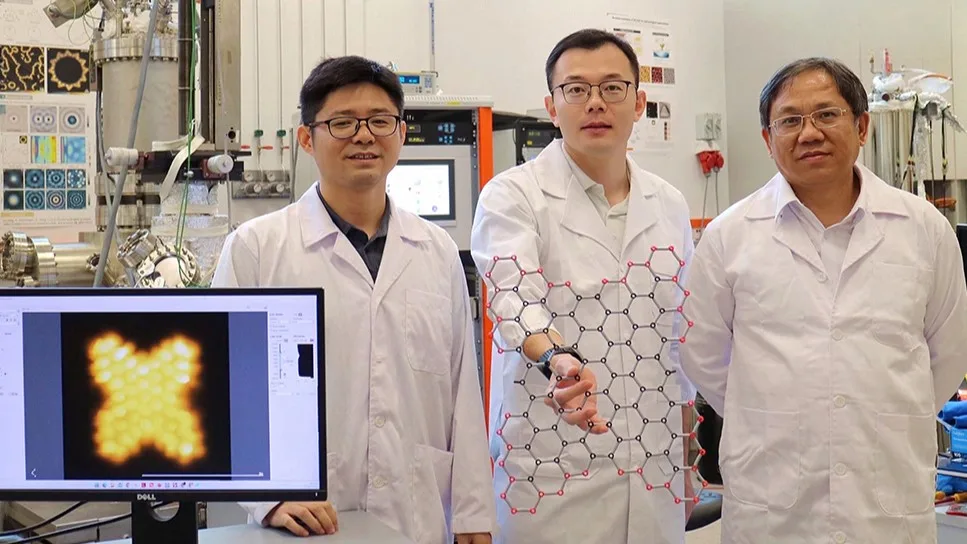
Researchers from the National University of Singapore, led by Associate Professor Lu Jiong and Professor Wu Jishan, have developed a butterfly-shaped magnetic nanographene. This tiny structure made of graphene molecules could advance quantum technologies due to its unique magnetic properties. The structure was achieved through an atomic-precise design of the π-electron network in the nanostructured graphene. The breakthrough could lead to advancements in quantum materials research, potentially revolutionizing information processing and high-density storage capabilities. The research was published in the scientific journal Nature Chemistry.
Unveiling the Butterfly-Shaped Magnetic Nanographene
Researchers from the National University of Singapore (NUS) have made a significant stride in the field of quantum materials by developing a unique butterfly-shaped magnetic nanographene. This innovative design concept for carbon-based quantum materials could potentially accelerate the advancement of quantum computing technologies, which are expected to revolutionize information processing and high-density storage capabilities.
The research team, led by Associate Professor Lu Jiong from the NUS Department of Chemistry and Institute for Functional Intelligent Materials, along with Professor Wu Jishan and international collaborators, have successfully created a tiny magnetic nanographene structure that hosts highly correlated spins. This structure, made of graphene molecules, exhibits remarkable magnetic properties due to the behavior of specific electrons in the carbon atoms’ π-orbitals. By precisely designing the arrangement of these carbon atoms at the nanoscale, the researchers have gained control over these unique electrons, making nanographene a promising material for creating extremely small magnets and fabricating fundamental building blocks needed for quantum computers, known as quantum bits or qubits.
The Butterfly-Shaped Magnetic Graphene: A Closer Look
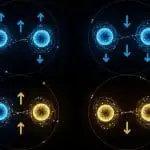
The butterfly-shaped magnetic graphene developed by the researchers is characterized by four rounded triangles resembling butterfly wings. Each of these wings holds an unpaired π-electron responsible for the observed magnetic properties. The structure was achieved through an atomic-precise design of the π-electron network in the nanostructured graphene.
“Magnetic nanographene, a tiny molecule composed of fused benzene rings, holds significant promise as a next-generation quantum material for hosting fascinating quantum spins due to its chemical versatility and long spin coherence time. However, creating multiple highly entangled spins in such systems is a daunting yet essential task for building scalable and complex quantum networks,” said Assoc Prof Lu.
Overcoming Challenges in Nanographene
The magnetic properties of nanographene are usually derived from the arrangement of its special electrons, known as π-electrons, or the strength of their interactions. However, it is challenging to make these properties work together to create multiple correlated spins. Nanographene also predominately exhibits a singular magnetic order, where spins align either in the same direction (ferromagnetic) or in opposite directions (antiferromagnetic).
The researchers developed a method to overcome these challenges. Their butterfly-shaped nanographene, with both ferromagnetic and antiferromagnetic properties, is formed by combining four smaller triangles into a rhombus at the center. The nanographene measures approximately 3 nanometers in size.
Fabrication and Measurement of the Butterfly Nanographene
To produce the “butterfly” nanographene, the researchers initially designed a special molecule precursor via conventional in-solution chemistry. This precursor was then used for the subsequent on-surface synthesis, a new type of solid-phase chemical reaction performed in a vacuum environment. This approach allowed the researchers to precisely control the shape and structure of the nanographene at the atomic level.
An intriguing aspect of the “butterfly” nanographene is its four unpaired π-electrons, with spins mainly delocalized in the “wing” regions and entangled together. Using an ultra-cold scanning probe microscope with a nickelocene tip as an atomic-scale spin sensor, the researchers measured the magnetism of the butterfly nanographenes. This new technique helps scientists directly probe entangled spins to understand how nanographene’s magnetism works at the atomic scale.
Future Implications of the Butterfly Nanographene
The breakthrough not only tackles existing challenges but opens up new possibilities for precisely controlling the magnetic properties at the smallest scale, leading to exciting advancements in quantum materials research. “The insights gained from this study pave the way for creating new-generation organic quantum materials with designer quantum spin architectures. Looking ahead, our goal is to measure the spin dynamics and coherence time at the single-molecule level and manipulate these entangled spins coherently. This represents a significant stride towards achieving more powerful information processing and storage capabilities,” added Assoc Prof Lu.
External Link: Click Here For More