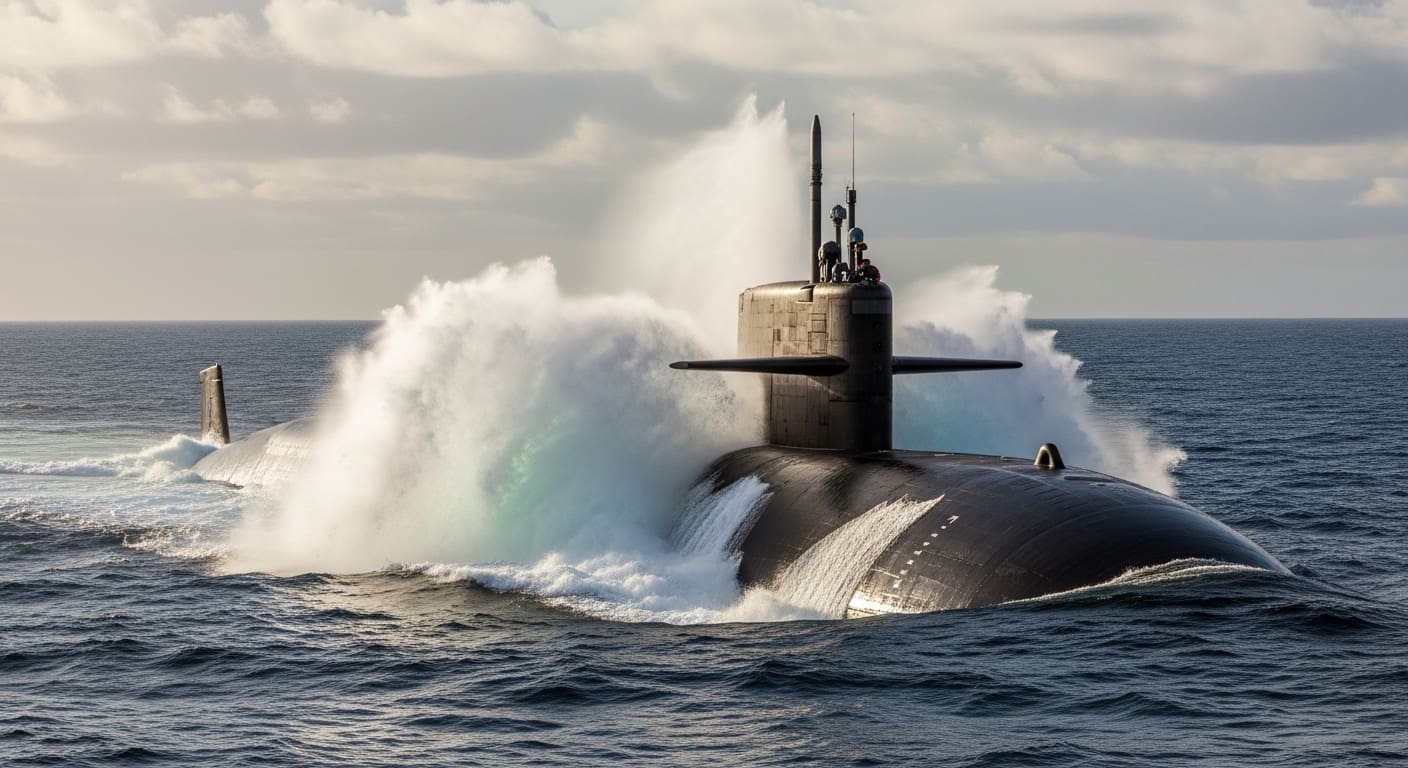
For centuries, navigating beneath the waves has relied on a delicate balance of skill, technology, and a little luck – but now, quantum physics is poised to rewrite the rules. In a groundbreaking first, Infleqtion has successfully trialed a quantum optical clock aboard a Royal Navy submarine, demonstrating a path toward GPS-free underwater navigation. This leap forward is critical, as traditional positioning systems are vulnerable to jamming or simply don’t penetrate water, leaving subs reliant on less accurate methods. By providing an ultra-precise, self-contained “time heartbeat,” this technology promises to dramatically enhance a submarine’s resilience, accuracy, and operational independence in increasingly contested environments.
Quantum Clock Deployed on Submarine
The successful integration of Infleqtion’s Tiqker optical atomic clock onto the Royal Navy’s Excalibur (XCal) testbed submarine represents a significant advancement beyond simply achieving GPS-free navigation. This wasn’t merely a proof-of-concept; the trial demonstrably validated the clock’s ruggedization for sustained operation during multiple submerged dives—a critical requirement for real-world naval deployment. Beyond positioning, the Tiqker’s ultra-precise timekeeping has implications for a suite of submarine systems, offering enhanced accuracy for sonar functionality, fire control precision, and the security of onboard communications. Commander Matthew Steele of the Royal Navy’s Disruptive Capabilities and Technologies Office highlighted the trial as a “critical step” toward understanding the broader deployment potential of quantum clocks on underwater platforms. Infleqtion’s selection as the first external technology partner within the XCal program underscores the Navy’s confidence in the company’s quantum capabilities, and signals a strategic move toward incorporating this technology into future naval operations. With plans for further benchmarking, the trial establishes a foundation for fleets to operate with unprecedented precision, regardless of environmental constraints or potential signal interference.
Advancing GPS-Independent Navigation
Advancing GPS-independent navigation with technologies like Infleqtion’s Tiqker optical atomic clock isn’t simply about replacing a signal; it’s about fundamentally altering a submarine’s operational profile. Unlike traditional microwave clocks prone to drift, Tiqker delivers a stable, self-contained time reference, enabling prolonged submerged operations without reliance on external signals. This is particularly critical given the increasing threat of GNSS jamming and spoofing in modern naval warfare. The successful trial aboard the Royal Navy’s Excalibur (XCal) testbed demonstrated not only the clock’s resilience during repeated dives—validating its ruggedization for practical deployment—but also its potential to enhance a suite of onboard systems. Beyond precise positioning, Tiqker’s ultra-accurate timing promises improvements in sonar functionality, fire control precision, and the security of communications—effectively elevating the performance of multiple critical submarine capabilities. Infleqtion’s selection as the first external technology partner within the XCal program signals a strategic investment in quantum technologies, and further benchmarking will pave the way for integrating this advanced PNT solution into future naval fleets, allowing them to navigate, coordinate, and operate with increased precision and autonomy in any environment.
Improving Submarine Capabilities & Resilience
Beyond enhanced navigation, the successful integration of Infleqtion’s Tiqker optical atomic clock onto the Royal Navy’s Excalibur submarine promises a significant uplift in overall submarine capabilities and resilience. The clock’s ultra-precise timing extends far beyond simply establishing position; it directly impacts the performance of critical systems reliant on accurate synchronization. Specifically, sonar functionality benefits from improved signal processing, allowing for more accurate detection and classification of underwater threats. Similarly, fire control systems gain precision, increasing the probability of successful engagements, while the security of onboard communications is bolstered through more robust encryption protocols. Commander Steele highlighted this interconnectedness, framing the trial as a step towards broader “quantum operational advantage.” The Tiqker’s demonstrated ruggedization—withstanding sustained operation during multiple submerged dives—is particularly crucial, as it validates the technology’s suitability for the demanding conditions of real-world naval deployment. This isn’t merely about futureproofing; the Navy is actively pursuing further benchmarking to accelerate the adoption of quantum-based PNT solutions, aiming to equip future fleets with a decisive edge in increasingly contested underwater environments and reduce reliance on vulnerable external signals.