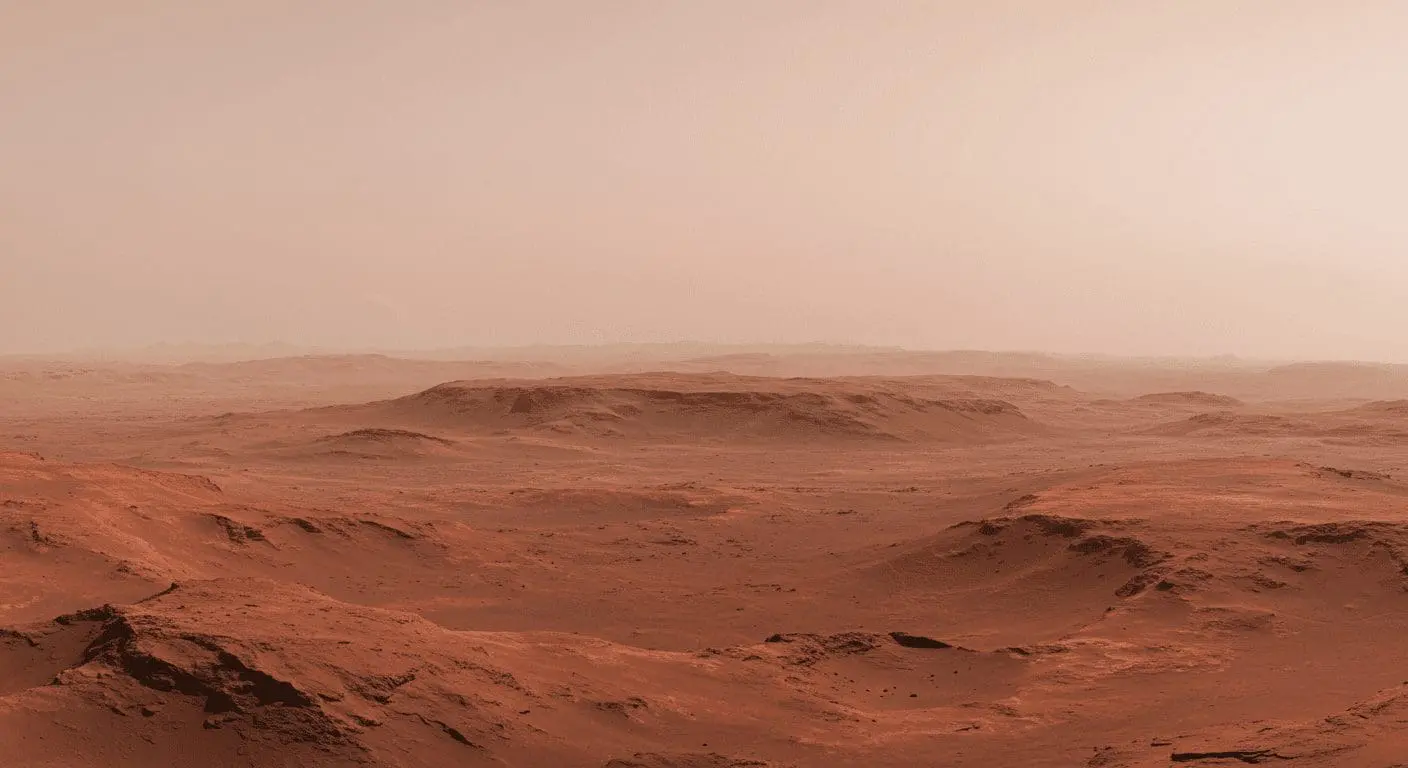
A new study co-authored by Dr. Michael Tice of Texas A&M University provides insights into the volcanic history and potential habitability of Mars through an analysis of diverse iron-rich rocks in Jezero Crater. Published in Science Advances, the research examines samples collected by NASA’s Perseverance rover, which landed in the crater on February 18, 2021.
Utilizing the PIXL spectrometer, the international team identified two distinct types of volcanic rocks, revealing a highly differentiated lava suite that suggests prolonged intracrustal magmatism. These findings not only shed light on Mars’ geological evolution but also imply that the region may have maintained conditions conducive to life for extended periods during the planet’s early history.
In a groundbreaking discovery, NASA’s Perseverance rover has uncovered compelling evidence of two distinct types of volcanic rocks in Jezero Crater, shedding light on the planet’s dynamic geological history. This revelation not only enhances our understanding of Mars’ past but also opens new avenues for exploring its potential to support life.
The rover’s PIXL (Planetary Instrument for X-ray Lithochemistry) instrument has identified rocks formed through fractional crystallization, a process indicative of prolonged magmatic activity. This suggests that the magma underwent multiple stages of cooling and crystal formation, pointing to a complex evolutionary history beneath Mars’ surface.
Additionally, PIXL detected evidence of crustal assimilation, where ascending magma incorporated pre-existing crustal materials. This dynamic interaction could have introduced diverse geochemical elements into the region’s geology, enriching its composition over time.
These findings are significant in assessing Jezero Crater’s potential as a past habitat for microbial life. Prolonged volcanic activity may have created stable environmental conditions conducive to sustaining life. Furthermore, the enrichment of local geology through crustal assimilation could have provided essential nutrients, further enhancing the region’s habitability.
The PIXL instrument has been pivotal in characterizing these rock types through high-resolution elemental mapping and detailed chemical analysis. This capability has enabled researchers to distinguish between rocks formed by distinct magmatic processes, providing a foundation for interpreting Mars’ geological history.
The data collected by Perseverance is laying the groundwork for future missions, such as the Mars Sample Return campaign. These efforts aim to bring samples back to Earth for further analysis, offering deeper insights into the planet’s geological and environmental evolution. The ability to analyze these rocks in situ has significantly advanced our understanding of Martian magmatism and its implications for past habitability.
The discoveries made by Perseverance rover, particularly through the PIXL instrument, are transforming our understanding of Mars’ geological history and potential for supporting life. As we look forward to future missions, these findings underscore the importance of continued exploration in unraveling the mysteries of our neighboring planet.
More information
External Link: Click Here For More