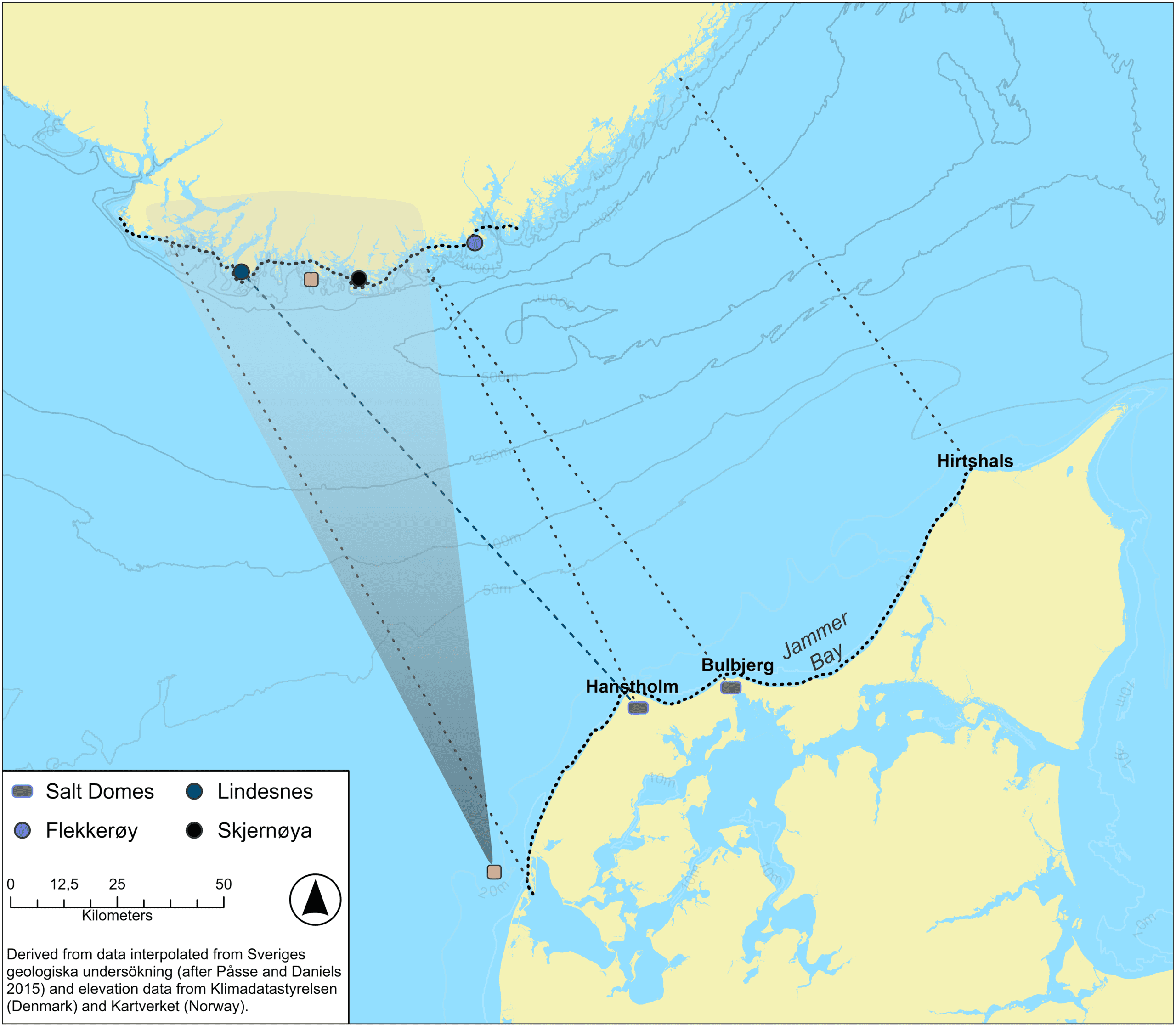
A study published in PLOS ONE on April 2, 2025, by researchers from the University of Gothenburg and colleagues, developed a computer model to simulate how Bronze Age Scandinavians may have traversed the sea between Denmark and Norway. The research suggests that people living in what is now northern Denmark and southwestern Norway could have made direct crossings over open water, despite the challenges posed by weather conditions and navigational requirements.
Using data on environmental factors and boat performance, the team simulated voyages using a reconstruction of the Hjortspring boat, a large paddle-driven canoe from around 350 BCE. The findings indicate that while direct crossings were possible under favorable conditions, such as calm seas and good weather forecasting, they would have required significant skill and likely occurred during summer months. In contrast, coastal routes, though safer and navigable year-round, would have been longer and more time-consuming. The study highlights the potential for regular open-sea voyages in the Skagerrak region by 2300 BCE, as supported by archaeological evidence, and provides a computational tool adaptable for studying seafaring in other contexts.
Bronze Age Seafaring: New Insights into Ancient Navigation and Cultural Exchange
Recent research has revealed that Bronze Age Scandinavians possessed advanced seafaring skills and technologies, enabling long-distance travel between Denmark and Norway. By employing a sophisticated computer modeling tool, researchers have simulated voyages across open water, demonstrating the feasibility of direct maritime connections despite challenging environmental conditions. This groundbreaking study challenges earlier assumptions about the limitations of Bronze Age navigation and sheds new light on ancient trade networks and cultural exchange in early Europe.
The Computer Modeling Tool: A Quantitative Approach to Ancient Voyages
The study utilized a cutting-edge computer modeling tool designed to reconstruct potential maritime routes between Denmark and Norway. By integrating environmental data, such as wind patterns, ocean currents, and wave heights, with detailed metrics on Bronze Age boat performance—including speed, maneuverability, and seaworthiness—researchers were able to assess the feasibility of long-distance crossings.
The modeling process accounted for both favorable and adverse weather conditions, providing a comprehensive analysis of the challenges ancient mariners would have faced. Simulations revealed that direct crossings over distances exceeding 100 kilometers were indeed possible, but they required precise navigation skills, an intimate understanding of seasonal weather patterns, and advanced boat design.
Advanced Seafaring Technologies and Strategies
The findings underscore the technological sophistication of Bronze Age maritime societies. The ability to navigate open water over significant distances suggests that these ancient mariners possessed a deep knowledge of celestial navigation, tidal cycles, and coastal landmarks. Additionally, the construction of seaworthy vessels capable of withstanding harsh North Sea conditions highlights their engineering expertise.
The study also emphasizes the importance of strategic planning in long-distance voyages. By leveraging seasonal wind patterns and ocean currents, Bronze Age sailors could optimize their routes, minimizing travel time and reducing the risk of adverse weather encounters. This level of sophistication indicates a highly organized and socially complex society, capable of coordinating resources and expertise to facilitate maritime exploration and trade.
Cultural Exchange and Trade Networks
The implications of this research extend beyond mere technological achievements. The ability to traverse long distances by sea likely played a pivotal role in fostering cultural exchange between regions. Shared artifacts, burial practices, and architectural styles observed in archaeological records from Denmark and Norway can now be better understood within the context of active maritime connections.
Moreover, the study suggests that Bronze Age Scandinavians were part of extensive trade networks, exchanging goods such as metals, ceramics, and textiles across significant distances. These interactions would have facilitated the dissemination of ideas, technologies, and cultural practices, contributing to the rich tapestry of early European civilization.
Reimagining Early European Maritime History
The integration of computational modeling with archaeological evidence has revolutionized our understanding of Bronze Age seafaring. By reconstructing potential routes and analyzing the strategies employed by ancient mariners, researchers have gained valuable insights into the capabilities and ingenuity of these early societies.
This research not only challenges previous assumptions about the limitations of Bronze Age navigation but also highlights the importance of maritime activities in shaping early European history. As further studies build on these findings, we can expect an even deeper understanding of the role that seafaring played in connecting communities and fostering cultural exchange across the ancient world.
In conclusion, the advanced seafaring technologies and strategic navigation skills of Bronze Age Scandinavians demonstrate a level of sophistication previously underestimated. Their ability to traverse open water has profound implications for our understanding of early European trade networks, cultural interactions, and societal organization. This research invites us to reimagine the maritime landscape of the past and appreciate the ingenuity of those who navigated it with such skill and determination.
More information
External Link: Click Here For More