The behaviour of quantum fields, particularly in systems exhibiting emergent particles, remains a fundamental challenge in physics, and researchers continually seek methods to move beyond traditional approximations. Fadi Sun and Jinwu Ye, both from the School of Sciences at Great Bay University, now present a new non-perturbative approach to identify subtle quantum phenomena, revealing the existence of both light pseudo-Goldstone modes and a previously unrecognised type of Goldstone mode with an exceptionally small energy slope, termed a ‘slow-Goldstone mode’. This formalism, which avoids the limitations of standard perturbative techniques, demonstrates how these modes arise in superfluids formed by interacting bosons, and suggests their potential role in quantum scrambling at realistic temperatures. The discovery expands understanding of emergent particles and offers a broadly applicable framework for investigating similar phenomena in diverse materials, potentially bridging connections to models like the Sachdev-Ye-Kitaev system.
Ultracold Gases, Synthetic Dimensions, and Spin-Orbit Coupling
This research explores the fascinating world of ultracold atomic gases, focusing on the creation of artificial, or synthetic, dimensions and the manipulation of spin-orbit coupling. These advancements allow scientists to explore new physics and create novel quantum systems with tailored properties. Researchers are creating synthetic dimensions by carefully controlling the behavior of ultracold atoms, effectively mimicking the properties of particles in higher-dimensional spaces using techniques like optical lattices and synthetic gauge fields. A central focus is the creation and manipulation of spin-orbit coupling, a relativistic effect that links an atom’s spin and momentum, typically achieved using lasers to create effective magnetic fields.
This coupling leads to a variety of interesting phenomena, including topological phases of matter and novel quantum states. The research investigates the collective behavior of these systems, focusing on phenomena like superfluidity, magnetism, and topological order, and explores how atoms interact with each other and how these interactions shape the system’s properties. Researchers are also exploring the emergence of collective excitations, such as Roton and pseudo-Goldstone modes, and transitions driven by changes in the Fermi surface topology. They are investigating quantum magnetism and out-of-time-order correlations, which can probe the quantum chaos within the system, and exploring the possibility of slowing down light within these systems. This work provides a comprehensive overview of the field and lays the groundwork for future discoveries in quantum science.
Nonperturbative Analysis of Interacting Bosonic Superfluids
Researchers have developed a new theoretical approach to understand complex quantum systems, particularly focusing on identifying subtle quantum states that conventional methods often miss. This new formalism addresses limitations in perturbative expansions, which rely on approximations that can fail when dealing with strongly interacting systems. The methodology centers on studying superfluids formed by bosons with spin-orbit coupling arranged in a square lattice, interacting via a weak spin-anisotropic force. Unlike previous methods that rely on incorporating quantum fluctuations, this approach seeks to eliminate spurious results from the outset, ensuring consistency with fundamental symmetry arguments.
A key innovation lies in the ability to identify and characterize a “slow-Goldstone mode,” a unique type of excitation not easily detected by standard techniques. This mode, alongside a light pseudo-Goldstone mode, emerges from the non-perturbative analysis and is predicted to play a role in quantum information scrambling at finite temperatures. This work promises to unlock new insights into the fundamental properties of matter and pave the way for future discoveries in quantum science, building upon recent experimental advances in creating and controlling these systems using cold atoms loaded into optical lattices.
Slow-Goldstone Modes in Interacting Bose Superfluids
Researchers have developed a new theoretical approach to understand complex quantum systems, revealing previously hidden properties of superfluids formed by interacting bosons in a lattice structure. This work addresses limitations in existing methods, which often produce inaccurate results or fail to capture fundamental physics when dealing with strongly interacting systems. The team’s formalism successfully identifies two distinct types of emergent modes, a pseudo-Goldstone mode and a novel “slow-Goldstone mode”, that were previously obscured by conventional calculations. The research focuses on superfluids exhibiting Rashba spin-orbit coupling, where the interaction between an electron’s spin and its motion influences the system’s behavior.
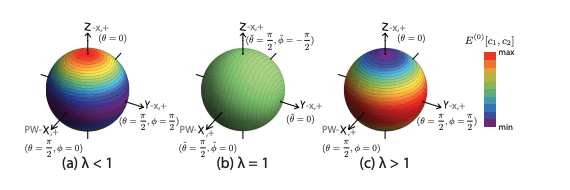
By applying their new non-perturbative method, the researchers demonstrate how these systems transition between different phases and how the emergent modes evolve. Notably, the pseudo-Goldstone mode appears when the system is weakly interacting, while the slow-Goldstone mode emerges at a specific interaction strength, exhibiting a remarkably flat dispersion, meaning it propagates much slower than typical Goldstone modes. The discovery of these modes has significant implications for understanding quantum information scrambling, a process crucial for quantum computing and the study of chaotic systems. The team found that the pseudo-Goldstone mode suppresses scrambling, while the slow-Goldstone mode leads to a unique scaling behavior in the rate of scrambling, specifically, a scaling proportional to the cube of temperature. This advancement provides a powerful tool for exploring a wide range of quantum materials and designing novel quantum devices.
Slow Modes and Quantum Chaos in Superfluids
This research introduces a new non-perturbative method for identifying light pseudo-Goldstone modes and a unique slow-Goldstone mode within superfluids formed by interacting bosons exhibiting spin-orbit coupling on a lattice. The formalism successfully predicts the existence of these modes, which may not be detectable using traditional perturbative approaches, and explores their potential role in quantum scrambling phenomena at finite temperatures. The findings reveal distinct behaviours for the pseudo-Goldstone and slow-Goldstone modes, with the Lyapunov exponent and butterfly velocity exhibiting specific dependencies on parameters like temperature and the strength of interactions. The authors present a detailed analysis of these modes, outlining how their properties contribute to the overall quantum scrambling behaviour of the system. Experimental realisation of these modes is considered feasible using ultracold alkaline atoms and optical lattice techniques, offering a pathway to directly observe and validate the theoretical predictions.
👉 More information
🗞 Nonperturbative quantum field theory for pseudo-Goldstone modes, slow-Goldstone modes, and their quantum chaos
🧠 ArXiv: https://arxiv.org/abs/2508.14491