Researchers developed a fully neuromorphic receiver, inspired by biological neural systems, achieving bit error rate performance comparable to digital receivers while consuming microwatt-level power. This system processes signals entirely with spikes, integrating detection and decoding, and incorporates a noise-tracking mechanism to maintain performance under varying conditions.
The pursuit of increasingly energy-efficient communication systems is driving exploration beyond conventional digital signal processing. Researchers are now investigating bio-inspired ‘neuromorphic’ computing – systems that mimic the structure and function of the brain – as a potential solution. A team led by George N. Katsaros and Konstantinos Nikitopoulos, from the Wireless Systems Lab at the University of Surrey’s 5G & 6G Innovation Centre, detail a novel approach in their article, “Toward Fully Neuromorphic Receivers for Ultra-Power Efficient Communications”. They present a fully neuromorphic receiver, operating entirely on spiking signals, for a basic binary phase-shift keying (BPSK) transmission scheme with repetition coding, achieving comparable error-rate performance to digital systems while consuming power measured in microwatts. Their work introduces a noise-tracking mechanism to maintain performance in fluctuating conditions and outlines future directions for developing complete neuromorphic transceivers.
Neuromorphic Receiver Achieves Joint Detection and Decoding with Spiking Signals
Neuromorphic computing offers a potential alternative to conventional digital signal processing (DSP) in wireless communication. Recent research details a fully neuromorphic receiver capable of performing both signal detection and decoding using asynchronous, event-driven signals known as ‘spikes’. This approach directly applies neuromorphic principles throughout the receiver’s processing chain, initially demonstrated using binary phase-shift keying (BPSK) – a digital modulation scheme where data is represented by variations in the phase of a carrier signal – and establishes a basis for future low-power communication systems.
The implemented receiver achieves error-rate performance comparable to conventional designs while operating with power consumption in the microwatt range. This suggests substantial potential for energy savings. A central innovation is a noise-tracking mechanism that dynamically adjusts neural parameters during transmission. This adaptation maintains performance despite fluctuating signal conditions and mitigates interference, enhancing robustness in challenging environments. The work represents a departure from energy-intensive digital processing towards biologically inspired, event-driven computation.
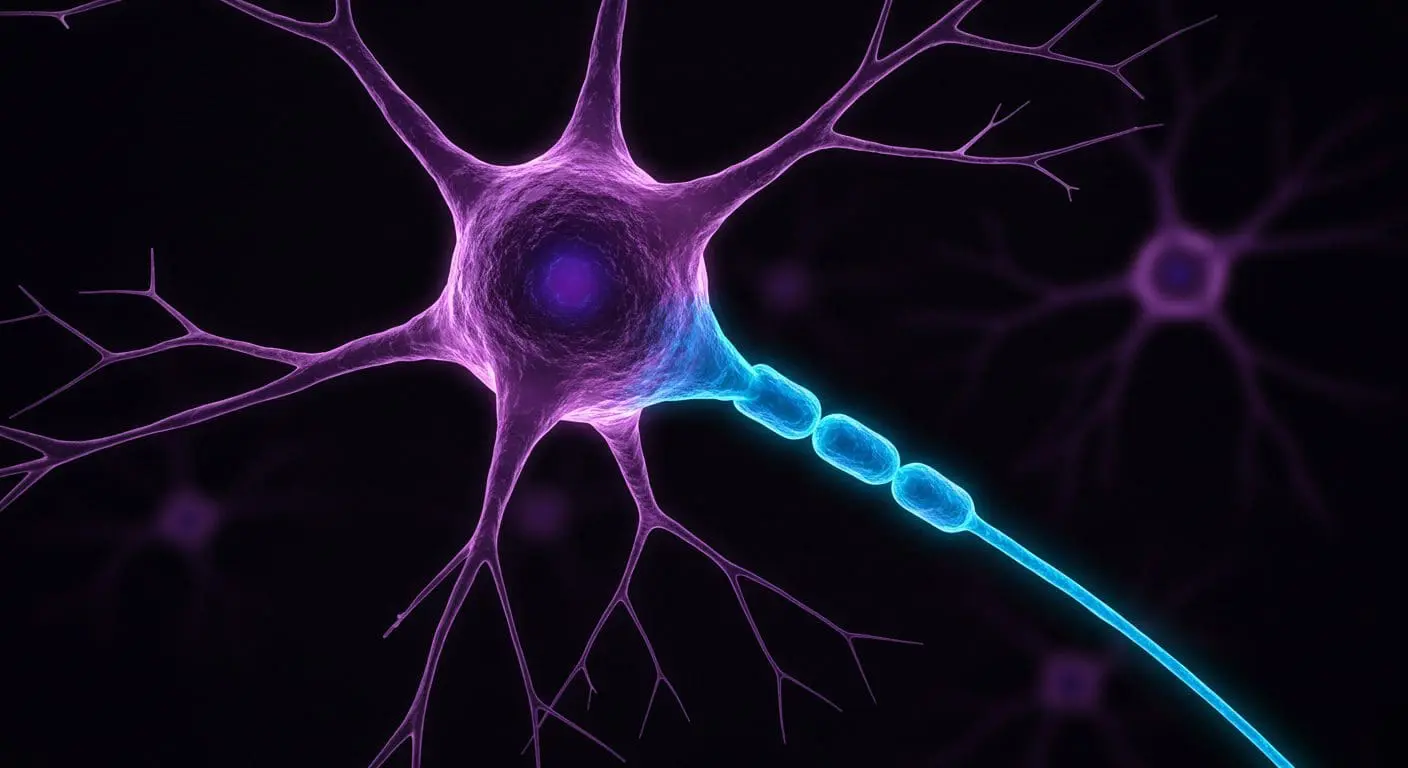
Researchers constructed the receiver using spiking neural networks (SNNs). Unlike artificial neural networks used in machine learning, SNNs more closely mimic biological neurons. The receiver employs lifetime integrate-and-fire (LIF) neurons, which accumulate incoming signals over time. When the accumulated signal reaches a threshold, the neuron emits a spike – a brief electrical pulse – and resets. This event-driven processing inherently reduces power consumption, particularly when processing sparse data, as computations only occur when a spike is generated. Traditional DSP methods, by contrast, continuously operate regardless of signal activity.
The research demonstrates the feasibility of a fully neuromorphic receiver for BPSK communication utilising repetition coding – a technique where data is transmitted multiple times to improve reliability. This work suggests a pathway towards more sustainable wireless technologies.
👉 More information
🗞 Toward Fully Neuromorphic Receivers for Ultra-Power Efficient Communications
🧠 DOI: https://doi.org/10.48550/arXiv.2505.22508