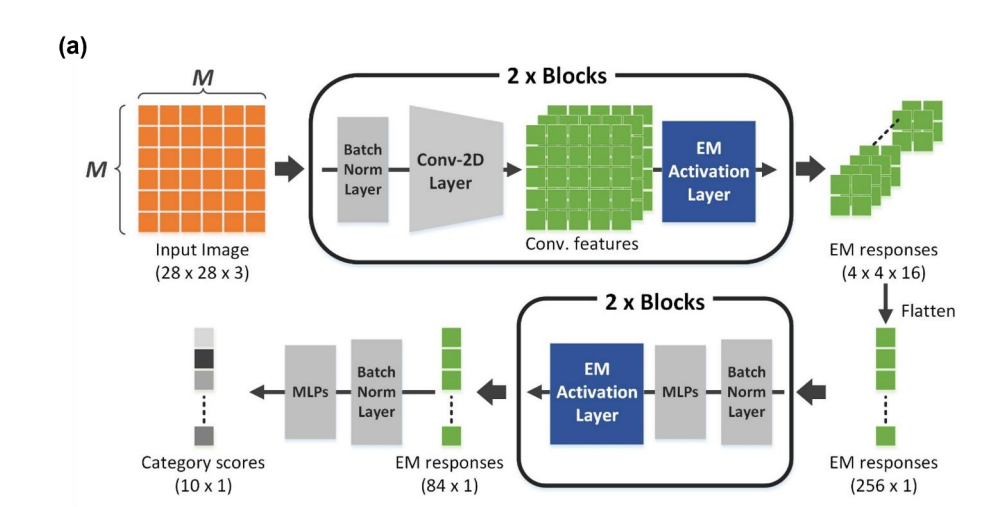
Memristors, electronic components that remember their past states without continuous power, hold immense promise for future computing technologies and brain-inspired systems. Tongxin Chen, Yinyu Nie, and Yafei Hao, alongside colleagues, have developed a new organic spintronic memristor that significantly advances this field. Their device, built from a unique combination of materials, mimics the behaviour of synapses in the human brain, exhibiting both long-term strengthening and weakening of connections. Crucially, this team introduces a novel method for controlling the memristor’s resistance using an external magnetic field, offering a non-electrical way to fine-tune its behaviour and achieve more complex data processing. Simulations demonstrate that incorporating this magnetic control into artificial neural networks improves accuracy and stability, paving the way for more efficient and versatile low-power electronics, potentially for use in flexible and wearable devices.
Fluorine Ion Motion Controls Spintronic Memristor Resistance
Scientists have developed a novel organic spintronic memristor, a device that retains its resistance state without continuous power, based on a layered structure of La0. 67Sr0. 33MnO3, poly(vinylidene fluoride), and cobalt. This device exhibits behavior inspired by biological synapses, demonstrating both long-term potentiation and long-term depression through controlled electrical polarization. The team fabricated small junctions, measuring 10×10 micrometers, using a precise deposition technique to create ultrathin layers of PVDF onto a pre-patterned LSMO substrate.
Experiments reveal that the memristor’s resistance is modulated by the movement of fluorine atoms within the PVDF layer. Applying a positive electrical polarization drives these fluorine atoms towards the LSMO side, increasing the tunneling barrier thickness and resulting in a high resistance state. Conversely, negative polarization directs fluorine atoms towards the cobalt layer, reducing the barrier thickness and creating a low resistance state. Measurements demonstrate a substantial resistance change ratio of 1. 1x 10 4 %, allowing for a wide range of resistance states to be achieved by adjusting the duration and amplitude of the applied voltage.
Notably, this memristor exhibits a significant tunneling magnetoresistance (TMR) effect, a quantum mechanical phenomenon where resistance depends on the alignment of magnetic layers. The movement of fluorine atoms plays a crucial role in tuning the TMR effect, altering the hybridization at the interface between organic molecules and ferromagnetic metals. This tunability provides a mechanism to modulate neural synaptic functions and control the TMR effect. Further experiments demonstrate the ability to switch the sign of the TMR effect through electrical polarization, achieving a positive TMR at -0.
8V and a negative TMR at -1. 3V. This tunability, resulting from the presence or absence of fluorine incorporation at the interfaces, provides flexibility in modulating device characteristics and opens avenues for advanced memory and neuromorphic computing applications.
Organic Spintronic Memristor Fabrication and Mechanism
Scientists engineered a novel organic spintronic memristor utilizing a layered structure of La0. 67Sr0. 33MnO3 (LSMO), poly(vinylidene fluoride) (PVDF), and cobalt, demonstrating biologically inspired synaptic behavior. The team deposited ultrathin layers of PVDF onto pre-patterned LSMO substrates using a precise deposition technique allowing control over film thickness and uniformity. Small junctions, measuring 10×10 micrometers, were then fabricated using UV lithography.
This fabrication process created the foundation for observing memristive effects driven by fluorine atom migration within the PVDF layer. The study pioneered a unique memristive mechanism based on the voltage-driven motion of fluorine atoms within the junction, rather than traditional ferroelectric effects. Following annealing, the LSMO bottom electrode fully dissociated fluorine components within the thin PVDF layer. Upon applying electrical polarization, these fluorine atoms migrate either towards the LSMO/PVDF interface or into the CoO/Co layer, modulating the device’s resistance. Positive polarization drives fluorine atoms into the LSMO side, increasing the effective tunneling barrier thickness and creating a high resistance state, while negative polarization directs them into the CoO layer, reducing the barrier thickness and establishing a low resistance state.
Measurements of current-voltage characteristics confirmed that incorporating fluorine into different interfaces effectively tunes junction resistance by altering the tunneling barrier. Researchers observed a substantial resistance change ratio, reaching 1. 1x 10 4 %, and the ability to achieve various resistance states by adjusting the pulse width and amplitude of the polarization voltage, forming the basis of memristor behavior. Notably, this device exhibits a significant tunneling magnetoresistance (TMR) effect, distinguishing it from other PVDF-based memristors. The team demonstrated a negative TMR of -43.
9% under a magnetic field, where the magnetizations of cobalt and LSMO align parallel, resulting in a high resistance state. Switching the magnetic field induced an antiparallel configuration and a lower resistance state. The study revealed that fluorine atom motion plays a crucial role in tuning the TMR effect, influencing the hybridization between organic molecule orbits and the spin-split bands of ferromagnetic metals, creating a “spin-interface” with efficient spin filtering. Electrical polarization modulates this hybridization, allowing control over the sign and amplitude of the TMR effect.
🗞 Magnetic-field controlled organic spintronic memristor for neural network computation
🧠 ArXiv: https://arxiv.org/abs/2510.23542