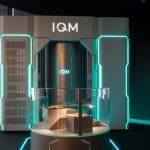
The intersection of physics and information has led to extraordinary advancements in computing, with quantum computing being the latest frontier. This concept, first described by Yuri Manin, Paul Benioff, Richard Feynman, and David Deutsch in the 1980s, uses quantum mechanics to solve problems faster than classical computers. Today, a burgeoning ecosystem of quantum computing has emerged, with companies like big tech industry names and hundreds of startups investing heavily in this technology.
The market is expected to reach $1.5 billion by 2026 and potentially trillions of dollars by 2035. However, experts caution that we are still in the infancy stage of quantum computing, with devices prone to errors due to their susceptibility to perturbations. Researchers like Santiago Núñez-Corrales, NCSA Quantum Lead Research Scientist, are working to overcome these challenges and develop more efficient quantum algorithms.
The University of Illinois is at the forefront of this research, with a focus on developing dependable quantum cyberinfrastructure, creating high-level quantum programming languages, and exploring applications for quantum technologies. As the field continues to evolve, experts like Núñez-Corrales emphasize the need for evidence-restrained optimism, acknowledging both the promises and difficulties of quantum computing.
The Intersection of Physics and Computation: A New Frontier
The relationship between physics and information is a profound one, with mathematical logic allowing for the creation of abstract computing devices that can be built and operated using energy and matter. This connection has led to significant advancements in science, technology, and even aesthetics. Quantum computing, which leverages quantum mechanics to solve problems faster than classical computers, takes this relationship to new heights.
The concept of quantum computing was first described in the 1980s by Yuri Manin, Paul Benioff, Richard Feynman, and David Deutsch as a theoretical possibility. Since then, significant progress has been made, with physicists and engineers developing devices that host quantum bits (qubits) and maintain their state long enough to perform preliminary useful work. A whole field, the study of quantum algorithms, has emerged to understand which kinds of problems are soluble with these systems and how efficient these solutions may be.
The Quantum Computing Ecosystem: From Academia to Industry
The quantum computing ecosystem has evolved significantly, from experiments in academic laboratories to products that can be accessed via the cloud. Big tech industry names and startups alike have invested heavily in this space, with estimates suggesting a market size of billions of dollars by the end of the decade. The University of Illinois, with its strong research focus, is well-positioned to contribute to this ecosystem.
However, despite the progress made, significant challenges remain. Noisy Intermediate-Scale Quantum devices produce unreliable results due to their susceptibility to perturbations of various sorts. Fault tolerance remains a distant goal, and fundamental questions about scalability, particularly with regards to entanglement, a key quantum resource, persist. Moreover, programming quantum devices is still a painstaking and inefficient process, with low-level languages being the norm.
The State of Quantum Computing: Promises and Challenges
The current state of quantum computing bears a striking resemblance to that of classical computing in the 1950s. Transistors were still experimentally used in hardware, stored programs had only recently been implemented in repeatable – yet clunky – ways, and computer architecture was untrodden land. The most productive stance is evidence-restrained optimism: both the promises and the difficulties are real, and closing the gap requires a collaborative effort.
NCSA’s Mission in Quantum Computing
At NCSA, the mission is clear: to harness advanced computing and scientific software to catalyze discoveries and ultimately enable positive impacts across science and society. Quantum computing fits naturally at the core of this mission. The organization has crafted a quantum computing vision that is scientifically informed and tempered by the expertise of colleagues in the Illinois Quantum Information Science and Technology Center.
Three main targets explain the bulk of recent work at NCSA. The first is to contribute to the advancement of quantum computing platforms toward dependable quantum cyberinfrastructure. Ongoing work toward digital twins for superconducting quantum devices and HPC-QPU integration has allowed NCSA to establish deep and enriching relationships with quantum experimentalists on campus.
The second target is to influence the quantum software ecosystem in ways that increase the productivity of developers through creating new high-level quantum programming languages and exploring what a quantum analogue of Message Passing Interface (MPI) may look like to write software transparently across distributed classical-quantum infrastructure in the future.
Finally, NCSA’s staff has begun gearing up to serve the needs of research scientists seeking new possibilities in quantum technologies while also leading the 1st Workshop on Broadly Accessible Quantum Computing at PEARC24. This workshop aims to provide participants with a comprehensive understanding of the current status and prospects of quantum computing (QC) and its applications, focusing on how it can benefit the broader community interested in integrating quantum technologies into their traditional research computing facilities.
Whatever form the quantum computing revolution takes, NCSA stands ready to contribute.
External Link: Click Here For More