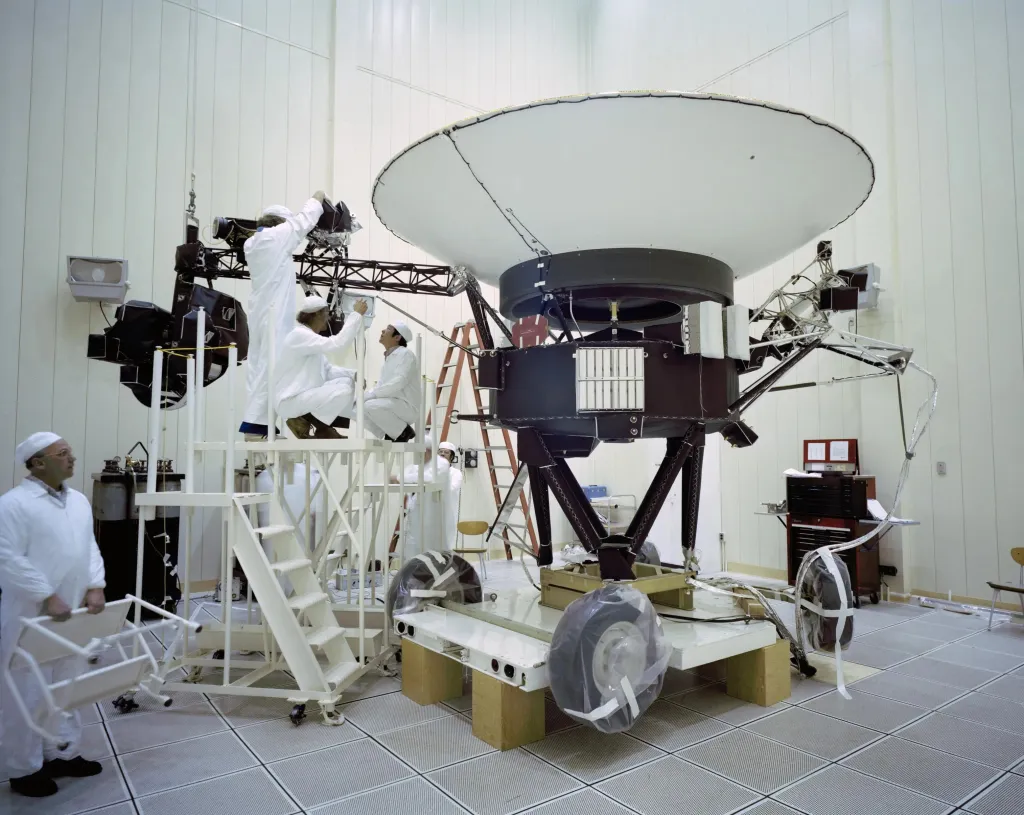
NASA has turned off the plasma science instrument on the Voyager 2 spacecraft to conserve power, as the probe’s electrical supply continues to dwindle. Launched in 1977, Voyager 2 is now over 12.8 billion miles from Earth, studying the region outside our heliosphere with four remaining science instruments. Despite the shutdown, the spacecraft has enough power to continue exploring this region with at least one operational instrument into the 2030s.
The plasma science instrument, which measures electrically charged atoms and their flow direction, had collected limited data in recent years due to its orientation relative to the plasma flow in interstellar space. Mission engineers have taken steps to avoid turning off instruments for as long as possible, as the twin Voyager probes provide unique science data from interstellar space.
Power Conservation Efforts on Voyager 2
NASA’s Voyager 2 spacecraft has been operating in interstellar space for over four decades, and its power supply is gradually dwindling. To conserve energy, mission engineers have turned off the plasma science instrument aboard the spacecraft. This decision was made to ensure that at least one operational science instrument remains active until the 2030s.
The Voyager 2 spacecraft is powered by decaying plutonium, which loses about 4 watts of power each year. After completing their exploration of the giant planets in the 1980s, the mission team turned off several science instruments that would not be used in the study of interstellar space. This move provided the spacecraft with extra power until a few years ago. Since then, the team has turned off all onboard systems not essential for keeping the probes working, including some heaters.
To postpone having to shut off another science instrument, engineers also adjusted how Voyager 2’s voltage is monitored. These efforts aim to maximize the mission’s science output while minimizing energy consumption. The plasma science instrument, which measures the amount of plasma (electrically charged atoms) and its direction of flow, has collected limited data in recent years due to its orientation relative to the direction of plasma flow in interstellar space.
Monitoring Results and Instrument Shutdown
On September 26, engineers issued the command to turn off the plasma science instrument. The signal took 19 hours to reach Voyager 2, and the return signal took another 19 hours to reach Earth. Mission engineers carefully monitor changes being made to the 47-year-old spacecraft’s operations to ensure they don’t generate any unwanted secondary effects.
The team has confirmed that the switch-off command was executed without incident, and the probe is operating normally. The shutdown of the plasma science instrument marks a significant milestone in the Voyager 2 mission, as it highlights the importance of power conservation efforts in extending the spacecraft’s operational lifetime.
Scientific Contributions of the Plasma Science Instrument
The plasma science instrument has played a critical role in determining that Voyager 2 left the heliosphere. In 2018, data from this instrument proved instrumental in identifying the boundary between the heliosphere and interstellar space. The instrument consists of four “cups” that measure the flow of plasma in different directions.
When Voyager 2 exited the heliosphere, the flow of plasma into the three cups facing the Sun dropped off dramatically. The most useful data from the fourth cup comes only once every three months, when the spacecraft does a 360-degree turn on the axis pointed toward the Sun. This limited data collection factored into the mission’s decision to turn this instrument off before others.
Ongoing Mission Operations and Future Prospects
The Voyager team continues to monitor the health of the spacecraft and its available resources to make engineering decisions that maximize the mission’s science output. Although the plasma science instrument has been turned off, another instrument aboard Voyager 2, called the plasma wave subsystem, can estimate the plasma density when eruptions from the Sun drive shocks through the interstellar medium, producing plasma waves.
The ongoing operation of Voyager 2 with at least one operational science instrument ensures that the spacecraft will continue to provide valuable insights into the region outside our heliosphere. As the mission enters its fifth decade, it remains a testament to human ingenuity and our quest for understanding the universe.
External Link: Click Here For More