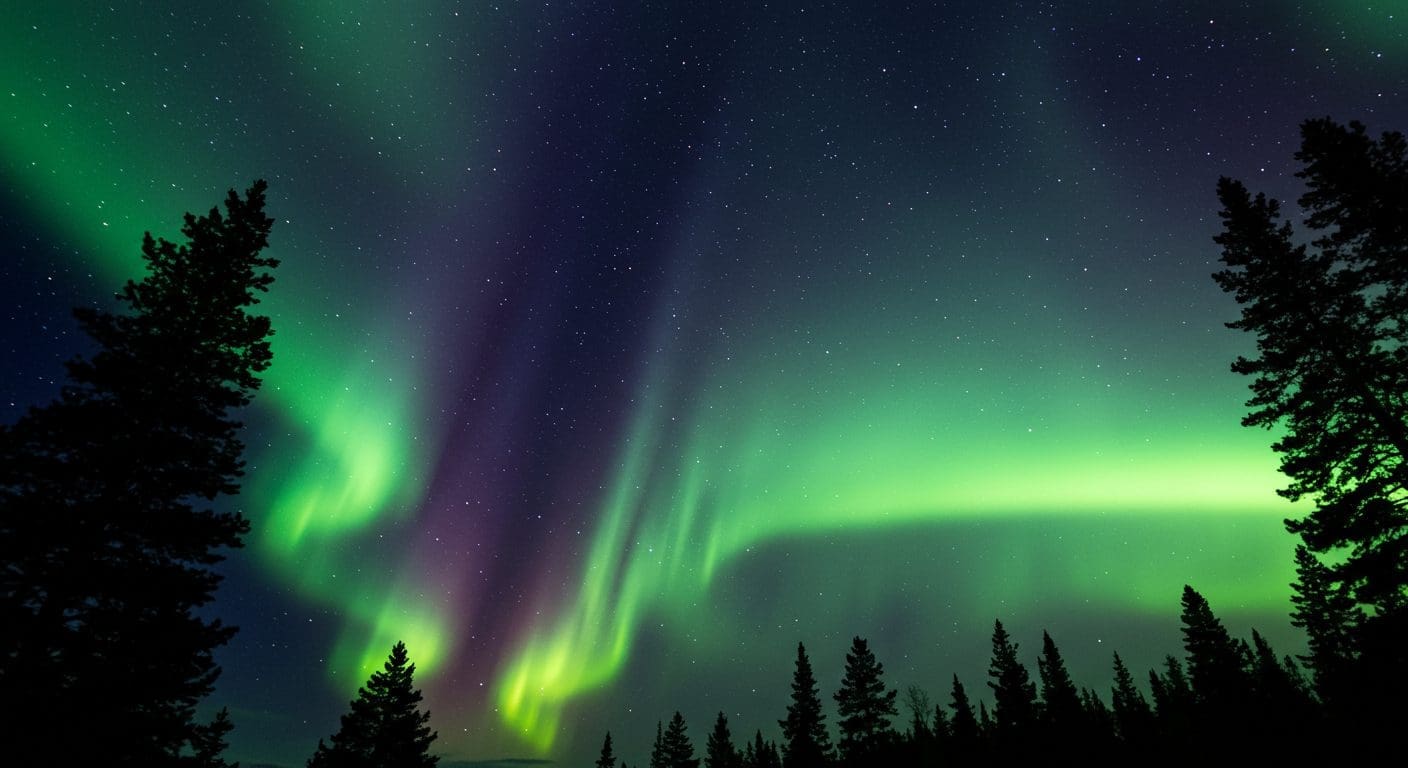
Scientists are poised to unravel the mysteries behind the aurora borealis’ mesmerizing displays as the night sky comes alive with shimmering curtains of light. Two NASA rocket missions, set to launch from Alaska’s Poker Flat Research Range in January 2025, will delve into the enigmatic world of flickering, pulsating, and hole-ridden auroras, seeking answers to what drives these ethereal spectacles.
By flying through active auroras, researchers Marilia Samara and Robert Michell aim to uncover the underlying electron acceleration processes that power these celestial light shows, ultimately shedding light on the complex space environment surrounding our planet.
Unraveling the Mysteries of Auroras: NASA‘s Rocket Missions
Auroras, also known as the northern lights, have long fascinated humans with their mesmerizing displays of colorful lights dancing across the night sky. However, beneath this breathtaking spectacle lies a complex phenomenon driven by countless tiny collisions between electrons and gases in the Earth’s atmosphere. Two upcoming NASA rocket missions, GIRAFF (Ground Imaging to Rocket investigation of Auroral Fast Features) and Black and Diffuse Aurora Science Surveyor, aim to uncover the underlying mechanisms that govern these enigmatic displays.
Understanding Electron Acceleration Processes
The GIRAFF mission, led by Robert Michell, will launch two rockets into distinct subtypes of auroras: fast-pulsating and flickering. By measuring the energy, quantity, and relative arrival times of electron populations forming these auroras, Michell’s team hopes to reveal which acceleration processes are at work and where in near-Earth space they occur. The mission’s instruments will provide valuable insights into the differences between fast-pulsating and flickering auroras, potentially shedding light on the distinct electron acceleration mechanisms driving these phenomena.
Fast-pulsating auroras flash on and off several times a second, while flickering auroras do so up to 15 times a second. Michell suspects that these different pulsation rates are fueled by distinct electron acceleration processes. By flying rockets through active auroras, the GIRAFF mission will provide unprecedented data on the electron populations responsible for these spectacular displays.
The Enigma of Black Auroras
The Black and Diffuse Aurora Science Surveyor mission, led by Marilia Samara, will investigate a peculiar phenomenon known as “black auroras,” where light from an aurora appears to be missing. Research suggests that these dark spots may form when the normally incoming stream of electrons reverses direction, escaping back out into space. However, not every blank spot in the aurora fits this description, and detecting outgoing electrons is crucial to understanding this phenomenon.
Samara’s team will launch their rocket through black auroras and surrounding regions, surveying electron populations as they fly through to understand how and why this stream reversal takes place. By studying these enigmatic features, the mission aims to provide a deeper understanding of the complex interactions between the Earth’s magnetic field, solar wind, and atmosphere.
The Challenges of Launching Rockets into Auroras
Launching rockets into auroras is no easy feat, even in Alaska where auroras are most active during winter nights. Above terrestrial winds, auroras move according to their own principles, making it essential to track them via ground-based cameras at the launch site and down-range observatory. The teams must time their launches precisely, aiming the rockets not where the auroras are but where they think they will be.
Experience plays a crucial role in this endeavor, as intuition and determination are necessary to navigate the complexities of auroral dynamics. By combining cutting-edge technology with expert knowledge, NASA’s rocket missions will provide unprecedented insights into the mysteries of auroras, ultimately enhancing our understanding of the space environment around our planet.
The Significance of Understanding Auroras
Auroras may seem like a natural wonder, but they are an integral part of the Earth’s space environment. By studying these phenomena, scientists can gain valuable insights into the complex interactions between the solar wind, magnetic field, and atmosphere. This knowledge is essential for understanding space weather events, which can impact our daily lives by disrupting communication systems, power grids, and satellite operations.
NASA’s rocket missions will contribute significantly to our understanding of auroras, ultimately enhancing our ability to predict and mitigate the effects of space weather events. As we continue to explore the mysteries of the universe, unraveling the secrets of auroras will remain a crucial step in advancing our knowledge of the Earth’s place within it.
External Link: Click Here For More