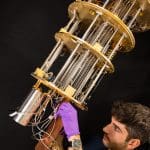
NASA’s Atmospheric Waves Experiment (AWE), conducted aboard the International Space Station, released its first data set after completing 3,000 orbits. This dataset includes over five million images and temperature swaths capturing atmospheric gravity waves, offering insights into how these phenomena affect technological systems like satellite communications and navigation. The AWE instrument, equipped with four telescopes, captures extensive views of Earth’s atmosphere, while researchers at Utah State University developed new software to process the data accurately.
The Atmospheric Waves Experiment (AWE) mission represents a groundbreaking initiative aimed at deepening our understanding of gravity waves and their profound impact on Earth’s atmosphere. By focusing on these dynamic phenomena, the mission seeks to unravel their role in shaping weather patterns, climate systems, and atmospheric circulation.
Gravity waves are oscillations in the atmosphere caused by various sources, including wind interactions with terrain and disturbances in the lower atmosphere. These waves play a critical role in transferring energy from the troposphere to the stratosphere and mesosphere, influencing temperature distribution and atmospheric dynamics. Despite their significance, many aspects of gravity waves remain poorly understood, particularly their global distribution, variability, and long-term effects on climate.
The primary objective of the AWE mission is to study gravity waves with unprecedented precision. By employing advanced instruments, including satellite-based observations and ground-based sensors, the mission aims to capture comprehensive data across different altitudes and regions. This will enable researchers to better understand how these waves contribute to atmospheric circulation and climate patterns.
Understanding gravity waves is essential for improving weather forecasting models and space weather predictions. These waves affect not only atmospheric circulation but also the overall dynamics of Earth’s climate system. By studying them, scientists hope to enhance our ability to predict extreme weather events, improve climate projections, and better understand the interactions between different layers of the atmosphere.
The AWE mission is a testament to the power of interdisciplinary collaboration. It brings together experts from various fields, including meteorology, climatology, and space physics, to tackle the complexities of gravity waves. This collaborative approach ensures that research findings are comprehensive and robust, fostering a deeper understanding of atmospheric dynamics.
The success of the AWE mission hinges on sustained efforts over time. Gathering sufficient data to draw meaningful conclusions requires long-term commitment and continuous support from the scientific community and funding organizations. By maintaining this dedication, researchers can build upon existing knowledge and make lasting contributions to our understanding of Earth’s environment.
The insights gained from the AWE mission have far-reaching practical applications. Improved weather forecasting models can help communities prepare for extreme weather events, while enhanced space weather predictions are vital for protecting satellites and communication systems. Additionally, better climate models can inform policy decisions aimed at mitigating the impacts of climate change.
In summary, the AWE mission is a pivotal endeavor in advancing our knowledge of atmospheric dynamics. By studying gravity waves, fostering interdisciplinary collaboration, and providing practical solutions, it plays a crucial role in addressing global environmental challenges. As we continue to unravel the mysteries of Earth’s atmosphere, the AWE mission stands as a beacon of innovation and scientific progress.
More information
External Link: Click Here For More